

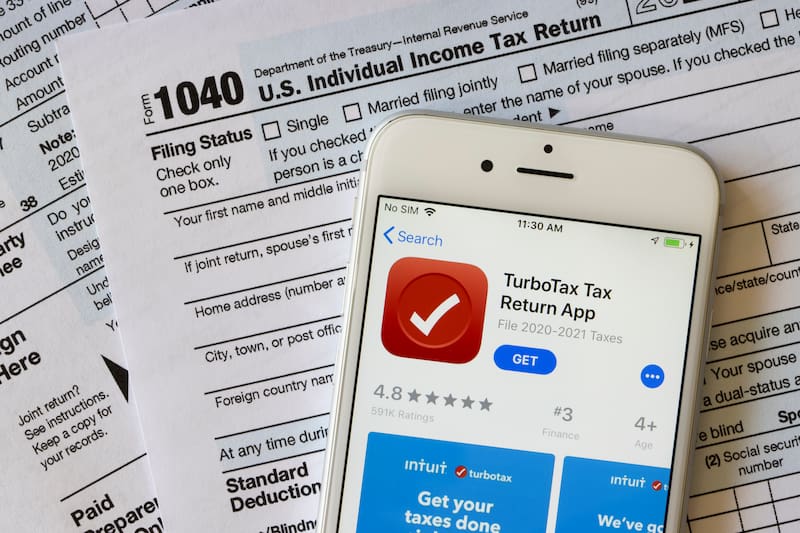
The Internal Revenue Service (IRS) requires nonresident aliens to file Form 1040-NR instead of the standard 1040, and those who use TurboTax to complete the latter by mistake are exposed to fines, interest, and delays in their refunds. The confusion mainly affects students and temporary workers with F, J, M, or Q visas.
TurboTax in its standard version does not support the 1040-NR, according to the platform itself. Those who need that form must turn to specialized software, such as Sprintax, or a tax professional with experience in nonresident filers.

Who must file the 1040-NR and not the 1040?
The 1040-NR must be used by those who do not pass the IRS substantial presence test and are considered nonresidents for tax purposes. This includes students and academics with F, J, M, or Q visas, even if they had no income in the United States during the tax year.
It must also be filed by those who had U.S.-source income without being residents, such as wages, taxable scholarships, or interest. This group must also report their days of presence in the country using Form 8843.
Among the most common cases that make up this list:
- Students with an F-1 visa in their first five years in the country
- Academics or researchers with a J visa who do not meet the exemption period
- Foreigners with income from renting properties in the United States
- Recipients of scholarships or grants subject to tax withholding

What happens if the wrong form is filed?
Filing the 1040 instead of the 1040-NR requires correcting the return with Form 1040-X, a paper filing that can take weeks to process. If the error generated a payment lower than owed, the IRS adds interest and a penalty that can reach 5% of the amount owed for each month of delay.
The mistake can also complicate future immigration procedures, such as visa or permanent residency applications, by leaving inconsistencies in the tax record. In addition, those who do not properly declare a tax treaty position face an additional fine of $1,000 for each omission.
Failing to amend the tax return and failing to pay the fines can trigger an audit by the U.S. tax authorities, which can lead to an investigation and subsequent seizure of the taxpayer’s assets if the agency proves that tax fraud occurred.