
En esta noticia
The Bureau of Labor Statistics (BLS) of the Department of Labor (DOL) announced on Wednesday, October 14, the inflation data for September 2026. Gasoline prices surged again and became one of the main factors driving the increase in the Consumer Price Index (CPI).
In addition to the release of these data, President Donald Trump announced on Friday, October 9, a series of measures to try to reduce fuel prices. Among them, a deal with Russia to increase diesel supplies stands out, along with other initiatives aimed at increasing fuel availability in the market.

How much did gasoline increase in September, according to the BLS?
According to the data published by the BLS, gasoline rose 9.1% in September, with a cumulative increase of 34.2% over the last 12 months.
This increase strongly boosted the energy sector index, which posted a monthly gain of 5.2%. The agency also reported that:
- Heating fuel posted a monthly increase of 15.3%.
- Electricity rose 0.2%.
- Piped natural gas fell 0.3%.
How does the rise in gasoline prices affect overall inflation?
The rise in gasoline prices has a direct impact on inflation because it is part of the goods and services used to calculate the CPI.
According to the BLS, this increase accounted for more than half of the monthly rise in the overall index. During this period, monthly inflation was 0.6%, while the year-over-year rate reached 3.7%.
According to Kyle Moore, chief economist at The Century Foundation, quoted by Reuters: “The war in Iran continues to disrupt global supply chains, which directly affects the U.S. economy”.
What is Trump’s plan for gasoline prices to fall in the United States?
The Donald Trump administration announced a series of measures aimed at increasing fuel supplies and reducing pressure on gasoline and diesel prices.
One of the main initiatives was the deal announced on October 9 with Russia, which provides for an initial supply of more than 300,000 metric tons of diesel to the U.S. and international markets.
On the other hand, the government also promoted other measures to try to contain prices:
- Release of reserves: promote the release into the market of fuels stored in allied countries’ strategic reserves to increase supply.
- Expanded use of diesel: temporarily allow certain fuels used in agricultural machinery to be used in road transport.
- Increased domestic production: promote measures to expand the country’s fuel refining capacity.
However, specialists consulted by Reuters warn that the deal with Russia could have a limited impact on prices, because the announced volume represents a small part of market demand.
Trump’s bet that prices will fall
President Donald Trump said on September 9 that oil prices would begin to fall after the November 3, 2026, midterm elections.
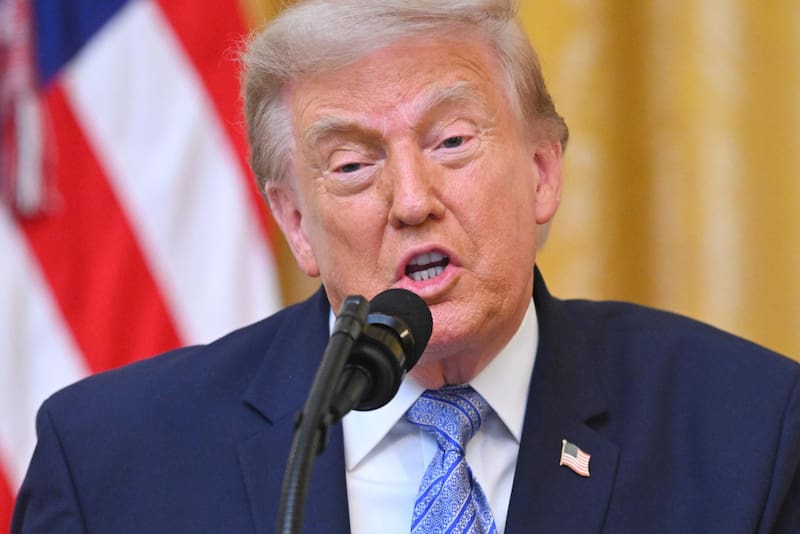
“Right after the elections, oil prices will plummet,” Trump publicly stated at Joint Base Andrews before heading to Texas to take part in the Republican Party’s midterm convention.
Recently, in an exclusive interview with Montana’s NBC, he spoke about the suspension of diesel taxes in Montana.
“It’s something I could support, but we’re going to fix it very quickly; we’re going to defeat Iran very quickly, and as soon as that happens, oil and diesel will plummet; they will fall very fast, but it’s something I could do anyway,” Trump said.
For its part, the U.S. Energy Information Administration (EIA) projected in its October report that gasoline prices will remain relatively stable during that month and will begin to gradually decline after October 2026.
According to the agency, gasoline reached an average price of US$4.35 per gallon in September, while for 2027 an annual average of US$3.56 per gallon is expected for regular gasoline.
This projection is based on a possible recovery in international oil supply and a drop in crude prices. However, the EIA warns that declines in wholesale markets will not be immediately reflected in the prices paid by consumers.