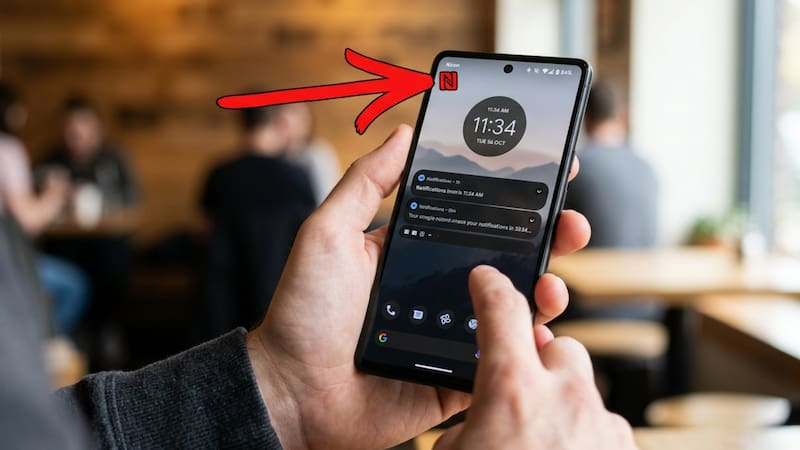

In millions of phones there is a feature that remains almost invisible to most users, although it can simplify everyday tasks such as paying for a purchase, validating a trip, or sharing data in seconds.
It is NFC (Near Field Communication), a technology that is already built into most modern smartphones and is increasingly gaining prominence.
However, one question remains common: is it advisable to keep NFC enabled all the time, or is it better to turn it off? The answer depends on how you use your device.

What is NFC and what is it used for on a cell phone?
NFC on a cell phone allows information to be exchanged between two devices at very short range, generally by bringing them a few centimeters apart. That instant connection makes multiple functions possible that are now part of daily life.
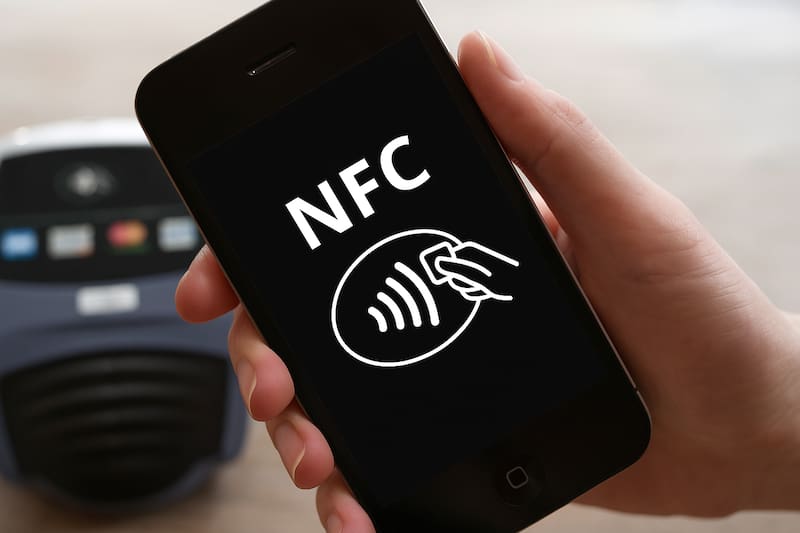
Among the most common uses are:
- Contactless payments in supermarkets, stores, and restaurants.
- Quick access to compatible public transportation systems.
- Instant pairing with speakers, smartwatches, and other devices.
- Reading NFC tags, used to automate actions or share links.
- Digital identification and validation in certain services.
The most important thing is that this technology works quickly and securely, since it needs physical proximity to activate.
Is it better to keep NFC enabled or turn it off?
Unlike other systems on the phone, keeping NFC on does not have a significant impact on the battery. Its power consumption is very low, so it does not pose a problem for the device’s battery life.
On many Android devices, the feature can be turned on or off from the quick settings menu. By contrast, on iPhones, Apple keeps this tool running automatically and does not allow it to be turned off manually on most recent models.
Even so, some specialists recommend disabling it if it is not used frequently, especially for reasons of control and security in very crowded places.

When it is convenient to use NFC
If your phone is compatible, enabling it can be useful for:
- paying with your phone without taking out your wallet;
- connecting to smart devices in seconds;
- automating tasks with programmable tags;
- speeding up digital access.