
Por Agustina Troiano
En esta noticia
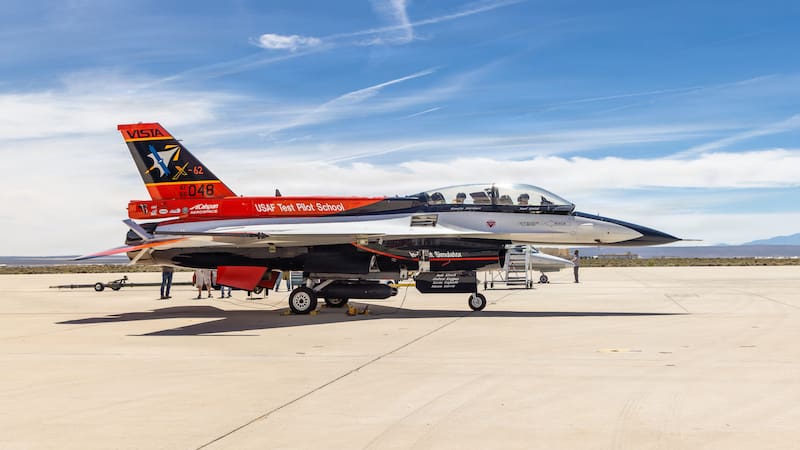
The U.S. Air Force, part of the country’s armed forces, is advancing the development of artificial intelligence systems capable of controlling fighter jets and carrying out maneuvers that until now have depended on human pilots. One of the main testbeds for this technology is the X-62A VISTA, an experimental aircraft based on an F-16 that was modified to test autonomous flight systems.
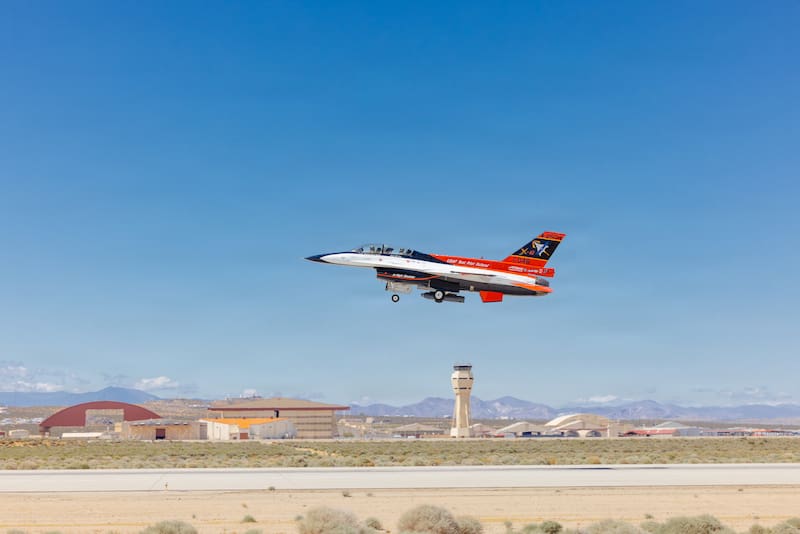
In April 2026, the aircraft took part in a series of tests at Edwards Air Force Base in California, where it completed 27 intercepts in eight flights controlled by artificial intelligence against a manned T-38 aircraft. The test showed that an autonomous system could process infrared sensor data and use it to guide the aircraft toward a target in real time.
The advance is part of broader research into the future of air combat, which involves developing systems that can take on certain maneuvers and tactical tasks and work alongside crewed aircraft.


What the X-62A fighter jet the United States adapted with artificial intelligence is like
The X-62A VISTA is a modified version of a two-seat F-16D, originally identified as the NF-16D, that the U.S. Air Force uses as an experimental platform. Its full name is Variable In-flight Simulation Test Aircraft, and its role is to allow researchers to test technologies and replicate the characteristics of other aircraft in flight.
The aircraft is operated by the U.S. Air Force Test Pilot School, with the participation of companies such as Lockheed Martin Skunk Works and Calspan. Its architecture allows different software and hardware systems to be integrated to evaluate artificial intelligence and autonomy capabilities that researchers can test during live flights, under controlled conditions and with safety systems.
How the AI that detects and chases other aircraft to intercept them works
One of the most recent tests took place in April 2026, as part of the HAVE HEAT program. During the trial, the X-62A was fitted with Lockheed Martin’s Legion Pod, an infrared search and track (IRST) system capable of detecting and tracking other aircraft. The device transmitted real-time information on a target aircraft, which was used by an artificial intelligence agent to guide the experimental aircraft and carry out an intercept maneuver autonomously.
According to Lockheed Martin, the X-62A completed 27 AI-controlled intercepts in eight flights, with a T-38 as the target. The result showed the system could receive data from a sensor installed on the aircraft and use it to carry out an intercept maneuver.
What air combat maneuvers artificial intelligence has already been able to carry out
The X-62A also took part in earlier tests in DARPA’s Air Combat Evolution (ACE) program, led by the Defense Advanced Research Projects Agency. In 2023, testing began with algorithm flights capable of controlling the aircraft during close-range air combat maneuvers, known as dogfighting. In those tests, the modified aircraft faced a human-piloted F-16 in visual-range combat scenarios.
DARPA’s goal is to develop autonomous systems that can carry out certain tactical maneuvers and work with human pilots in air operations, but the research also aims to lay the groundwork for transferring these capabilities to future uncrewed aircraft. In this way, people would retain supervision and decision-making roles while AI systems could take on flight and maneuvering tasks.