
Por Germán Takaichi
En esta noticia
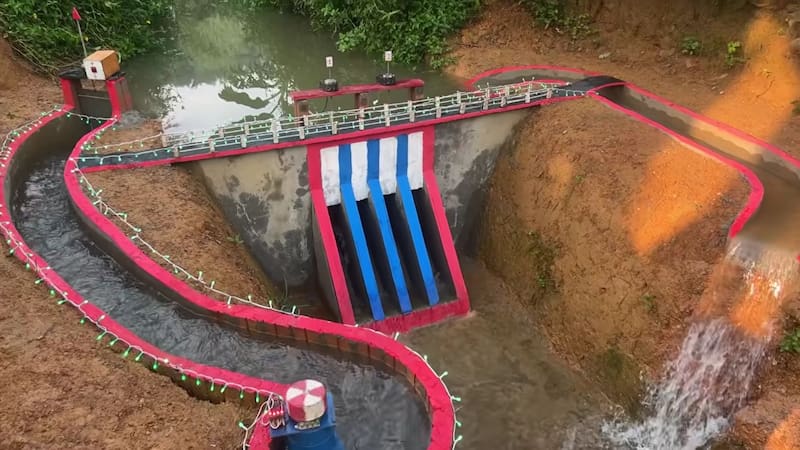
A Vietnamese engineer identified as Chien-Tran built a small hydroelectric plant out of bricks, pipes, a turbine and a generator to tap water from a nearby stream near his home and have power 24 hours a day.

The project, documented in videos on his YouTube Mini Construction channel, recreates on a small scale how a conventional hydroelectric facility works and shows how it can generate electricity to light a bulb and run a fan.
How did he build his own hydroelectric plant?
The operating principle is to channel water from a higher point to a turbine connected to a generator. To build a system like this, Chien-Tran showed that the first step is to choose a stream with the right flow and slope. After that, the work area is prepared and, when necessary, the water is temporarily diverted so work can be done on the channel.
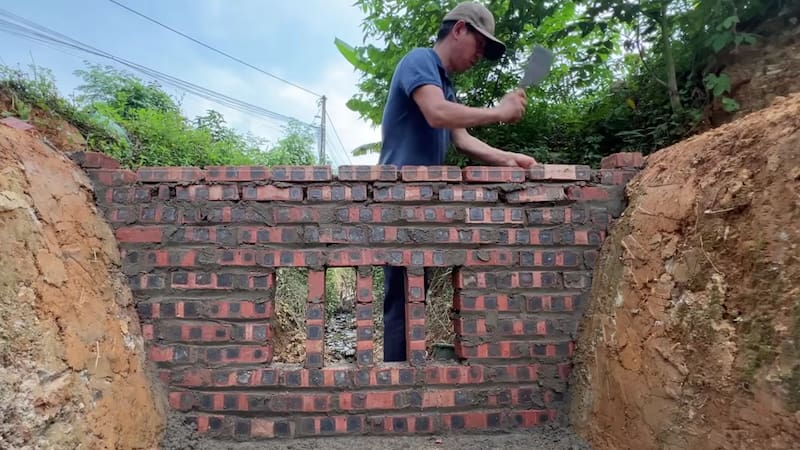
The retaining structure can be built with bricks or stones, depending on the design and the materials available. The foundation must be set on a stable base, while the joints and sides need to be properly sealed to reduce leaks and prevent damage from water pressure.
How do the pipes and turbine work?
Once the structure is ready, a channel or pipe is installed to carry the water to the generation area. The difference in height between the inlet and the outlet makes it possible to harness the water’s potential energy and turn it into motion.
In a homemade microplant, the turbine can be made or adapted with metal parts and other water-resistant components. Its shaft is connected to an electric generator, which converts the spinning motion into electrical energy. The exact design, however, depends on the flow, the drop in elevation, and the power the system is meant to produce.
After assembly, the joints, any possible leaks, and the stability of the structure are checked. When the water is released toward the turbine, it is tested to see whether the mechanism turns and whether the generator can power a small electrical load.
What are the advantages of a home hydroelectric plant?
The project shows how a waterway can be turned into a renewable energy source through a small-scale installation. In places with the right conditions, microhydropower can help with self-consumption and reduce the need to rely exclusively on the conventional grid.
Still, reproducing the system requires assessing the flow, the drop in elevation, equipment safety, and any possible effects on the surrounding environment. Permits may also be required to work on a natural waterway.