
En esta noticia
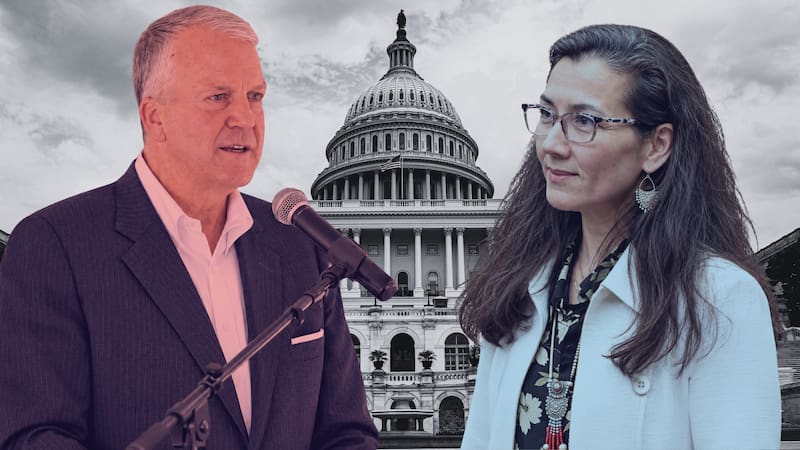
A second Dan Sullivan on Alaska’s ballot could pull votes from Republican Sen. Dan Sullivan in Tuesday’s toss-up race, which may decide who controls the U.S. Senate, and the FBI is already contacting the other candidate’s donors. Democrat Mary Peltola leads the senator 49.2% to 47.8% in the RealClearPolitics polling average.
The other candidate, retired teacher Daniel J. Sullivan Jr., is under state and federal investigation. A New York Times report alleged that people linked to Peltola’s campaign recruited him to split the senator’s support, which Peltola and Daniel J. Sullivan both deny.
On Sunday, a federal judge dismissed a Justice Department lawsuit that tried to stop Alaska from certifying, or making official, the result if the senator loses. The department is appealing.


Who is the second Dan Sullivan on Alaska’s ballot?
Daniel J. Sullivan is a retired teacher and musician from Petersburg, a small Alaska fishing town reachable only by air or water. On the ballot, the senator appears as Dan S. Sullivan, labeled as the incumbent, and the newcomer as Daniel J. Sullivan Jr.
State election officials removed him from the ballot earlier this year, but the Alaska Supreme Court ruled in June that they had overstepped and put him back on.
The Times reported that people tied to Peltola’s campaign and the Democratic Senatorial Campaign Committee, which works to elect Democrats to the Senate, tried to recruit him as a spoiler, a candidate meant to draw votes away from a rival. Peltola’s former campaign manager backed that account after being fired, then retracted it.
The committee also denies any involvement. At an Anchorage rally Friday, Peltola told volunteers, “I know I can beat Dan Sullivan. I do not need any help winning this race.”
Could a second Dan Sullivan cost Republicans the US Senate?
A party needs 51 of the Senate’s 100 seats for a majority. RealClearPolitics counts 47 seats as safe or leaning Democratic and 45 as safe or leaning Republican, with eight toss-ups that either party could win. Democrats would need four of those eight, and seven of them, including Alaska, are held by Republicans.
Republicans argue the shared name could lead some of the senator’s supporters to mark the wrong Sullivan. President Donald Trump called it “voter fraud at the highest level” on Saturday.
The race is close either way. A New York Times/Siena poll of 610 likely voters, conducted Oct. 23–30, had Peltola ahead 48% to 46%, within the margin of error of plus or minus 4.8 percentage points. She has also led most polls since early this year, well before the recruitment report came out.
Alaska also uses ranked choice voting, in which voters list candidates in order of preference. If no one wins a majority, the last-place finisher is dropped and those ballots go to each voter’s next choice, so a voter unsure which Sullivan is which can rank both.
Why is the FBI knocking on doors in the Alaska Senate race?
U.S. Attorney Michael Heyman said federal investigators have been looking into the candidacy for months and sent significantly more agents to Alaska after the Times report.
Agents have contacted Daniel J. Sullivan’s donors in at least two remote Alaska towns and in Massachusetts, asking whether they knew which Sullivan they were giving money to. Donors who spoke publicly said they did. One of them, Charles Flint of Petersburg, gave $500 and told The Associated Press he plans to rank Peltola first and Daniel J. Sullivan second.
As part of its lawsuit, which Trump said he personally ordered, the Justice Department also asked the court to set aside some ballots for investigation. The judge refused, ruling there was no way to tell which Sullivan a voter meant without breaking ballot secrecy.
Republican Gov. Mike Dunleavy has also ordered a state investigation.