En esta noticia
One of New York City’s most notorious garbage dumps is undergoing a transformation that is turning a massive landfill into one of the city’s largest green spaces.
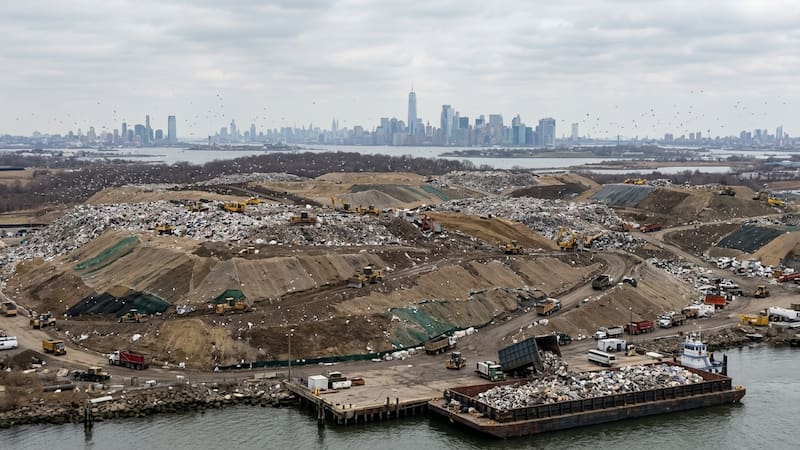
Located on Staten Island, the former Fresh Kills Landfill once received enormous amounts of New York City’s household waste. Today, the site is being converted into Freshkills Park, a vast public space that will eventually cover roughly 2,200 acres, making it nearly three times the size of Central Park.
The project is one of the most ambitious landfill-to-park transformations in the United States and is designed to combine recreation, ecological restoration and public access to a landscape that was once associated with garbage and pollution.

From the world’s largest landfill to a massive park
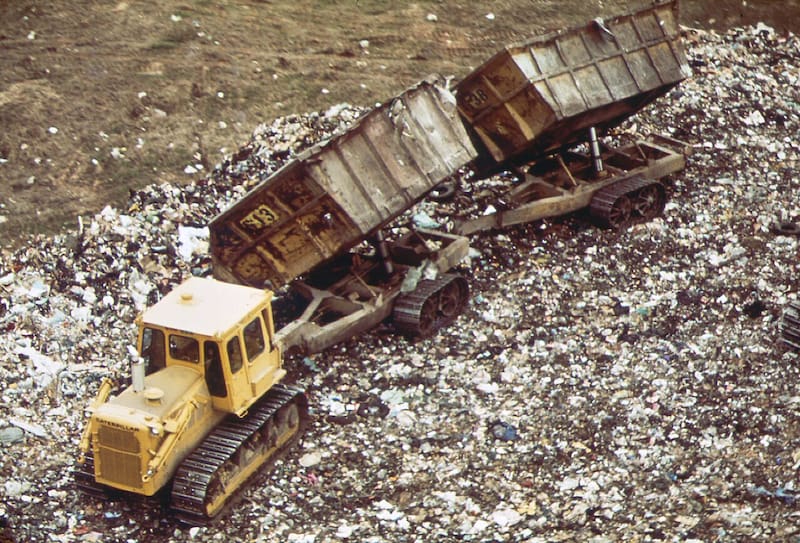
Fresh Kills operated for roughly half a century and became one of the largest landfill sites in the world. At its peak, it received as much as 29,000 tons of waste per day, according to New York City planning documents.
The landfill was finally closed in 2001, ending decades of waste disposal at the Staten Island site. Several years later, New York City began the process of transforming the enormous property into a public park.
Construction on Freshkills Park officially began in 2008, with the project divided into multiple phases. The city expects the complete park to be finished in 2036.
The new park will be almost three times larger than Central Park
Freshkills Park is planned to cover approximately 2,200 acres, making it nearly three times the size of Central Park.
New York City planning documents describe the site as one of the most significant open-space projects in the city’s history. The park is also expected to become the second-largest park in New York City’s five boroughs, behind Pelham Bay Park in the Bronx.
The enormous size of the former landfill allows planners to incorporate a wide variety of recreational and environmental features that would be difficult to accommodate in a smaller urban park.
The plans include:
- Hiking and biking trails.
- Open recreational fields.
- Kayaking and other waterfront activities.
- Bird-watching areas.
- Picnic spaces.
- Native plant habitats.
- Public art and cultural activities.
- Ecological and environmental education programs.
Part of the former landfill is already open
Although the entire park is still under development, visitors can already access completed sections of Freshkills.
In October 2023, New York City opened the 21-acre North Park section, marking the first public space inside the former Fresh Kills landfill site. The area includes pedestrian and cycling paths, a bird-viewing tower, an overlook deck and access to the William T. Davis Wildlife Refuge.
The North Park area also contains native plant plots and environmentally focused infrastructure. Its facilities include a composting restroom and solar-powered systems designed to reduce reliance on the traditional electrical grid.

Wildlife is returning to the former dump
One of the most striking aspects of the project is the return of wildlife to an area that was once dominated by garbage.
New York City officials have reported sightings of ospreys, hawks, foxes, terrapins and rare birds at the site. The ecological restoration is intended to create new habitats while making the landscape accessible to residents and visitors.
The transformation is not simply about covering the old landfill with grass. It involves carefully restoring wetlands, creating native habitats and managing the former waste site so that it can safely serve as public open space.
A long-term transformation
Turning Fresh Kills into a park is a process that requires decades of planning and environmental work. The city has described the project as a model for reclaiming contaminated or underused urban land and converting it into recreational and ecological assets.
The original master plan envisioned five major areas: the Confluence, North Park, South Park, East Park and West Park. Each section is designed with different recreational, ecological and cultural purposes.
Once all phases are completed, Freshkills Park will offer New Yorkers a huge new landscape on Staten Island while preserving the site’s unusual history.
What was once one of the world’s largest repositories for urban garbage is therefore becoming something entirely different: a massive public park nearly three times the size of Central Park.
The transformation is expected to continue through 2036, when the full project is scheduled to be completed.