
En esta noticia
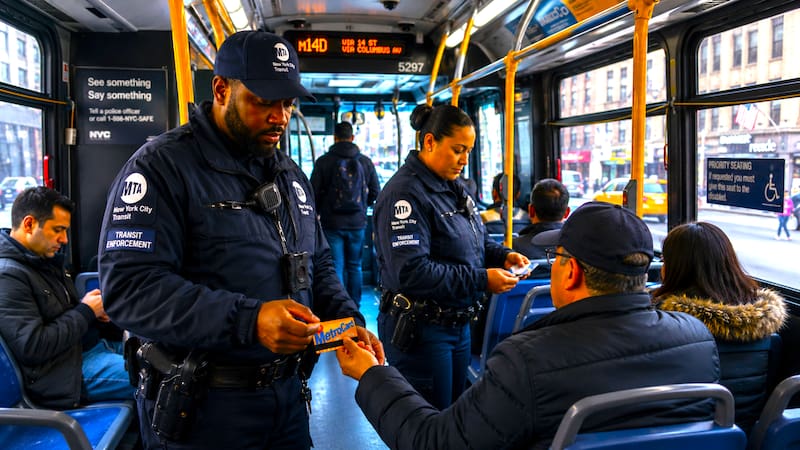
Historically, in New York City, residents tend to make heavy use of the subway and the bus. That is why the Metropolitan Transportation Authority (MTA) is responsible for maintaining order and service quality through inspections.
In the first case, the subway has turnstiles and not long ago incorporated new automatic doors that open when payment is made. However, on the bus, inspections are still carried out by MTA agents.
Over the last 12 months there has been an increase in fare evasion cases. For that reason, the MTA seeks to strengthen inspections on this mode of transport by implementing a new system.

The MTA will record each bus one by one: What is the new system New York will implement?
The MTA will implement a new fare control system in the coming weeks, inspired by the model used in European countries. From now on, MTA agents will be able to board and carry out inspections while the bus continues its route, without the vehicle having to interrupt its trip until the inspection is finished.
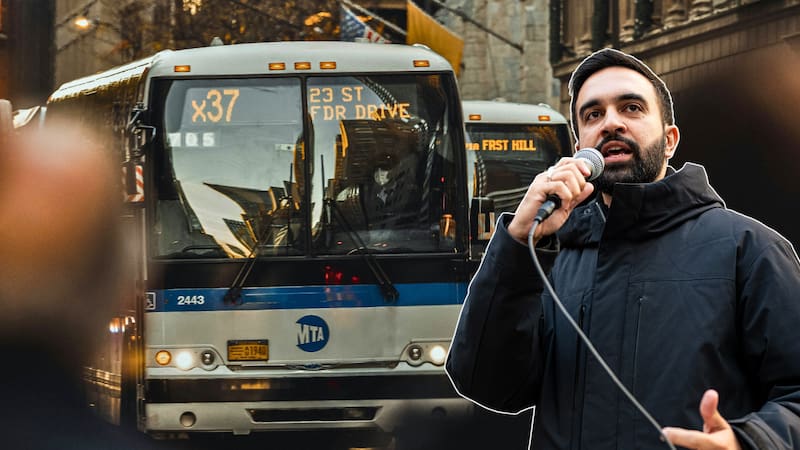
The main objective is to be sure that passengers have paid the fare correctly. Inspections will be random. In addition, electronic issuance of penalties will also be implemented to speed up procedures.
It differs from the current system because until now, inspectors had to ask buses to stop the route in order to board and check passengers’ tickets, something that caused delays for both sides.
The MTA will fine those who do not pay the correct fare: How much are the penalties?
The MTA will punish those who do not pay the proper fare with fines. It will follow the following penalty scheme:
- First offense: warning with no fine.
- Second offense within a four-year period: fine of $100.
- Third offense or subsequent repeat offenses: fine of $150 or even an additional citation depending on the case

Why is New York taking this decision?
The local bus in New York has an average cost of $3, while express routes cost $7.25. The MTA measure comes amid a context in which many passengers were seeking to avoid paying, something that negatively affected New York’s transportation system.
This generated major financial losses and the new measure seeks to recover funds to maintain the quality and frequency of service, so that New York residents can continue enjoying the bus day after day.