
En esta noticia
The Social Security Administration (SSA) has the authority to send its agents to the homes of certain beneficiaries in specific situations, such as when information is inconsistent or outdated.
This is not an automatic and routine procedure: the Government carries out these checks preventively in the face of suspicious situations, and they are specific interventions. It mainly applies to programs that must be validated periodically.

Security verification: how to know if it is an official agent
When an agent appears at a beneficiary’s home, they must show official identification before speaking about benefits or asking to enter.
The SSA recommends calling the agency to verify that it is indeed an intervention to avoid being deceived, since in April 2026, several cases were reported of criminals identifying themselves as real employees to impersonate officials.
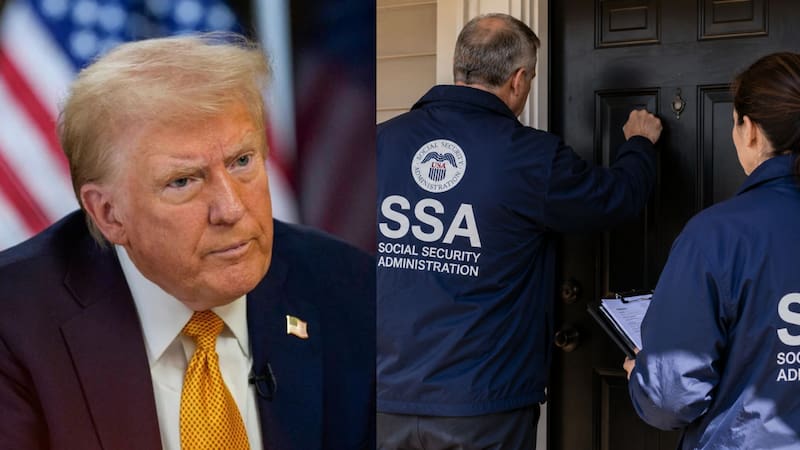
In what situations can agents go to homes?
Home visits are a special SSA tool, not a mass control mechanism for all beneficiaries. In general, home interviews are considered in the following situations:
- Identity cannot be properly verified by phone.
- The beneficiary or their representative requests a home interview.
- There are difficulties that prevent a home interview.
- SSA needs to carry out reviews of eligibility or case follow-up.
- There were attempts to obtain information to determine continuation that did not work.
There are also reviews related to beneficiary representatives (representative payees). In these procedures, a home visit and an interview with the beneficiary may be carried out to verify that the payments are being managed correctly.
Who can receive these visits?
The measure may apply to beneficiaries such as retirees or pensioners with files that require verification.

It could also apply to holders of Supplemental Security Income (SSI) who are undergoing an eligibility review, since this program requires constant checks because it depends on factors such as income, resources, household composition, and housing situation.
Important information: all changes that must be reported to SSA
SSI holders must report any of the following changes:
- Change of name or phone number.
- Change of mailing address or place of residence.
- Start or end of a job.
- Changes in income.
- Changes in resources or assets.
- Changes in bank accounts or their balances.
- Marriage, divorce, or other changes in marital status.
- Changes in household composition.
- Birth or death of household members.
- Admission to or discharge from hospitals, prisons, rehabilitation centers, or nursing homes.
- Changes related to citizenship or immigration status.
- Being outside the United States for a month or more.
- Certain changes in school attendance for children under 22 years old.
In the case of SSI, these changes must be reported as soon as possible and, in general, no later than the tenth day of the month following the one in which the change occurred.