En esta noticia
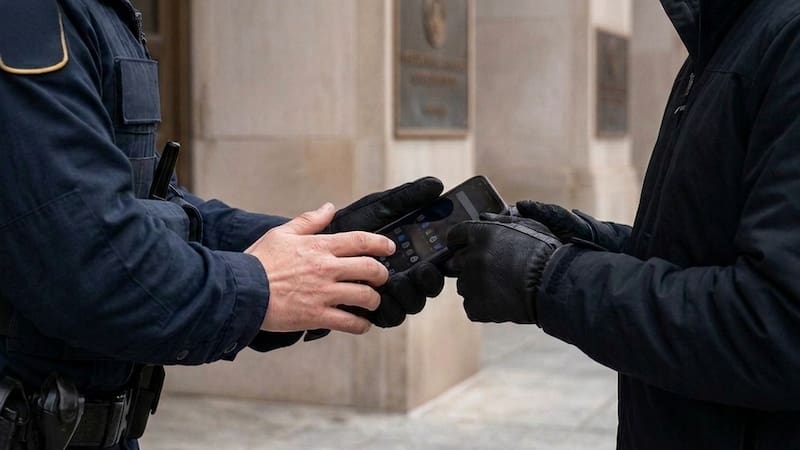
A court order placed the phones used by these people during immigration operations carried out in Los Angeles under scrutiny.
The case seeks to determine what stored information on those devices may be relevant to a lawsuit challenging the Government’s actions during the 2025 operations.
The court also imposed a US$500 daily sanction against the Department of Homeland Security (DHS) while the failure to comply with evidence production obligations continues.
The Government will review the phone of these people
The dispute is part of the case Pedro Vasquez Perdomo v. Kristi Noem, filed before the United States District Court for the Central District of California.
In January 2025, federal judge Maame Ewusi-Mensah Frimpong had ordered that the Government carry out forensic copies of the phones used by agents present during certain operations.
The measure sought to preserve possible electronic evidence related to the agents’ actions during the Los Angeles immigration operations.
The order covered both devices provided by the Government and personal phones used by agents during the operations.
The goal was not to review the cell phones of the general public, but rather to obtain potentially relevant information for a legal proceeding that questions the legality of certain detentions and immigration procedures.
The US$500 daily fine facing DHS
The conflict escalated when the plaintiffs alleged that the Government had not complied with the evidence production order.
In May 2026, the plaintiffs’ lawyers asked the court to hold the Government in contempt and sought a sanction of US$500 for each day of noncompliance.
The measure aims to create an incentive for the Government to comply with the obligations established by the court and deliver the information required within the case.
For that reason, the figure of US$500 per day does not represent a fine that the agents must pay individually or a sanction applied to each phone.
More than 800 agents were involved in evidence production
The scope of the court order is significant because the investigation involves more than 800 agents who participated in the immigration operations carried out in Los Angeles.
The information stored on their devices could form part of the evidence used to analyze how the procedures unfolded and what communications took place during the operations.
What is being investigated about the Los Angeles immigration operations?
The case originated from questions about the immigration enforcement operations carried out in Los Angeles during 2025.
The plaintiffs maintain that during those procedures, there were detentions that violated constitutional rights.
Among the issues being discussed are the circumstances under which federal agents detained certain people and the detainees’ access to their lawyers.
In February 2026, Judge Frimpong allowed several of the case’s main claims to proceed and found that the plaintiffs had presented sufficient arguments regarding their claims under the Fourth and Fifth Amendments.
The dispute over the phones is part of that process and aims to determine what information can help reconstruct what happened during the operations.