
En esta noticia
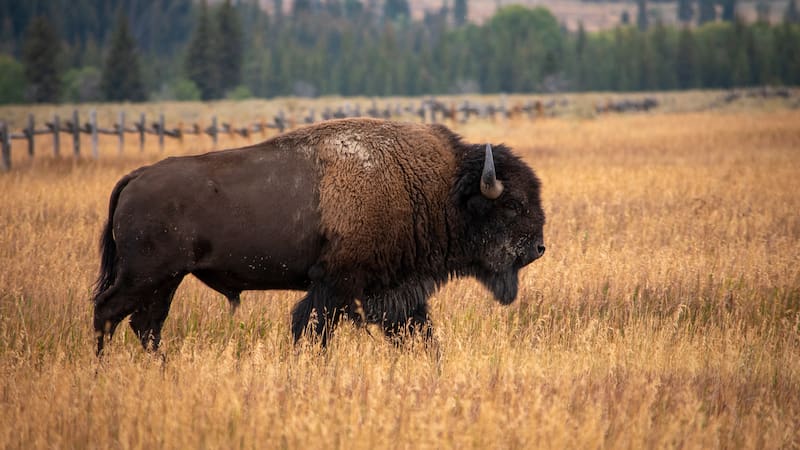
In the fall of 1993, 300 American bison returned to the tallgrass prairie of northeastern Oklahoma, marking the beginning of a long-term conservation effort. The animals were donated by Kenneth and Dianna Adams, owners of the Ken-Ada Ranch, to The Nature Conservancy, which manages the Joseph H. Williams Tallgrass Prairie Preserve.
Today, the herd numbers more than 2,000 animals and can grow to approximately 2,700 during the summer, when calves born in the spring are included. Their presence is part of a broader effort to protect a landscape that has lost most of its original range to agricultural development and other land-use changes.

How 300 bison became a herd of thousands
The original donation helped restore a species that once roamed the Great Plains in enormous numbers. By the late 19th century, commercial hunting and other pressures had brought American bison close to extinction.
The return of the animals to Oklahoma’s prairie was not simply an effort to increase their population. The Nature Conservancy reintroduced them as part of a strategy to restore the natural processes that sustain the tallgrass prairie ecosystem.
The preserve’s herd lives across tens of thousands of acres of protected grassland. Although the bison roam freely throughout the property, conservation staff monitor their health and manage the herd to support the long-term restoration project.
The annual roundup is one part of that work. Each fall, staff and experienced wranglers gather the animals for health checks, weighing and vaccinations.
Why bison are essential to the prairie
The tallgrass prairie once covered a vast area of central North America, extending across multiple states. Today, less than 4% of its original extent remains, making the protection of surviving grasslands particularly important.
Bison are considered a keystone species because their behavior helps shape the environment around them. Their grazing changes the amount and composition of vegetation, creating different conditions across the landscape rather than allowing the grassland to become uniform.
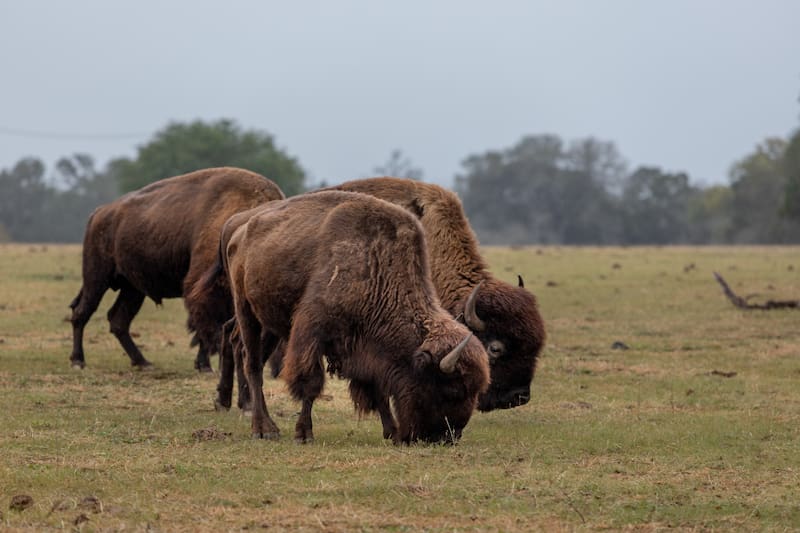
These changes can benefit native grasses, wildflowers and other plants, while helping create habitats for insects, birds and amphibians. In this way, the animals contribute to the ecological processes that sustain the prairie.
Their impact is reinforced by carefully managed, prescribed fires. The Nature Conservancy uses a patch-burn approach, in which different sections of the grassland are burned at different times. This helps limit the spread of woody vegetation, encourages native plant growth and maintains a varied landscape.

The Oklahoma preserve protecting a disappearing landscape
The Joseph H. Williams Tallgrass Prairie Preserve, near Pawhuska, Oklahoma, covers approximately 39,650 acres. The Nature Conservancy describes it as the largest protected remnant of tallgrass prairie left on Earth.
The preserve is home to hundreds of plant species, along with diverse bird and mammal populations. Its conservation work combines habitat protection, bison management and prescribed burning to maintain the natural character of the grassland.
Visitors can experience part of the landscape along a designated 15-mile driving loop, although bison are wild animals and may not always be visible. During the annual fall roundup, the herd may be temporarily out of sight while staff conduct health checks.
More than 30 years after the first 300 animals were released, the project demonstrates how restoring a native species can help recover the ecological processes of an endangered landscape. The bison are not just a symbol of the American West: their grazing is one of the tools being used to keep the tallgrass prairie alive.