
En esta noticia
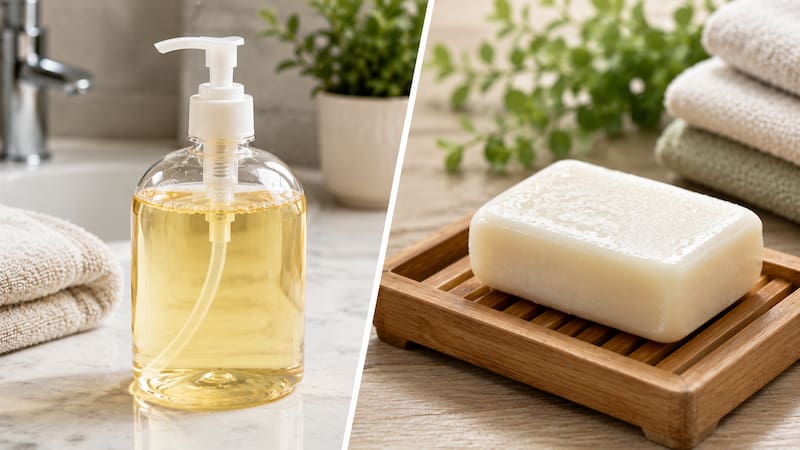
When it comes to daily hygiene, one of the most common questions is whether it is better to use liquid soap or bar soap. Both fulfill the main function of removing dirt, excess oil, and microorganisms from the skin, but they have important differences in terms of composition, practicality, environmental impact, and skin care.
Although for years there was a belief that bar soap was less hygienic, specialists agree that, when used correctly, both liquid and solid soap are safe options. The choice will depend on the skin type, the intended use, and each person’s preferences.

Liquid soap: advantages and disadvantages
Liquid soap has become one of the most popular options, especially in public bathrooms, offices and homes where several people share the same sink.
Benefits of liquid soap
- Reduces direct contact between users thanks to the dispenser.
- It often includes moisturizing ingredients that help maintain skin hydration.
- It is a good alternative for people with dry or sensitive skin, as long as it contains gentle, fragrance-free formulas.
- It is practical and easy to use, especially for children and older adults.
Disadvantages of liquid soap
- It generally has a higher price than bar soap.
- It requires plastic packaging, which generates more waste.
- Some products contain preservatives, colorants, or perfumes that can irritate sensitive skin.
Bar soap: advantages and disadvantages
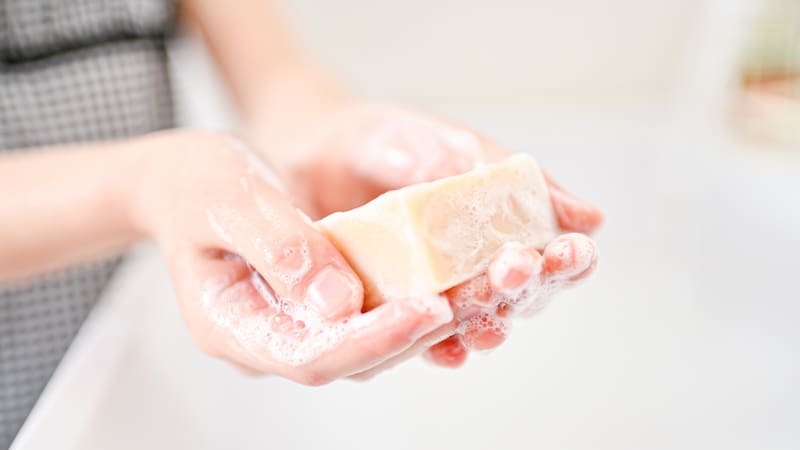
Bar soap remains a very commonly used alternative because of its effectiveness, lower cost, and reduced environmental impact.
Benefits of bar soap
- It is more economical and usually lasts longer.
- It creates less plastic waste because many are wrapped only in paper or cardboard.
- It cleans the skin effectively when used correctly.
- There are versions formulated for sensitive skin, with moisturizing or naturally derived ingredients.
Disadvantages of bar soap
- It can soften and wear down quickly if it stays wet.
- If several people use it, it is advisable to keep it in a soap dish that allows the water to drain to avoid residue buildup.
- Some traditional bars have a more alkaline pH, which can dry out the skin if used frequently.

Which do the experts recommend?
Dermatologists agree that there is no single winner. Both liquid soap and bar soap are effective for hand and body hygiene if used correctly.
The main recommendation is to pay attention to the product formula rather than its presentation. Specialists advise choosing gentle soaps, preferably without strong fragrances or irritating ingredients, especially if you have sensitive skin, dermatitis, or eczema.
For those with very dry skin, liquid soaps with moisturizing agents or the so-called “syndet” (synthetic cleansers with a milder pH) usually offer better tolerance. By contrast, for people without dermatological problems, a good-quality bar soap can provide equally effective cleansing.
Which cleans better?
In terms of cleansing, there are no significant differences between the two formats. Both liquid soap and bar soap effectively remove dirt, bacteria, and viruses when used with water and with proper washing for at least 20 seconds.