
En esta noticia
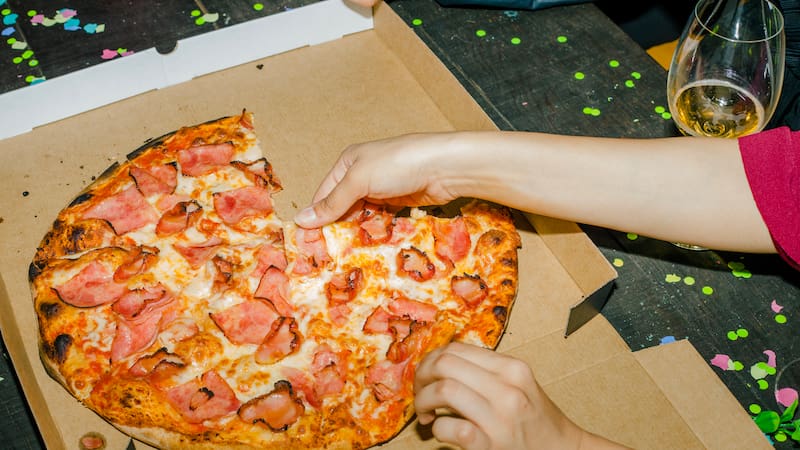
The round shape of the pizza contrasts with an element that has practically not changed over the years. It is the square box, which, far from responding to an aesthetic issue, has an explanation related to manufacturing, costs, and logistics.
Straight lines make it possible to produce the containers easily and store them folded so they fit better during transport. For this reason, although a circular box would fit the pizza, it is not usually the option most chosen by businesses.

Why are pizza boxes usually square?
The main explanation lies in how they are made. Pizza boxes usually start from a sheet of cardboard that is cut, scored, and folded until it forms the container.
The square or rectangular format simplifies this process because it uses straight cutting and folding lines, and it also makes better use of the cardboard surface and facilitates rapid large-scale manufacturing.
Thus, pizzerias choose a relatively cheap and durable container that is easy and quick to assemble before serving the food inside it.
What advantages do square boxes offer?
In addition to making manufacturing easier, their design offers several benefits for businesses and delivery services:
- They are easy to produce: they can be made from a single flat piece of cardboard.
- They reduce material waste: straight shapes allow cuts to be distributed better across the sheets.
- They take up little space before assembly: they can be stored completely flat and stacked.
- They facilitate transport: one box can be placed next to another, making better use of the available space.
- They are quick to open and close: the flaps allow the container to be assembled without complex systems.
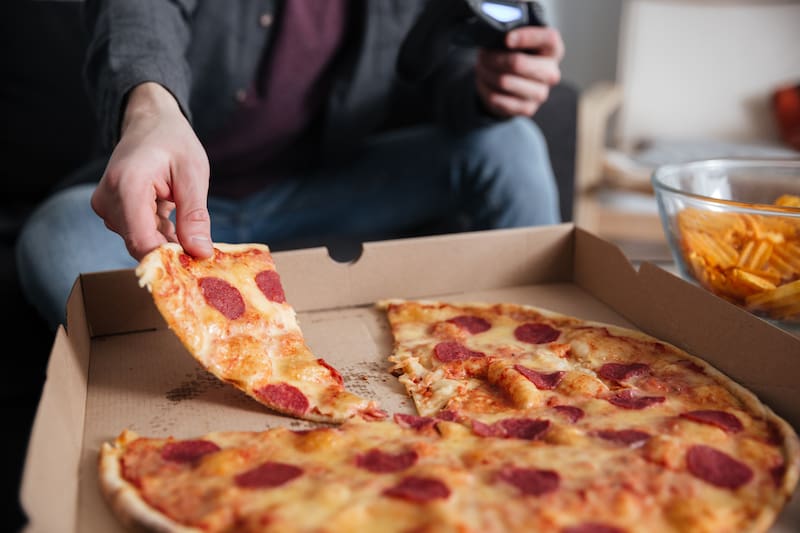
- They protect the pizza: the space left around it prevents the edges from being constantly pressed against the walls of the container.
In addition, the free corners make it easier to take the slices or place extras such as condiment packets.
Why are round boxes less common?
A circular box would seem more logical because it would follow the shape of the pizza exactly. However, its production would be more complex.
Curved cuts make it harder to use cardboard sheets efficiently and may require more elaborate assembly processes or designs. This can increase both material waste and manufacturing costs.
They also present a logistical drawback, since when several circular containers are placed next to one another, empty spaces remain between them. That is why, although circular alternatives exist, the square box remains the predominant format because of a combination of practicality, economy, and ease of transport.