En esta noticia
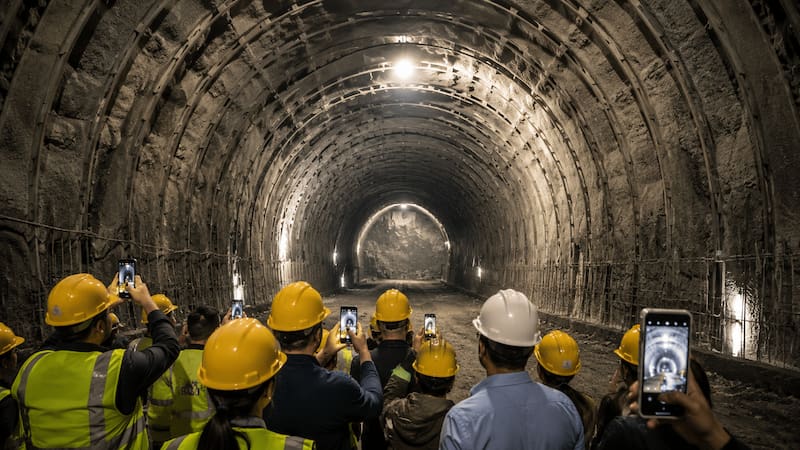
A train enters a tunnel in Switzerland and, for a few moments, daylight disappears. Passengers check their phones, listen to music, or simply look at their reflections in the windows. For millions of commuters, it is just another routine trip.
What most people do not realize is that they are traveling through one of the world’s most ambitious environmental projects. Hidden beneath the mountains lies an enormous underground network that many experts describe as a “second Switzerland”—a system of more than 1,400 tunnels stretching for over 1,243 miles (2,000 kilometers) beneath the Alps.

Switzerland’s underground world beneath the Alps
Switzerland’s vast network includes rail tunnels, road tunnels, and underground galleries used for water and energy infrastructure. Together, these hidden corridors rival some of the largest urban transportation systems on Earth.
The crown jewel of this underground world is the New Rail Link through the Alps (NRLA), a mega-project composed of three major base tunnels: Lötschberg, Gotthard, and Ceneri.
At the heart of the project is the Gotthard Base Tunnel, which extends approximately 57 kilometers (35 miles) beneath the Alps and holds the title of the longest railway tunnel in the world. Passenger trains can cross it in around 20 minutes.
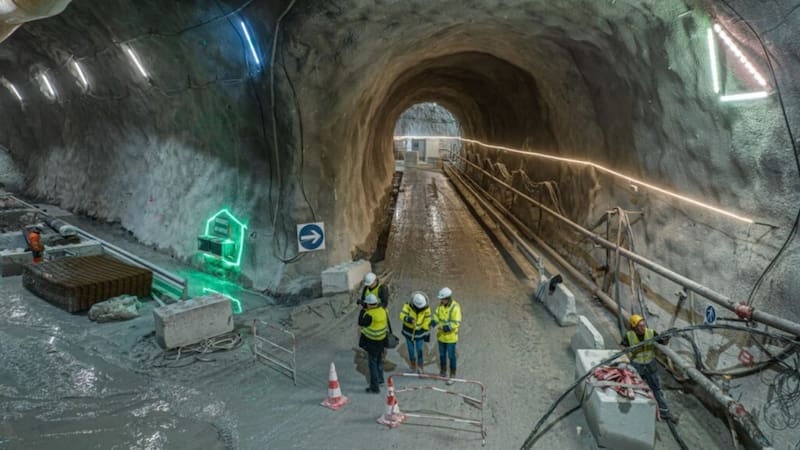
While the tunnels have significantly reduced travel times and made transportation more efficient, their primary purpose goes far beyond convenience.
The hidden climate mission behind the tunnels
For decades, heavy trucks traveled through the Alpine valleys in ever-increasing numbers. The result was more traffic, air pollution, noise, and safety concerns in some of Europe’s most fragile mountain ecosystems.
In response, Swiss voters approved the Alpine Initiative during the 1990s. The objective was straightforward but ambitious: move freight traffic from roads to railways and protect the Alps.
The underground tunnels became the infrastructure needed to make that goal possible.
Because trains can travel through relatively flat tunnels beneath the mountains, they require less energy than climbing steep mountain roads. Research on European freight transport has shown that rail systems typically consume about one-fifth of the energy used by heavy trucks and produce only around one-quarter of the greenhouse gas emissions per ton-kilometer.
The policy has transformed transportation across the region. Today, more than 72% of cross-Alpine freight in Switzerland is carried by rail.
Hundreds of thousands of truck journeys have been avoided
The shift toward rail transportation has produced measurable environmental benefits.
In 2018, approximately 941,000 trucks crossed the Swiss Alps, representing a reduction of about one-third compared with the year 2000.
Analysts estimate that without Switzerland’s rail-focused policies, an additional 651,000 trucks would have crossed the Alps in 2016 alone. In 2017, the country is estimated to have avoided at least 0.7 million tons of carbon dioxide emissions compared with a business-as-usual scenario.
Despite the progress, Swiss authorities acknowledge that the work is not complete. In 2022, official figures still counted around 880,000 truck journeys across the Alps, although rail transport continued to account for approximately 74% of all goods transported through the region.
For communities living in Alpine valleys, each freight train replacing long convoys of trucks means quieter nights, cleaner air, and fewer traffic risks.

Building massive tunnels while protecting nature
Constructing tunnels beneath mountains inevitably leaves an environmental footprint.
The Gotthard Base Tunnel alone required the excavation of approximately 28 million tons of rock and enormous amounts of concrete.
Swiss authorities, however, attempted to minimize the impact throughout construction. According to official environmental reports, about 152 kilometers of shafts and passages were excavated while efforts were made to limit damage to nearby ecosystems.
Construction materials were transported by rail and ship whenever possible, machinery was equipped with particle filters, and wastewater generated during excavation was treated and cooled before being released into rivers.
Once construction ended, riverbanks were restored, streams were returned to more natural conditions, and dry-stone walls were rebuilt to create habitats for reptiles and other small animals.
The philosophy was simple: if construction alters the landscape underground, restoration efforts should improve conditions above the surface.
Why Switzerland’s underground infrastructure may become even more important
The tunnel network also offers advantages as climate risks intensify.
Avalanches, landslides, and extreme weather events increasingly threaten transportation infrastructure in mountain regions worldwide. Deep tunnels and protective galleries help keep roads and railways operational even when surface routes become dangerous or impassable.