
En esta noticia
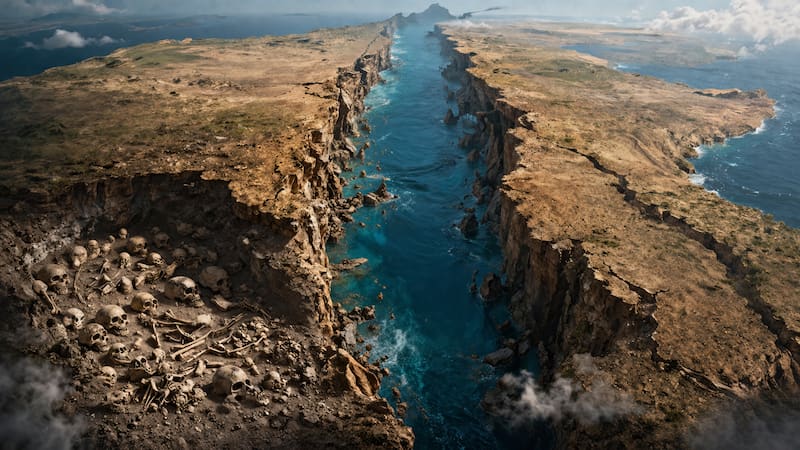
A geological rift is advancing across Kenya and Ethiopia and dividing the African continent into two separate plates. Beneath that fracture, scientists found more than 1,200 fossils of human ancestors preserved for millions of years.
The fault is part of the Great Rift Valley, a system that stretches about 6,000 kilometers from Ethiopia to Mozambique. The process began 30 million years ago and today is separating the continent at a rate of just 2.5 centimeters per year.

What is the rift that is dividing Africa in two?
The movement originates in a mass of hot rock that pushes from inside the planet against the Earth’s crust. That pressure first raises the ground and then breaks it from below, the same mechanism that gave rise to Iceland.
The force is so great that it created two branches of the rift, with different paths and countries:
- Eastern Rift: crosses Ethiopia and Kenya.
- Western Rift: extends through Uganda and Tanzania.
Where both branches meet, in the south, the continent will split completely and give rise to a new landmass with its own coastline and climate.
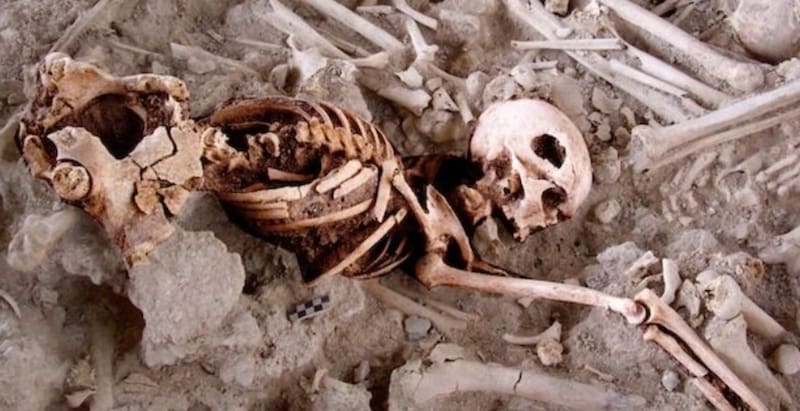
Why were so many fossils of human ancestors found in the area?
For millions of years, the ground of the rift gradually sank and acted as a natural trap. Ash, sediment, and animal remains were sealed underground, turning the region into one of the richest fossil records on the planet.
Some of the most relevant findings
- The skeleton of Lucy, 3.2 million years old, found at a rift site in Ethiopia.
- Turkana Boy, one of the most complete human skeletons ever found, recovered on the shores of Lake Turkana.

According to scientific records, the Turkana region alone contains more than 1,200 fossils of human ancestors, close to one-third of all those found on the African continent.