
En esta noticia
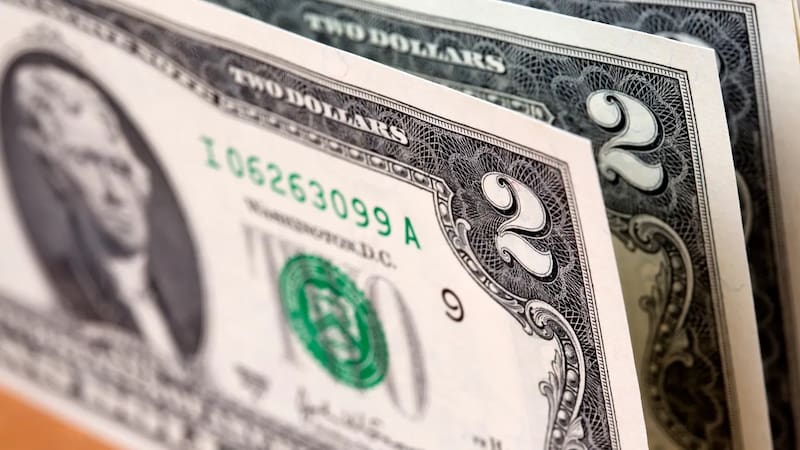
What for many is a simple 2-dollar bill in circulation can, in the world of collectors, become a true fortune. Depending on its year of issue, condition, and serial number, some exceptional examples have reached values of up to 20,000 dollars at specialized auctions.
This phenomenon has turned the modest bill into a highly sought-after piece, generating notable interest among both numismatic experts and curious people who check their wallets in search of a possible treasure.

What features make the 2-dollar bill an exceptional treasure?
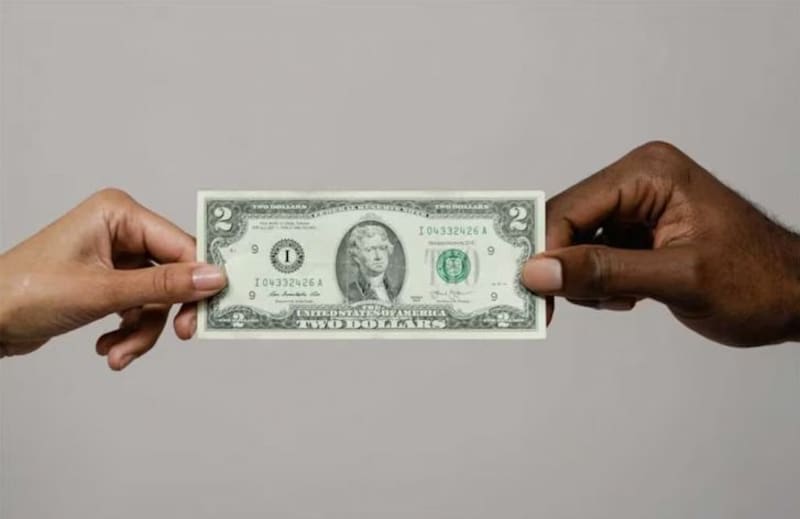
The two-dollar bill, which was first issued in 1775, is considered one of the least common denominations of the U.S. dollar. Its limited use in daily life has contributed to its fascination and its value in collecting, featuring on the front the face of President Thomas Jefferson.
The bill’s design was conceived by Charles Bert, and on its reverse, one can see an image engraved by Joachim C. Benzing of the iconic Monticello mansion, Jefferson’s residence.
According to experts in numismatics, one of the most coveted models among collectors is the one that has a red seal on the left side of the bill. This detail is crucial for identifying a valuable version, corresponding to series 1928-G. Since 1953, the seal has been moved to the right side, which makes bills with the seal on the left authentic collector’s items.
Additional factors that increase the value of the two-dollar bill
The bill’s condition is a fundamental aspect. A specimen kept in optimal condition can double or even triple its value. In particular, bills that have unique serial numbers, especially those that contain mostly zeros, are highly valued in the field of numismatics.
According to specialized sources on this topic, these features can increase the bill’s value to as much as 20,000 dollars.