
En esta noticia
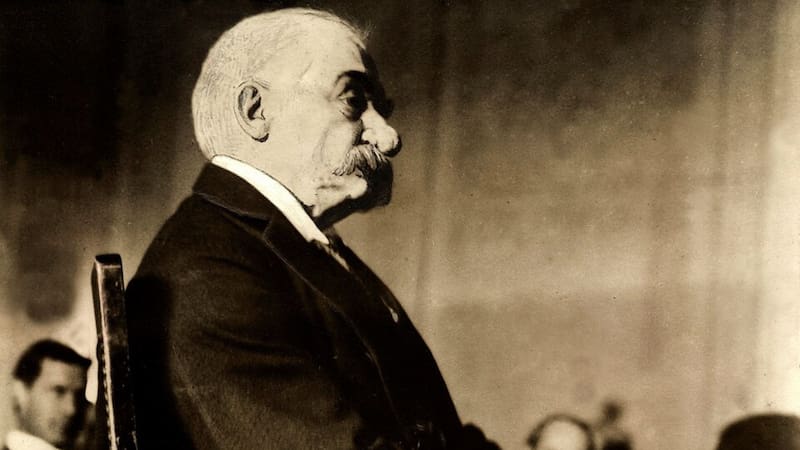
A piece of Maine’s coastline that is now part of Acadia National Park has a remarkable connection to financier J.P. Morgan and his family. More than a century ago, Morgan acquired 117 acres that included Sand Beach and Great Head as a wedding gift for his daughter, Louisa.
What began as a private family retreat eventually became public land, allowing visitors to explore a section of the coast that once belonged to the Morgan family.
J.P. Morgan’s 117-acre purchase
In 1900, J.P. Morgan purchased approximately 117 acres in Maine, including the area around Sand Beach and Great Head. The property was intended as a wedding gift for his daughter Louisa P. Morgan, who married Herbert Satterlee in New York City in November of that year.
The transaction, however, was not formally completed until 1910 because of title issues. By then, the property had become an important part of the Satterlee family’s summers.
Louisa and Herbert eventually raised two daughters, Mabel and Eleanor, who grew up spending time on the coastal property. The family’s summer estate became known as Satterlee Field.

A private estate surrounded by Acadia
The Satterlee family’s property was located alongside large areas that were already part of what became Acadia National Park. The family also allowed park visitors to access Sand Beach while the land was still privately associated with the estate.
The setting included a combination of forest, mountains, coastline and sandy beaches, making it a particularly distinctive part of Mount Desert Island.
For decades, the property remained connected to the Satterlee family. That changed after Louisa and Herbert died in the mid-1940s.
The 1947 fire changed the family’s plans
Louisa died in October 1946, followed by Herbert in July 1947. Only a few months later, the region was affected by the devastating October Fire of 1947, which destroyed much of the Satterlee estate.
The destruction, combined with the family’s changing circumstances, ultimately contributed to the decision to turn the property over to the public.
Eleanor and her sister Mabel wanted other people to continue enjoying the landscape that had played such an important role in their family’s history.

Morgan’s granddaughter donated about 100 acres
After her parents died, Eleanor Morgan Satterlee, J.P. Morgan’s granddaughter, inherited the property. In 1949, she donated approximately 100 acres to the United States in memory of her mother, Louisa. The land included the area around Great Head and Sand Beach and became part of Acadia National Park.
A bronze plaque near the staircase leading toward Sand Beach commemorates the donation and identifies the property as Satterlee Field.
The gift transformed land that had once been a private family retreat into a place that could be enjoyed by visitors from around the country.
What visitors can see today
The former Satterlee property remains part of the landscape of Acadia National Park. Visitors can reach the area through the Great Head Trail, which provides access to the coastal scenery surrounding Sand Beach and Great Head.
The landscape retains many of the features that made the property special to the Satterlee family: rocky coastline, woodland, mountains and the sandy shoreline.