
En esta noticia
Chicken is one of the most chosen types of meat when selecting a protein for the daily diet, and different types can be found on the market, such as farm-raised or industrial chicken and free-range chicken, whose differences often raise questions.
Although both come from young poultry intended for consumption, there are key differences related to rearing conditions, their diet, the fattening period, and their distinctive characteristics. All these particularities can influence flavor, texture, color, and price.

Free-range chicken or farm-raised chicken: what is the difference
According to what was explained by the Ministry of Agriculture, Fisheries and Food of Spain, the main difference lies in how the birds are raised.
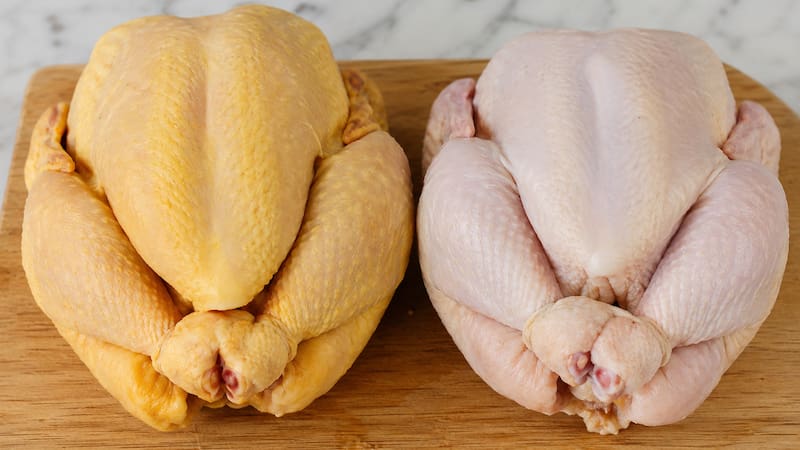
Industrial farm-raised chicken is produced through intensive rearing systems. The birds grow quickly until they reach the appropriate weight for sale (1kg), and their feed is specifically designed for this purpose.
As a result of this production system, it is a meat with a whiter or paler color, a tender texture, and a less intense flavor.
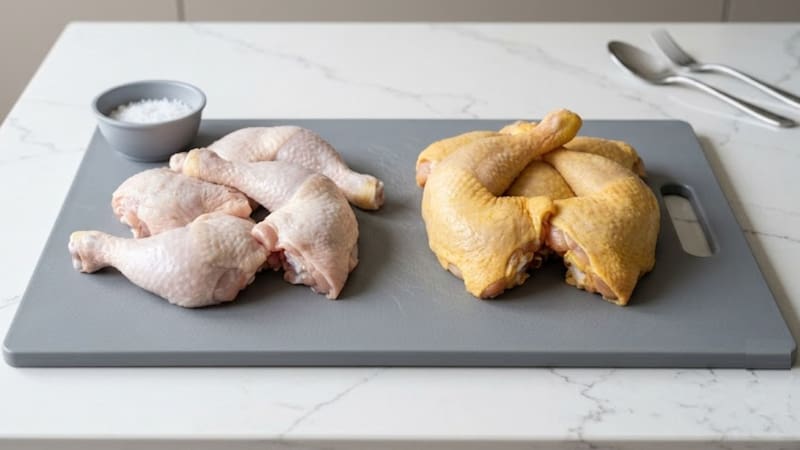
Free-range chicken, on the other hand, is raised under different conditions and has a longer growth period (3kg). In this case, the feed is based on grains and it is raised under semi-free conditions. The meat is more yellowish, has a firmer texture, and a more pronounced flavor.
What is better to buy: free-range chicken or farm-raised chicken
There is no single answer to this question, since the choice will depend on each person’s preferences.
Free-range chicken can be a good option for those who choose to prioritize:
- Meat with a more intense flavor
- A firmer texture
- Different characteristics in terms of meat color

On the other hand, farm-raised chicken may be convenient for those who prefer
- More tender meat
- A milder flavor
- A generally more competitive price
It is important to consider that, from a nutritional point of view, the fat content will depend on the cut chosen and on whether it is eaten with or without skin.