
En esta noticia
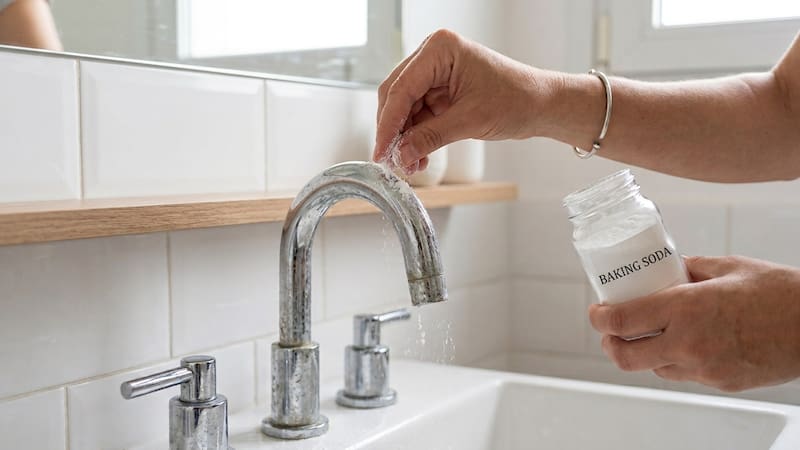
The faucets and taps in the bathroom can quickly lose their shine due to the buildup of soap residue, toothpaste, dirt, and minerals present in the water. However, there is an inexpensive ingredient that can help restore their appearance without having to resort to specific cleaning products: baking soda.
This product, common in many kitchens, works as a mild abrasive that makes it possible to remove some of the dirt and residue accumulated on certain surfaces. According to experts, it can be used especially to clean chrome and stainless steel faucets, as long as it is applied correctly.
What is baking soda used for on faucets?
The main benefit is helping to remove surface dirt and stains that appear with everyday use.
Faucets are constantly in contact with water, soap, and hands, so they can accumulate residue around the base, the handles, and the water outlet. In areas where the water is hard, white mineral deposits that are difficult to remove may also appear.
Baking soda can help remove this residue thanks to its slightly abrasive texture, while frequent cleaning prevents dirt and minerals from building up too much.
The desired result is not only a cleaner surface, but also to recover part of the faucet’s original shine.
How to clean faucets with baking soda
The procedure is simple and requires few items: baking soda, water, a small container, a toothbrush or a soft-bristled brush, and a microfiber cloth.
To prepare the mixture, place three parts baking soda and one part water in a container and stir until you get a thick paste.
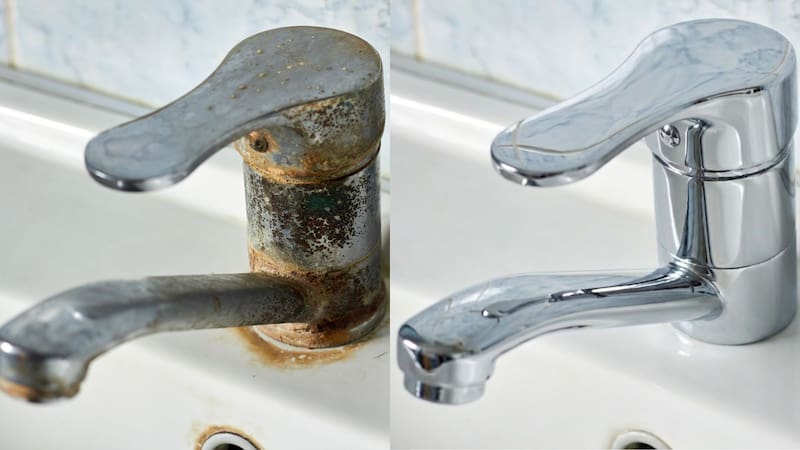
Then, apply the mixture to the faucet and its handles using a microfiber cloth. To reach the smaller areas and joints where dirt usually accumulates, a soft-bristled toothbrush can be used.
The recommendation is to let the paste act for approximately 10 minutes. Then gently scrub the surface, rinse with clean water, and dry with a clean, dry microfiber cloth. This last step helps prevent new water marks and allows the shine to return.
What happens with the tougher stains?
When the main problem is stains caused by hard water, the mineral deposits may be more resistant.
Several experts suggest boosting the cleaning by adding vinegar to the baking soda paste. The mixture creates bubbles and may help work on certain mineral stains.
In the case of the aerator, the small piece located at the faucet outlet, sediment can also build up. The recommendation is to remove it and leave it in a container with vinegar for 30 to 60 minutes. Then the baking soda paste can be applied and gently scrubbed before rinsing it and putting it back.

Not all faucets can be cleaned with baking soda
Although baking soda is useful for certain surfaces, that does not mean it can be applied indiscriminately to any faucet.
The source warns that its abrasive action can scratch or dull some more delicate finishes, such as matte black, plated or polished brass, and oiled bronze.
Care must also be taken with the natural stone surfaces around faucets. Both baking soda and vinegar can affect the protective finishes or sealants of materials such as granite.
For this reason, before using the method it is advisable to check what material and finish the faucet has and, if there is any doubt, consult the manufacturer’s instructions.
How often it is advisable to clean faucets
A weekly cleaning can help prevent soap residue, dirt, and mineral deposits from building up. In bathrooms that get heavy use, it may also be useful to wipe the surfaces daily with a clean cloth to prevent stains caused by water drops.
In addition, the aerator can be removed every few months to eliminate sediment and possible buildup that affect the flow of water.