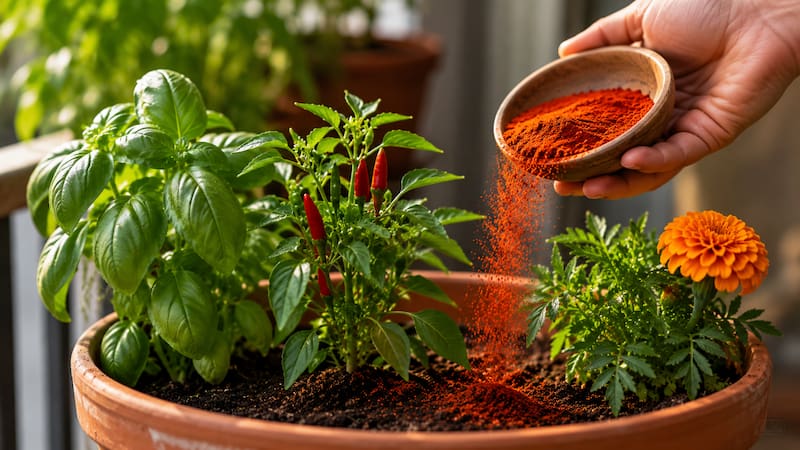

More and more gardeners in the United States are turning to cayenne pepper to protect their plants without using fertilizers or pesticides. This common seasoning acts as a natural, non-lethal repellent: it irritates the senses of certain animals and forces them to look for food elsewhere, without poisoning or killing them.
Its effectiveness depends on how and when it is applied, and on the type of pest you want to drive away. It works well in many cases, but it has specific limitations that are worth knowing before sprinkling it all over the flower bed.

Why does cayenne pepper work in the garden?
The key is capsaicin, the same compound that gives cayenne its spicy flavor. On contact, it creates a burning sensation that most mammals find very irritating, so they end up avoiding the treated plants instead of eating them.
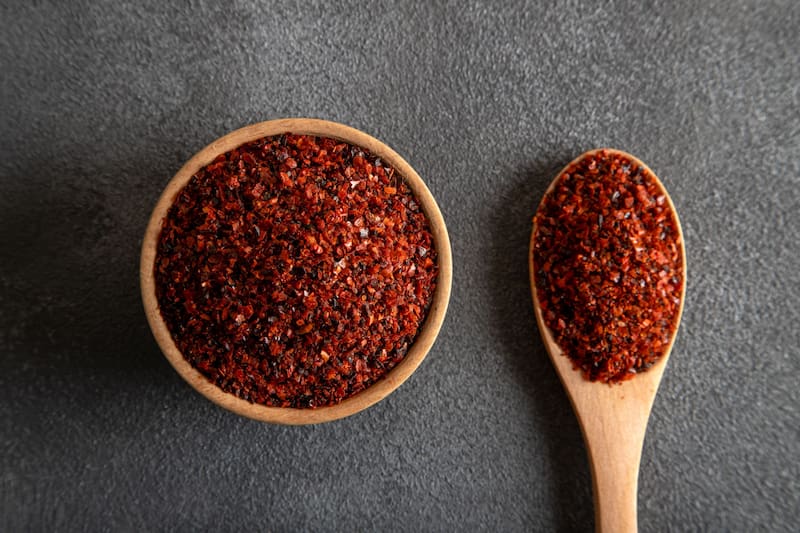
It is more effective against deer, rabbits, squirrels, and other rodents that damage crops. On the other hand, it does not work to scare away birds: they do not perceive capsaicin, and therefore, the heat does not affect them. It is also wise not to overdo it, since excessive use can harm beneficial wildlife and pets.

How is cayenne applied to repel pests?
There are several ways to use it in the garden, depending on the level of protection you want. Before starting, it is advisable to apply it preventively, even before seeing the first signs of damage. These are the most recommended options:
- Sprinkle the powder around the base of the plants.
- Spread it along the edges of the flower bed or garden.
- Prepare a diluted spray: 1 to 2 tablespoons of cayenne per gallon (about 3.8 liters) of water.
The effect is not permanent and wears off easily. Cayenne needs to be reapplied after rain, watering, or heavy dew, and refreshed every few days during pest season. Adding a surfactant helps it stick better to the leaves and extends its action.