En esta noticia
A team of astronomers confirmed the origin of an interstellar object that arrived from a remote point in the Milky Way, and a statistical model revealed a fact that surprised the scientific community.
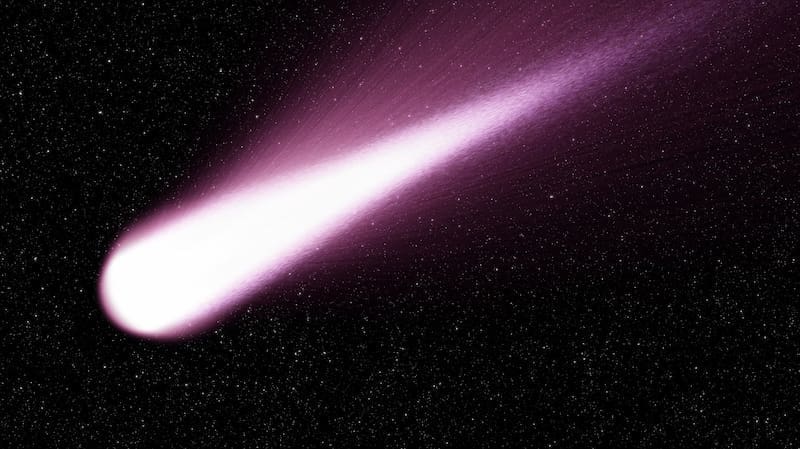
A telescope detected a comet from outside the Solar System, and subsequent calculations determined that it could be the oldest object ever observed by humanity, with an estimated age of 7 billion years. The finding was confirmed after weeks of monitoring by international observatories.
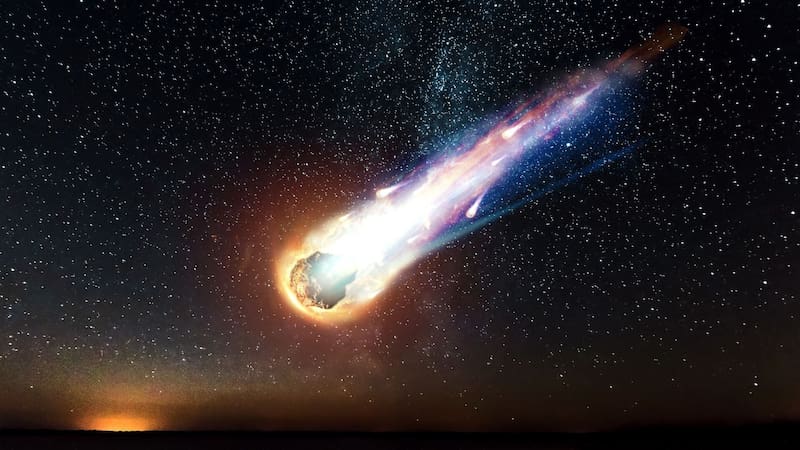
The comet was named 3I/ATLAS and is only the third confirmed interstellar object in history, after 1I/’Oumuamua in 2017 and 2I/Borisov in 2019. A study led by researchers at the University of Oxford, released by the Royal Astronomical Society, established that the body formed around a star much older than the Sun.

What is comet 3I/ATLAS and why is it so old?
The comet was detected on July 1, 2025 by the ATLAS survey telescope, located in Río Hurtado, Chile. Its hyperbolic trajectory immediately revealed that it did not belong to the Solar System, but was traveling through it from interstellar space.
Researcher Matthew Hopkins of the University of Oxford applied a statistical model developed together with astronomer Chris Lintott to estimate the comet’s origin. The result indicated a two-thirds probability that 3I/ATLAS is older than the Sun itself, with an age estimated at around 7 billion years.
Why scientists believe it comes from a very ancient region of the galaxy
The key was the comet’s angle of arrival. According to the published analysis, its trajectory links it to the so-called “thick disk” of the Milky Way, a region populated by stars between 10 and 12 billion years old.
- The thin disk, where the Sun is located, contains younger, metal-rich stars.
- The thick disk, on the other hand, hosts much older stars that orbit the galaxy at inclined angles.
- The two previous interstellar comets originated in the thin disk, so they had an age similar to that of the Sun.
What does this discovery mean for science, and what comes next?
The comet turned out to be rich in water ice, with a chemical composition that suggests it formed around a star different from those that gave rise to the Solar System. For astronomers, this is equivalent to having a frozen sample of what the galaxy’s chemistry was like billions of years ago.
3I/ATLAS reached its closest point to the Sun on October 29, 2025, and came closest to Earth on December 19, at a safe distance of 168 million miles. The comet is now moving away from the Solar System and will not pass near the Sun again, although the collected data will continue to be analyzed for years.
The new Vera C. Rubin Observatory, which is beginning operations in Chile, will make it possible to detect several interstellar objects per year, compared with one every several years using previous technology. This opens the door to comparing future visitors with 3I/ATLAS and better reconstructing the chemical history of the Milky Way.