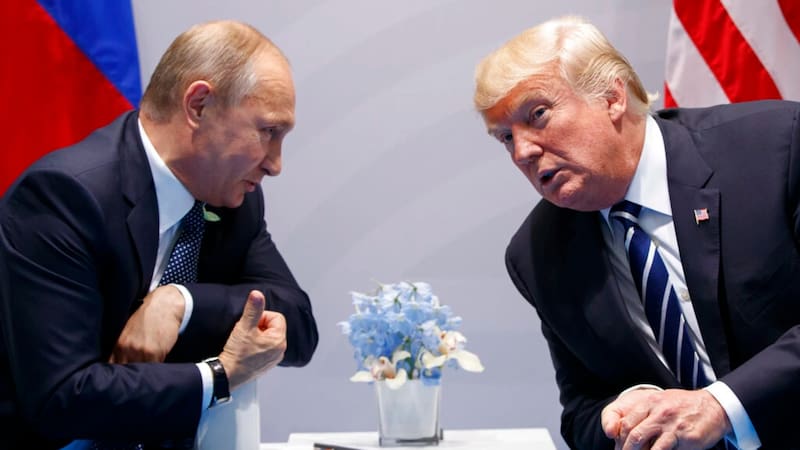

In just one week, U.S. President Donald Trump made several decisions in which he favored Russia, lifting sanctions on its energy sector, and punished Ukraine by restricting its use of the Starlink satellite network, with an eye on the crucial legislative elections on November 3.
Just when it seemed that Trump was willing to pressure Russian President Vladimir Putin, the drop in Republicans’ opinion polls led him once again to turn his back on Kiev and its European allies, just as he did as soon as he arrived at the White House.
As happens in every vote in the U.S. for the past ten years, Russia has slipped into the election campaign. This time Trump put the rise in fuel prices and the escalation of Russian bombings in Ukraine, where the UN reported a dramatic increase in the number of civilians killed in September, on the same scale before American voters.
More ammunition for the Russian army
First, Trump agreed on October 9 with Putin on the supply of diesel to the U.S. and the rest of the world, supposedly with the aim of stabilizing international markets and lowering the cost of fuel.
Aside from the harsh criticism from Kiev and the European Union, European politicians, U.S. lawmakers, and international experts have cast serious doubt on whether such a measure can have any positive effect, when the figures being discussed are, to begin with, a drop in the ocean of consumers’ needs in the U.S.
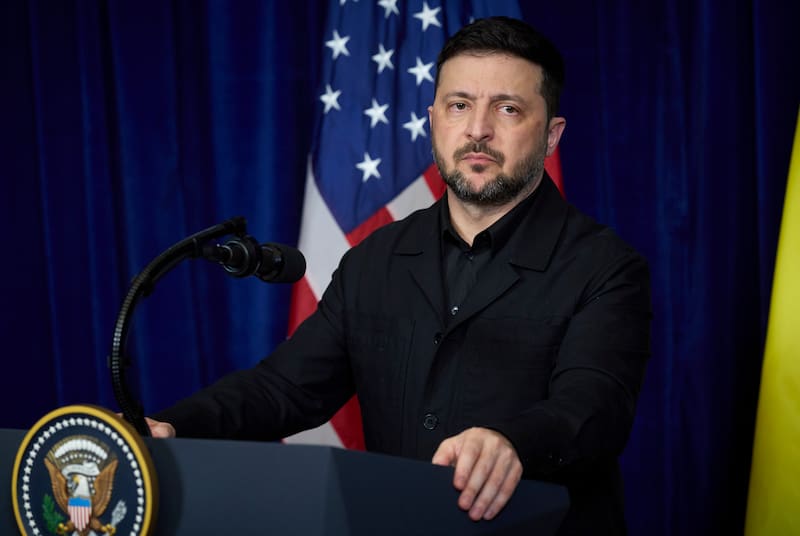
The conclusion drawn by the most skeptical is that Trump wants to use Ukrainian President Volodymyr Zelensky, whom he is demanding suspend attacks on Russian refineries, as a scapegoat for his own mistakes in Iran, the true trigger of the current energy crisis, according to what the Russian Foreign Ministry acknowledged this week.

“The key to the total normalization of that market is the urgent stabilization of the situation around the Persian Gulf and the settlement of the conflict in Iran. Let us hope that the conflict in Iran will soon be overcome (...) Statistics tell us that much of the diesel came from the Persian Gulf countries before the Strait of Hormuz was closed as a consequence of the U.S. and Israeli aggression against Iran,” said Georgy Borisenko, Russian deputy foreign minister.
Be that as it may, Moscow will not miss the chance to cash in just as the budget deficit is soaring as defense spending rises - $200 billion in 2027 -, arguing that the 3.5 million tons per month it expects to export by the end of the year will represent 10% of the international market.
Russian Deputy Prime Minister Alexandr Novak said last night that the U.S. Department of Energy has already handed Moscow the list of companies interested in Russian diesel.
“And now, right at this very moment, we are working on the commercial terms, the contracts for supplying fuel to the U.S.,” he explained to state television and added that Moscow will devote 50% of its diesel to exports now that it has repaired the refineries damaged by Ukrainian drones.
Fewer sanctions for the Kremlin
Now, Trump has decided to suspend -in defense of the national interest- the enforcement of the sanctions package he himself enacted a month ago, which contemplated tariffs of up to 100% against importers of Russian hydrocarbons, namely China and India.
The president, who made the decision three months after the author of the law, Republican Senator Lindsey Graham, died, had said he would use those sanctions to pressure Putin during the tripartite negotiations on Ukraine, whose resumption is farther away than ever.
The Kremlin’s envoy, Kirill Dmitriev, did not hesitate to call the decision on Saturday a “historic moment”. He added that, “instead of sanctions and confrontation,” the White House had chosen “mutually beneficial cooperation and joint responsibility for global stability.”

“Economic cooperation between Russia and the U.S. serves the interests of both countries, contributes to the stability of the world economy and creates the conditions for strengthening trust and achieving lasting peace,” he noted on Telegram.
In his view, the law could have practically and completely halted economic cooperation" between Moscow and Washington “and caused serious damage to the entire U.S. economy and international markets.”
If the agreement on Russian diesel is in force until April 2027, the exemptions to the Graham law will remain in place until Trump or the secretary of state says otherwise.