
En esta noticia
Brazil has started one of the most ambitious infrastructure projects in its history and in the entire region. It is a megaproject that promises to transform mobility, boost economic development and become a new icon of Latin American engineering.
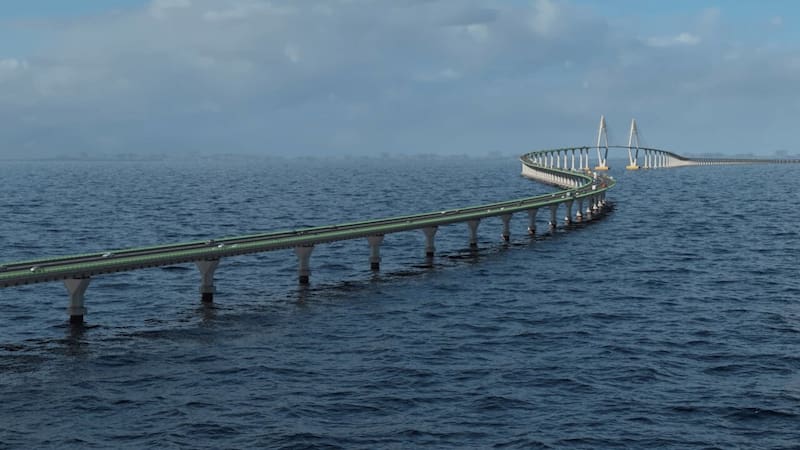
With an investment exceeding USD 2.200 million, the construction will link the city of Salvador with the island of Itaparica through a structure of 12.4 kilometers over Todos os Santos Bay. When it is finished, it will be the longest bridge over the sea in Latin America and one of the largest civil works on the continent.

They are building the longest maritime bridge in Latin America
The main structure will be 12.4 kilometers long, crossing Todos os Santos Bay in its entirety to permanently connect Salvador with the island of Itaparica.
With these dimensions, it will surpass the traditional Rio-Niteroi Bridge and become the longest bridge over a body of water in Latin America, becoming a benchmark for regional engineering.
Among its main features, the following stand out:
- 12.4 kilometers long
- Four lanes for vehicle traffic
- A central span of approximately 400 meters
- Up to 82 meters high in some sections to allow the passage of large vessels
- Design prepared to withstand the maritime conditions of Todos os Santos Bay
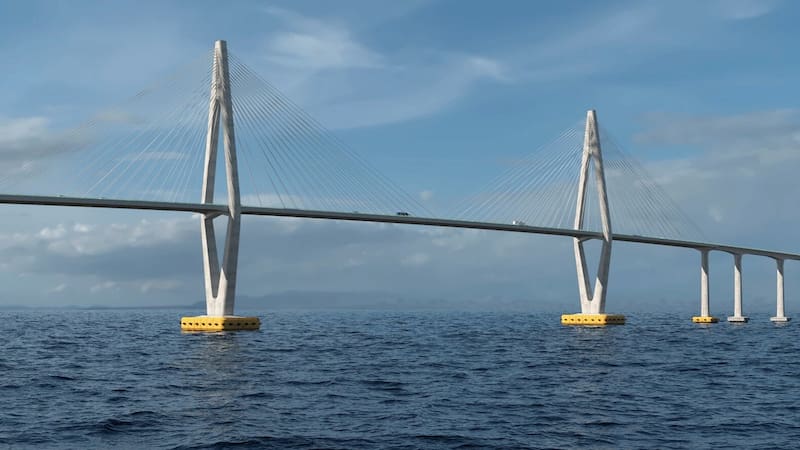
More than 2 billion dollars will be invested in the latest technology
The total cost of the project amounts to 11.600 million reais, equivalent to approximately 2.220 million dollars.
The work will be carried out through a public-private partnership involving Brazilian companies and a Chinese consortium made up of China Communications Construction Company (CCCC) and China Civil Engineering Construction Corporation (CCECC), along with contributions from the Brazilian federal government and the state of Bahia.

It will reduce travel times by up to two hours
The so-called Salvador-Itaparica Bridge will connect the capital of the state of Bahia with the island of Itaparica across Todos os Santos Bay.
Currently, travel between the two points depends mainly on ferries and boats, a system that can cause long waits, especially during tourist seasons and weekends.
With the new bridge, authorities estimate that the trip to the southern coast of Bahia could be reduced by approximately two hours, greatly improving regional connectivity.