
En esta noticia
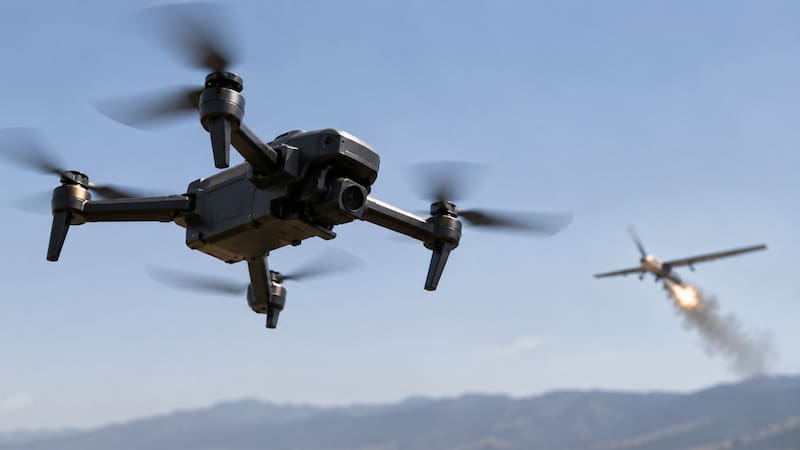
U.S. Army soldiers in Poland spent the first week of November testing the FD-1, a small drone built to chase down and destroy enemy drones. The goal is to give troops a cheaper way to fight off drone swarms without spending expensive missiles on them.
The test ran Nov. 2-6 at the Ustka Training Area on Poland’s Baltic coast, according to an Army report published Nov. 9. It was led by the 5th Battalion, 4th Air Defense Artillery Regiment, part of U.S. Army Europe and Africa, under the name Operation Audacious Fury.
The FD-1 is made by Mountain Horse Solutions, a subsidiary of Global Ordnance. The company announced Oct. 12 that the Army had ordered more of the interceptors, but neither side has disclosed the number of units or the contract’s value.
The Army has not released results from the exercise. That includes how many FD-1s were used, how many targets were hit and what each interception cost.


Why doesn’t the US Army want to fire pricey missiles at cheap drones?
It comes down to math. An attack drone that costs a few thousand dollars can force a defender to fire an interceptor that costs millions. Repeat that across hundreds of drones, and the attacker wins on cost even when every drone is shot down.
Then-Army Secretary Dan Driscoll pointed to that imbalance in May. He noted that Patriot missiles cost millions of dollars each, while a Shahed attack drone, the type Russia has fired at Ukraine in large waves, costs about $4,000.
Brent Ingraham, an assistant secretary of the Army, made the same point later that month at a Pentagon briefing. He said the service needs to stop relying on Patriot missiles to take down inexpensive drones.
The battalion behind the Poland test is working from that same logic. Its commander, Lt. Col. John Verwiel, said in the Army’s account that the unit wants affordable options against mass drone attacks so it can save its most advanced munitions for the threats that need them.
How do the US Army’s drones that hunt other drones work?
The FD-1 is a first-person-view drone. The operator flies it through a live camera feed, as if sitting in the cockpit, and steers it straight into an enemy drone to physically take it out.
During the test, soldiers also launched the FD-1 from an SGT Stout, a Stryker armored vehicle the Army uses for short-range air defense. That pairing suggests the drones are meant to add a cheaper layer to existing air defenses, not replace them.
Much of the exercise focused on people rather than hardware. The unit set out to build the playbook and certification steps that can turn a soldier with no drone experience into a qualified pilot. Staff Sgt. Felix Aguilar said his soldiers, who enlisted to run air defense systems, are now certified and flying drones out over the Baltic Sea.
Verwiel wants to standardize both the training and the way troops engage targets, then roll the method out widely. The soldiers who ran the test are expected to become the instructors who teach it to other units across U.S. Army Europe and Africa.