
En esta noticia
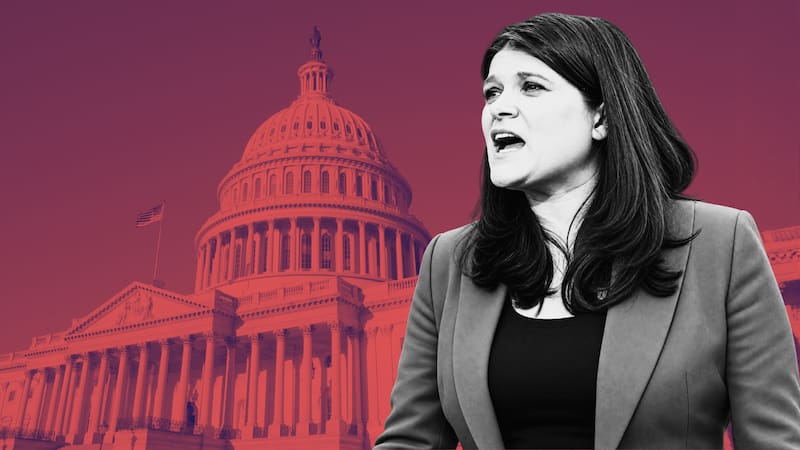
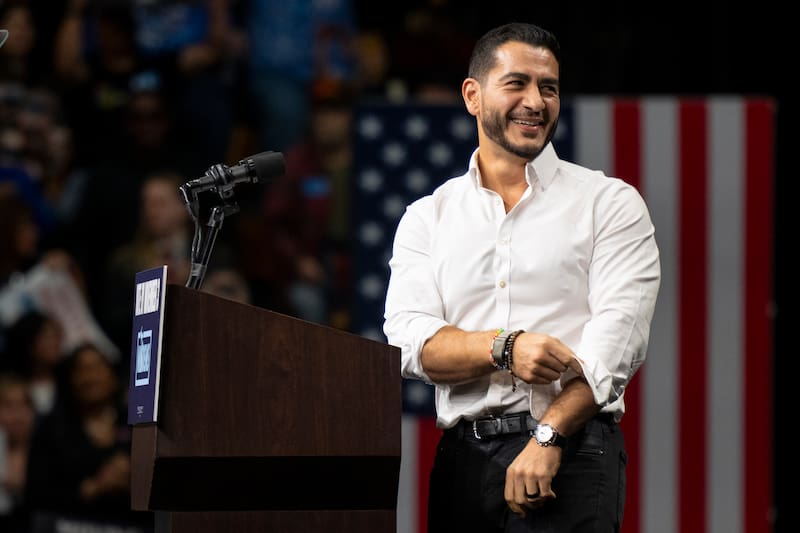
Rep. Haley Stevens, a Michigan Democrat, endorsed Republican Mike Rogers on Sunday in a Senate race that could decide control of the chamber, abandoning her party’s nominee, Abdul El-Sayed, two days before the election. El-Sayed leads Rogers 50.1% to 44.8% in the RealClearPolitics polling average.
Stevens lost the Democratic nomination to El-Sayed by less than a percentage point in the Aug. 4 primary and had endorsed him afterward. She announced the switch after attending a Sunday service with Rogers, a former congressman, at a Black church in Detroit. She then repeated it in a video on X.
Democratic leaders condemned the move within hours. Senate Minority Leader Chuck Schumer called it “a despicable betrayal.” Michigan Democratic Party Chair Curtis Hertel said Stevens is not a member of the state party and won’t be in the future.


Republicans celebrated. President Donald Trump called Stevens “very brave” at a rally in Iowa and said he’d like her to join the GOP. Most of her congressional staff quit after learning of the endorsement on social media.
Why did Haley Stevens endorse Republican Mike Rogers?
Stevens said El-Sayed’s campaign made it clear she wasn’t wanted. On Saturday, he told reporters he didn’t want her at a Sunday church event in Detroit, saying he wanted to avoid distractions.
Party leaders had set up that event to show unity. Rep. Debbie Dingell arranged for Rep. Jim Clyburn of South Carolina, one of the party’s most influential figures, to invite both of them. It would have been their first joint appearance since the primary.
I am endorsing Mike Rogers for the United States Senate today. https://t.co/pQgfSBuhOJ
— Haley Stevens (@HaleyforMI) November 1, 2026
The bigger divide is over support for Israel. El-Sayed is one of his party’s sharpest critics of Israel’s actions in Gaza and wants to end U.S. military aid to the country. Stevens has defended Israel. The American Israel Public Affairs Committee (AIPAC), a pro-Israel lobbying group, spent heavily against El-Sayed in the primary.
The breaking point was an ad from an outside group backing El-Sayed that blamed U.S. aid to Israel for high grocery prices. Stevens called it antisemitic and demanded he denounce it, and he did on Saturday. In her video, she also criticized his past appearances with Hasan Piker, a live-streamer whose remarks about jewish people have been widely condemned.
Could Haley Stevens’ endorsement cost Democrats the US Senate?
Democrats need a net gain of four seats Tuesday to win the Senate majority. Michigan’s seat is held by a retiring Democrat, so losing it would push that number to five.
That margin leaves little room for error. RealClearPolitics rates eight Senate races as toss-ups, Michigan among them, and its polling averages point to a Democratic gain of exactly four seats. That’s the bare minimum, with no cushion for losing a seat they already hold.
The state is a true swing state. It voted for Joe Biden in 2020 and Donald Trump in 2024, although no Republican has won this Senate seat since 1994.
Stevens did best in the primary among Black and Jewish Democrats, two groups where El-Sayed has had trouble. Rogers has predicted he could win as much as half of the Jewish vote.
For now, the numbers favor El-Sayed, though nearly all of those polls were done before the endorsement. The most recent survey, by The New York Times and Siena, was conducted Oct. 23 to Nov. 1 and showed him ahead 53% to 42%. Even so, RealClearPolitics still rates the race a toss-up.
His campaign said he raised $2.4 million on Sunday, his best fundraising day of the race.
Could Haley Stevens become Democrats’ scapegoat if they lose the Senate?
The party moved quickly to put the turmoil on her. Former House Speaker Nancy Pelosi, who had criticized El-Sayed’s views on Israel only days earlier, said Stevens had betrayed Michigan families and urged voters to back him.
Some of her friends turned on her too, and several pointed to her fiancé, Michigan lawyer Jason Turkish, an AIPAC donor who endorsed Rogers last week. Her mother, Maria Marcotte, told CNN that Stevens made the decision on her own.
Privately, though, Democratic officials told CNN there was blame to go around, notably for El-Sayed. One longtime official said he acted as if he’d won the primary in a landslide, when his margin was under a point.
Stevens says she was never invited to a single campaign event after the primary, and El-Sayed had little contact with her after their August race.
El-Sayed has dismissed the fight, telling reporters Sunday that none of it matters and that he is focused on the problems facing Michiganders. Tuesday’s results will show whether the defection moved any votes and, if El-Sayed falls short, how much of the blame lands on Stevens.