
En esta noticia
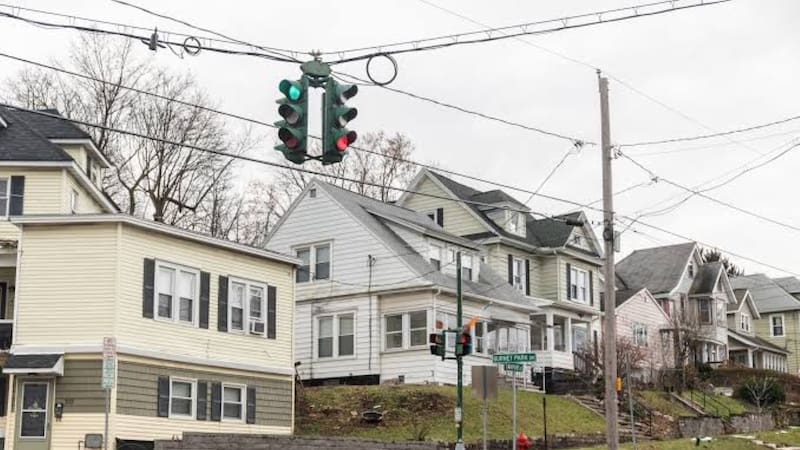
In Syracuse, New York, there is a traffic light that seems to be installed upside down: it has the green light on top and the red light on the bottom.
Although its layout is different from the usual one, it does not change traffic rules: drivers must go when the green light comes on and stop when the red appears.
Where the traffic light is with green on top and red on the bottom
The inverted traffic light is in the Tipperary Hill neighborhood, in the west side of Syracuse, in the state of New York. It is at the intersection of Tompkins Street, Milton Avenue and Burnet Park Drive, and it has become one of the most recognized symbols of the city’s Irish heritage.
The signal is known as Green Over Red and is often presented as one of the most unusual traffic lights in the U.S. Its arrangement breaks with the standard setup, in which the red light is on top and the green light is below.
Syracuse’s municipal rules acknowledge this quirk. In its Traffic Code, section 15-95 explicitly identifies the Tipperary Hill intersection and states that there the green light must be on top and the red light below.
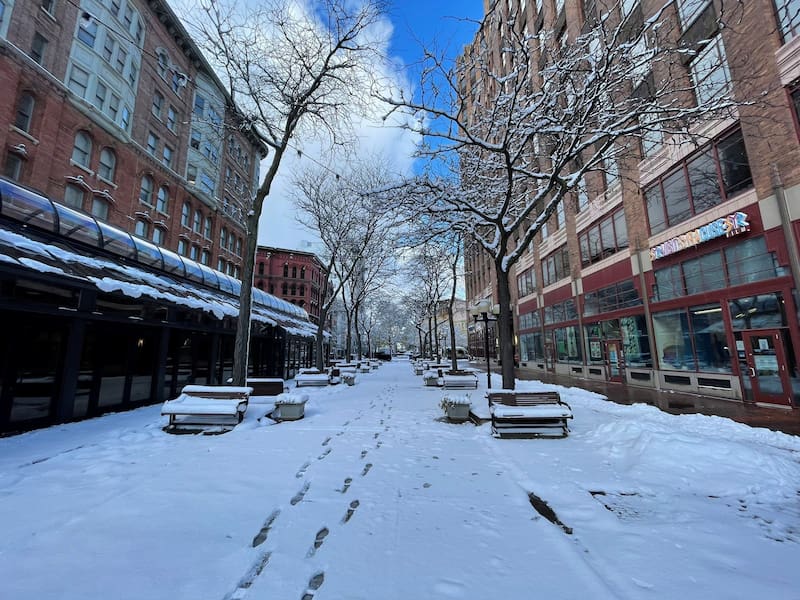
It is worth noting that the traffic light is also part of the neighborhood’s cultural identity. Tipperary Hill is named after County Tipperary in Ireland and retains an important historical connection to the immigrant families who settled in this part of Syracuse during the 19th century.
Why the traffic light has green on top
The explanation is tied to the history of Irish immigration in the U.S. and to the meaning neighborhood residents attached to the colors red and green.
During the 1820s, many Irish workers helped build the Erie Canal, a major waterway that connected Albany and Buffalo, New York. After the work was finished, some settled in Syracuse and formed communities.
Over the years, the area came to be identified with its Irish roots and took the name Tipperary Hill, in reference to the county where many of the families who came to live there were from.
The traffic light story began when authorities installed a standard traffic signal in the 1920s. According to neighborhood lore, young men of Irish descent saw the setup as a provocation: they associated red with Britain and green with Ireland.
So they began throwing stones at the red light to break it. Each time authorities replaced the device, the young men damaged it again. The people behind these episodes came to be known as the Stone Throwers.
In the end, after several acts of vandalism, authorities agreed to reverse the light arrangement so the green would be on top and the red below. The traffic light thus became a permanent expression of the community’s Irish pride.
How the inverted traffic light works
The inverted traffic light works exactly like any other traffic signal in the United States. The position of the lights does not change their meaning or create exceptions for drivers.