

Por Julián Kaper
En esta noticia
The finding of bones at an archaeological site in Japan surprised researchers: they are the remains of a prehistoric man with severe injuries caused by a shark. It represents the oldest recorded attack by one of these animals.

The case came to light in 2021, when specialists at the University of Oxford examined human remains preserved at Kyoto University. Among the bones of ancient hunter-gatherers, they found an adult man who lived more than 3,000 years ago and whose skeleton showed about 800 traumatic injuries.
How they discovered the shark attack that took place 3,000 years ago
While analyzing the remains, researchers Alyssa White and Rick Schulting were stunned by the extent of the wounds. The serrated marks were concentrated mainly on the arms, legs, chest, and abdomen. To determine their origin, the team compared different possibilities and ruled out injuries from fights between people or the work of other common predators and scavengers.
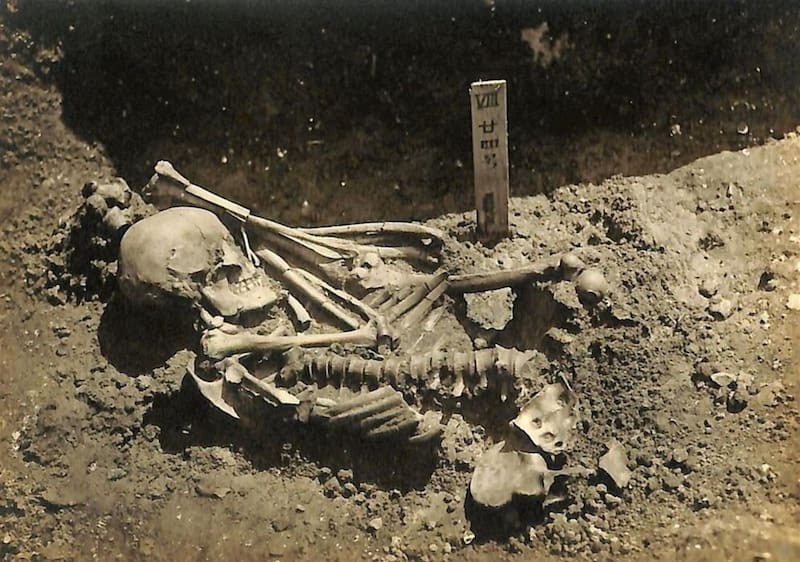
The study, published in Journal of Archaeological Science: Reports, combined archaeological tools with forensic analysis techniques to reconstruct what happened. The specialists dated the death to between 1370 and 1010 B.C. in the Seto Inland Sea region of Japan. The distribution of the wounds indicated that the man was likely still alive when he was attacked, strengthening the theory of a fatal encounter with a shark.
What is known about the victim and the possible shark responsible
Archaeologists believe the man may have been fishing with other people when the attack occurred. According to the reconstruction, his companions would have recovered the body shortly afterward and buried him. The excavation records showed that one hand and the right leg were missing, while the left had been placed over the body in an inverted position.
Based on the characteristics and distribution of the bites, experts suggested the culprit may have been a tiger shark or a great white shark, although the find did not allow them to identify the species with certainty.
Mark Hudson, a researcher at the Max Planck Institute and one of the study’s authors, highlighted the value of the discovery for understanding ancient Japan.