
En esta noticia
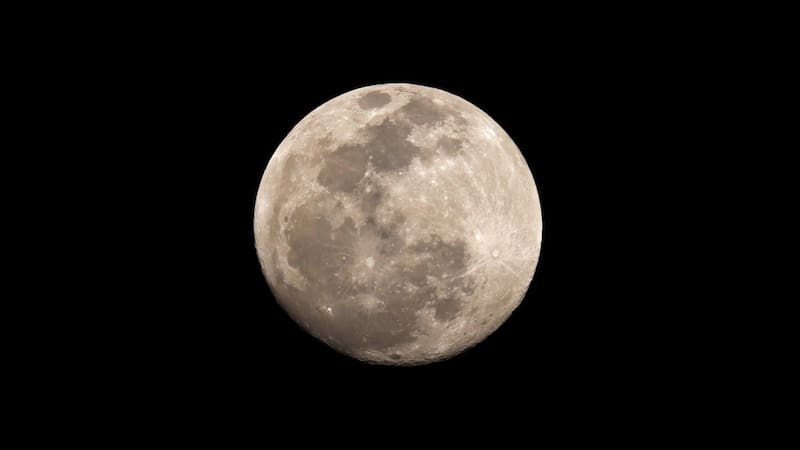
The Beaver Moon Supermoon 2026 will be one of the standout astronomical events of November and will be visible from Mexico if sky conditions allow.
The full Moon will reach its exact phase on Tuesday, Nov. 24, while the satellite will move even closer to Earth the following day, when it reaches perigee, its closest point of the month. This coincidence will make it appear slightly larger and brighter than many typical full moons.

When can the 2026 Beaver Moon Supermoon be seen in Mexico?
According to the National Institute of Astrophysics, Optics and Electronics (INAOE), November’s full moon will occur on Tuesday, Nov. 24, 2026, at 2:53 p.m. Mexico City time.
However, that time corresponds to the exact moment of the full phase, not necessarily when it will be visible in the sky. To see it, observers are advised to look for it during the night of Nov. 24, once it rises above the horizon.
INAOE also notes that the satellite will reach perigee on Wednesday, Nov. 25, at 9:01 p.m., when it will be about 359,312 kilometers from Earth. It is worth noting that the distance during the full phase will be about 360,746 kilometers.
Why is it called the Beaver Moon?
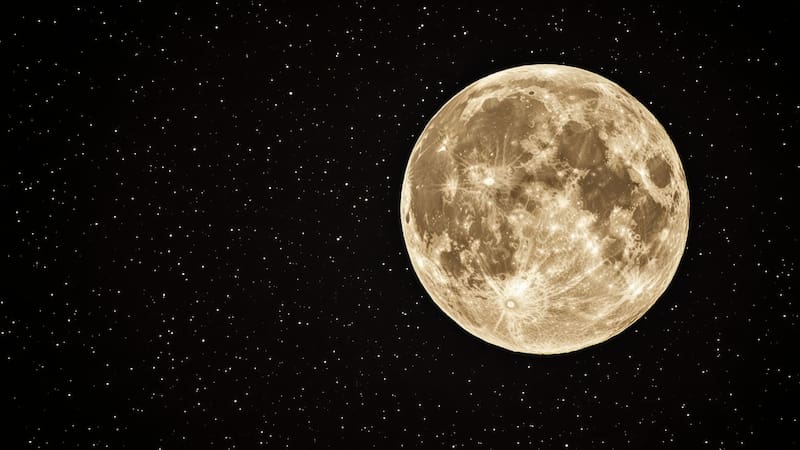
The name Beaver Moon comes from ancient North American traditions. According to The Old Farmer’s Almanac, November was the time of year when beavers began taking shelter in their lodges and stockpiling food to get through the winter.
Another historical explanation is tied to the hunting season for these animals, whose fur was used to make warm clothing. That is how the name became part of traditional full-moon calendars.
Why is it called a Supermoon?
NASA explains that a supermoon occurs when the full phase coincides with perigee, the point in the Moon’s orbit when the satellite is closest to Earth.
In November 2026, the full moon and perigee will be separated by just over a day. That closeness will give the satellite an apparent size of about 33.1 arcminutes during the full phase and 33.2 arcminutes when it reaches perigee, according to INAOE ephemerides.
The National Aeronautics and Space Administration says a supermoon can appear up to 14% larger and 30% brighter than a full moon that occurs when the satellite is at its farthest point from Earth.

An event that happens every year, but with a twist this time
The Beaver Moon is the traditional name for November’s full moon, so it occurs every year. What does not necessarily happen every November is for that full moon to coincide with perigee.
In that sense, NASA says supermoons usually occur three to four times a year. That is why the 2026 Beaver Moon Supermoon will be special for its closeness to Earth.
Tips for viewing the Beaver Moon Supermoon
To watch it from Mexico, telescopes or specialized equipment will not be necessary.
All you need is a spot with a clear view of the horizon and patience until the Moon appears in the night sky, weather permitting.