
Por Bárbara Pérsico
En esta noticia
A new species of crocodile was discovered after a team of scientists analyzed fossils found several decades ago in a famous Egyptian rock formation called the Mokattam Formation.
The previously unknown specimen was named Herugavialis cairensis by experts, who described the animal’s features in a paper published Oct. 7 in Royal Society Open Science.
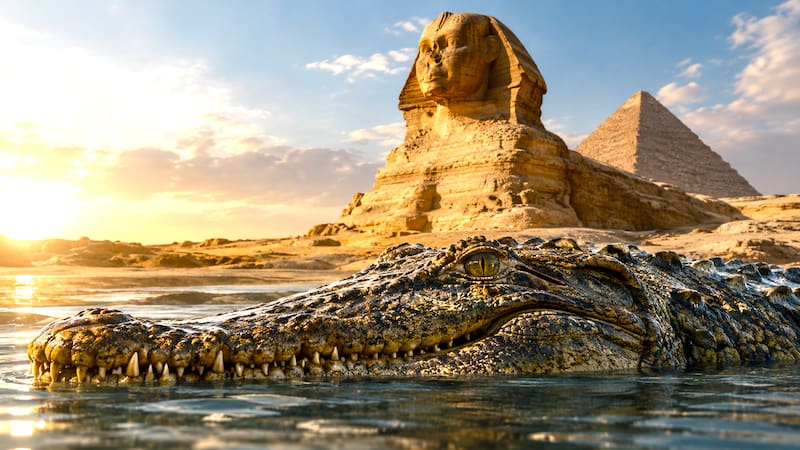
What is notable about the discovery, beyond the advance it represents for crocodile history, is its connection to the Great Sphinx of Giza, which led scientists to give it that name.
The crocodile that lived 45 million years ago in the Mediterranean: a newly discovered species
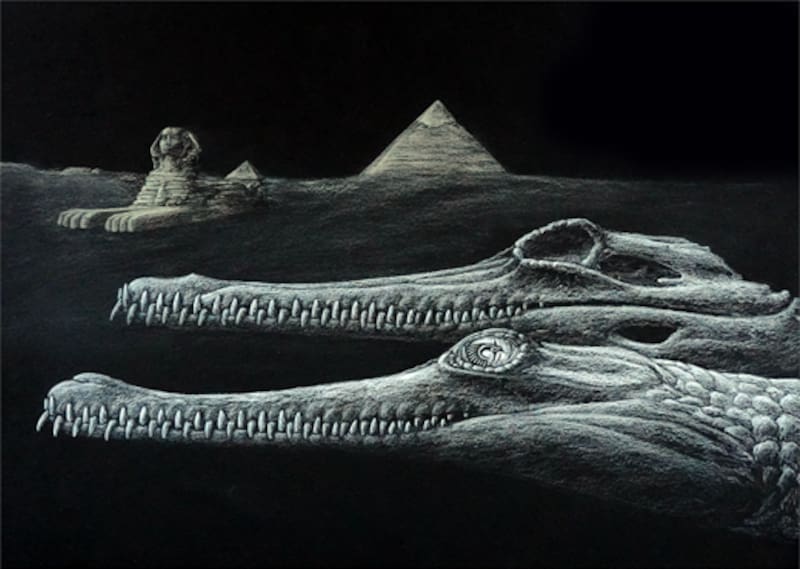
University College London (UCL), where study co-author Philip Mannion works, explains that the new species is a gavial, a specific group of crocodiles distinguished from others by their long, slender snouts.
According to the report, the team analyzed fossils that were originally discovered in the 1920s but were previously misidentified as part of the species Tomistoma schlegelii.
The mistake was spotted when they performed a CT scan to examine the inside of the skull, at which point they identified several features that did not match the classification it had been given and showed that it was a different species.
The animal is now extinct, and experts explain that there are only two gavial species in the world, both endangered.
This crocodile’s link to the mysteries of Ancient Egypt
The species was discovered in the same rock formation where the Great Sphinx of Giza was carved. The curiosity deepened further when researchers found that the skull was missing the tip of its snout, the same thing seen in the ancient Egyptian sculpture, which is missing its nose.
“Given this coincidence, we decided to name the new crocodile after the Egyptian god Heru, who may have been the inspiration for this monument,” Mannion said.
This discovery therefore provides more information about the creatures that inhabited our planet in the past, helping to fill in a new piece of the puzzle of terrestrial fauna.