
En esta noticia
When taking a domestic flight in the United States, airport authorities require all passengers to show a driver’s license, identification document, or passport, as well as any other personal credential considered valid under the security standards established by the Real ID law, which has been in effect federally since May of last year.
On the website of the Transportation Security Administration (TSA), the official list of acceptable documents for verifying passengers’ identities is available, as well as the expiration period during which they are valid for that purpose.

Identity documents: What validity periods are accepted by the authorities?
According to what is stipulated by the TSA, the presentation of passports, driver’s licenses and any acceptable document that appears on the official list is allowed, with a maximum expiration that does not exceed two years.
It is crucial to note that flexibility regarding the expiration of identification documents, such as the passport, applies only to domestic flights.
In cases where travel abroad is undertaken, it is essential to present a fully valid U.S. passport, which, in most cases, must have future validity of up to 6 months.
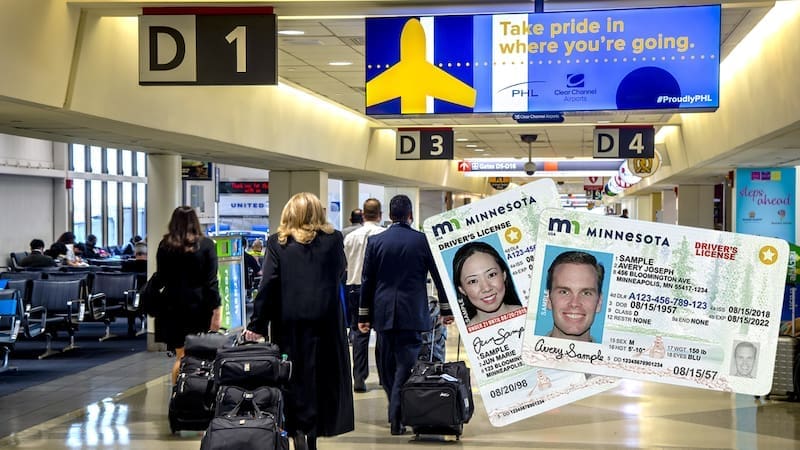
Documentation required for boarding the flight
The documents listed below have Real ID approval and may be presented in their valid state or with the aforementioned expiration:
- State-issued Enhanced Driver’s License
- U.S. Passport
- U.S. Passport Card
- DHS Trusted Traveler Card
- U.S. Department of Defense identification, including IDs issued to dependents
- Permanent Resident Card
- Border Crossing Card
- Acceptable photo ID issued by a federally recognized tribal nation/native tribe
- PIV HSPD-12 Card
- Passport issued by a foreign government
- Canadian provincial driver’s license or Indian and Northern Affairs Canada card
- Transportation Worker Identification Credential
- Employment Authorization Card issued by U.S. Citizenship and Immigration Services (I-766)
- U.S. Merchant Mariner Credential
- Veteran Health Identification Card (VHIC)
Likewise, digital identifications are accepted, such as Apple ID, Clear ID, or Google Pass ID.

Consequences of lacking these essential documents
Since February 1, those who do not have a valid boarding ID must pay 45 dollars as a penalty for opting for an alternative identity verification method, known as TSA ConfirmID.
This change in security policies aims to ensure a more efficient and safer process for all passengers.