
En esta noticia
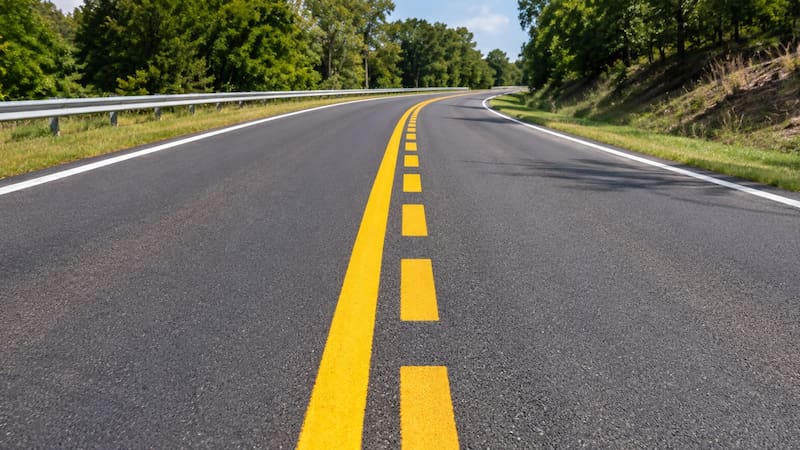
On U.S. roads, seeing two parallel yellow lines, one solid and one broken does not mean every driver has the same chance to pass.
The combination, known as a mixed yellow line, sets a rule that depends on which marking is closest to the vehicle. The difference matters because a maneuver allowed for motorists traveling in one direction may be prohibited for those coming the other way.

What it means to find a solid yellow line next to a broken one
This road marking combination is used to regulate passing on two-way roads, where vehicles travel in opposite directions. Unlike a double solid yellow line, which bars passing from both sides, the mixed line sets different rules for each direction of travel.
The main rule is simple: the line closest to your vehicle is the one you should look at to know whether you can pass. It is not enough to see that one of the two markings is broken; you must also check which side of the road you are driving on.
The Virginia Driver’s Manual explains that passing is allowed from the side of the broken line, but not from the side of the solid line.

When you can pass if the broken yellow line is on your side
If you are driving and the broken yellow line is the one closest to your lane, you may cross it to pass a vehicle ahead of you. However, that does not mean you can do it in any situation. If you cannot confirm that the road is clear, you must stay behind the vehicle.
In this regard, the Virginia Driver’s Manual says that you may pass on the left when the way is clear.
Before starting the maneuver, you must check that:
- No vehicles are approaching in the opposite lane.
- You have enough visibility to see the road.
- There is enough room to pass the other vehicle and return to your lane.
- There are no traffic signs prohibiting passing.
- The maneuver can be completed without forcing other drivers to slow down or swerve.
What happens if the solid yellow line is on your side
The situation changes when the solid yellow line is the one next to your lane. In that case, you cannot cross the marking to pass another vehicle or use the opposite lane to get around traffic.
Even if you do not see cars coming toward you, the ban still applies. The solid line means that part of the road is not open for passing from your direction of travel.