
Por Agustina Troiano
En esta noticia
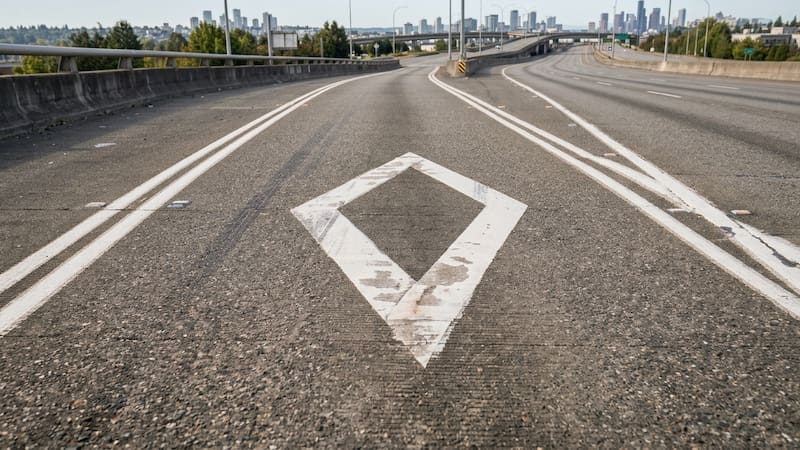
On some streets and highways, there is a mark painted directly on the pavement that can catch drivers’ attention. Although it looks like just another lane marking, it has a specific meaning and warns that the lane is subject to special traffic conditions.
The symbol is used to identify HOV (High-Occupancy Vehicle) lanes, a type of roadway setup on highways. The rules include occupancy requirements and penalties that drivers should know before using these lanes.


What the White Diamond Painted on the Pavement Means
The white diamond painted on certain lanes identifies a roadway reserved for high-occupancy vehicles, known as HOV lanes, designed to encourage carpooling and allow vehicles carrying several people to use a designated part of the road.
The Federal Highway Administration (FHWA) includes this symbol in the Manual on Uniform Traffic Control Devices (MUTCD), the document that sets national standards for traffic signs and pavement markings. The current edition is the 11th, with Revision 1 published in December 2025.

Who Can Use HOV Lanes
HOV lanes are intended primarily for vehicles carrying a minimum number of people. Section 166 of Title 23 of the U.S. Code says that, as a general rule, at least two occupants per vehicle may be required.
However, federal rules include exceptions, since 23 U.S.C. § 166(b)(2) says authorities must allow motorcycles and bicycles to use these lanes. The exception applies when the authority shows that their use poses a safety risk and the federal government accepts that justification.
What Fines Drivers Can Face for Using These Lanes Without Meeting the Requirements
Driving in an HOV lane without meeting the access conditions can be a traffic violation. However, penalties depend on each state’s laws, since the amount can vary depending on where the road is located and the number of prior violations.