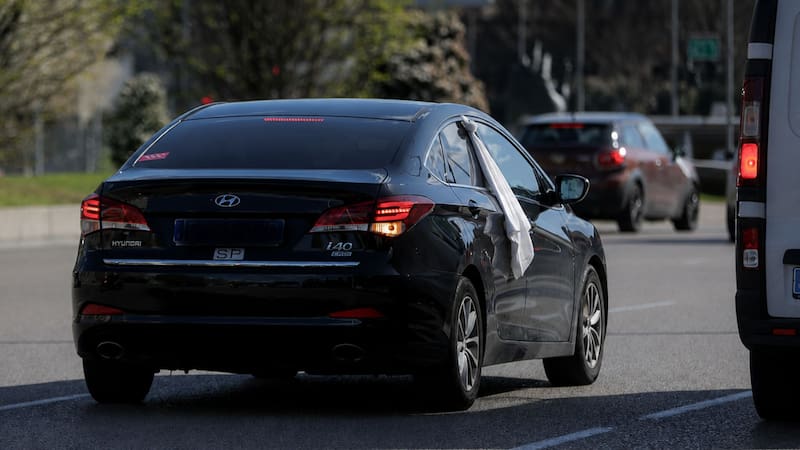
Seeing a car driving with a white handkerchief sticking out of one of its windows can raise doubts among drivers and pedestrians in Mexico.
Although there is no single interpretation of this gesture, the white handkerchief is a visual signal that is often used to communicate a message without needing to use words.
Its meaning can vary depending on the context, the country, or the situation in which it appears. In some cases, it is linked to emergencies, while in others it responds to traditions, demonstrations, or symbolic expressions.
What is the best-known interpretation of the white handkerchief?
Throughout history, the color white has been associated with truce and the absence of hostility. For this reason, a white handkerchief placed in a vehicle is usually interpreted as a sign of peace, conciliation, or an intention to avoid a confrontation.
The origin of this meaning dates back to ancient military conflicts, in which a white flag or cloth represented the willingness to negotiate or bring a confrontation to an end.
Over time, this symbol was no longer limited to warfare and began to be used in different contexts of everyday life as a way of expressing neutrality, respect, or goodwill.

When does the white handkerchief indicate an emergency?
In some regions, especially in areas far from urban centers, a white handkerchief placed in the window of a car can be used as a signal to request help.
This practice is usually used when the occupants are going through an urgent situation, such as a mechanical breakdown, a health problem, or any other unforeseen event that requires immediate assistance. In the absence of other means of communication, the white handkerchief serves to attract the attention of other drivers or authorities passing through the area.
A symbol present in celebrations and demonstrations
The use of the white handkerchief may also be linked to cultural traditions, community events, or peaceful demonstrations.
In some celebrations, this element represents values such as unity, respect, or purity. Likewise, it often appears in marches and social gatherings where participants seek to convey messages of solidarity, coexistence, or protest without resorting to violence.