

Por Agustina Troiano
En esta noticia
The Trump administration confirmed the end of the automatic extension of work permits for certain immigrants who need to renew their Employment Authorization Document (EAD) in the United States. The measure, which took effect on Oct. 30, 2025, was ratified through a final rule published by the Department of Homeland Security (DHS) on Oct. 14, 2026.
The change eliminates the option of receiving an automatic extension of up to 540 days while U.S. Citizenship and Immigration Services (USCIS) processes certain renewal applications. That means filing the appropriate form no longer guarantees that foreign workers can keep working if their card expires before they receive a new authorization.
Before this change, immigrants who need to keep their work authorization must pay close attention to the EAD renewal deadlines and requirements.


The U.S. has eliminated the automatic work permit extension: What changed under the new rule
The DHS eliminated the automatic extension of up to 540 days of work authorization for certain categories of immigrants seeking to renew their EAD. Before the change, eligible applicants could file the renewal form and continue working legally while USCIS processed the request. However, since Oct. 30, 2025, filing a new application no longer guarantees that automatic extension.
The decision was ratified on Oct. 14, 2026, when DHS published the final rule in the Federal Register. The document confirmed without changes the provision already in effect and established that renewal applications filed on or after Oct. 30, 2025, generally do not receive the previous automatic extension. According to the administration, the goal is to carry out new security checks and verify that each applicant still meets the requirements before granting another work authorization.
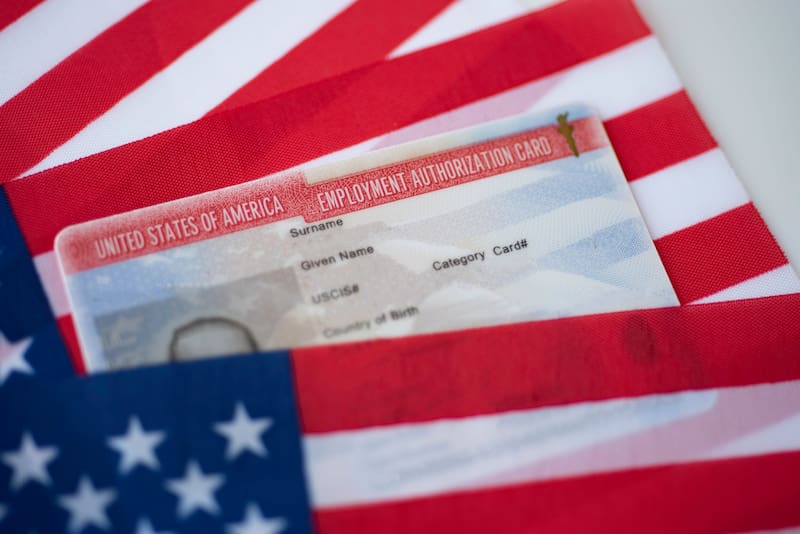
So if the permit expires while USCIS has not yet approved the renewal, the worker may have to stop working until receiving a new authorization, unless they have another legal basis to work.
What immigrants need to do to renew their EAD work permit in the United States
Immigrants who need to renew their work permit must file Form I-765 with USCIS and meet the requirements for their immigration category. The agency recommends planning the process ahead of time, submitting documentation that shows the applicant remains eligible and, generally, not filing the application more than 180 days before the document expires.
To complete the renewal, applicants should:
- Check the expiration date: Identify when the current EAD expires and verify the authorization category listed on the card.
- Complete Form I-765: Select the option for a renewal and provide the requested personal and immigration information.
- Attach the required documents: Include a copy of the previous work permit and any additional evidence required for the immigration category.
- Pay the filing fee: Pay the required amount or check whether you qualify for a fee waiver, when allowed.
- Submit the application and track its status: Keep USCIS’s receipt notice and follow the case status until a decision is issued.
It is worth noting that the USCIS receipt serves as proof that the application was filed, but it does not replace the work permit or automatically extend its validity. So if the card expires before the agency approves the renewal, those who depend on that EAD to work must stop working until they have a new authorization, unless they have another legal basis that allows them to continue. If USCIS later approves the filing, they may resume working during the validity period of the new document.
Which immigrants can still get an automatic work permit extension
The change does not apply retroactively to all renewals, since immigrants who properly filed their application before Oct. 30, 2025, and met the conditions under the previous rule may keep the automatic extension of up to 540 days, even if their card expired after that date. To qualify for this protection, they must have filed the renewal before the EAD expired and, among other requirements, requested it under the same work authorization category.
Certain extensions established by law or through specific notices published in the Federal Register also remain in effect. That is the case for some work authorizations tied to Temporary Protected Status (TPS), which may have their own extensions depending on the designation and the rules that apply to each country.