
En esta noticia
Mold can appear on almost any surface, such as walls, floors, fabrics, and even food. When this happens, it is normal to wonder whether the rest of the food can be saved by cutting out the visibly affected part.
Mold can cause allergic reactions and respiratory problems. In addition, some types of mold can produce mycotoxins, toxic substances that can cause illness, under certain conditions.
What is mold and why does it appear in food?
Mold is a type of microscopic fungus that grows on matter of plant or animal origin. It reproduces through spores that can be carried by air, water, or insects and settle on different foods.
According to the Food Safety and Inspection Service (FSIS) of the United States Department of Agriculture (USDA), its growth is favored by warm and humid environments, although some species can develop at refrigeration temperatures.
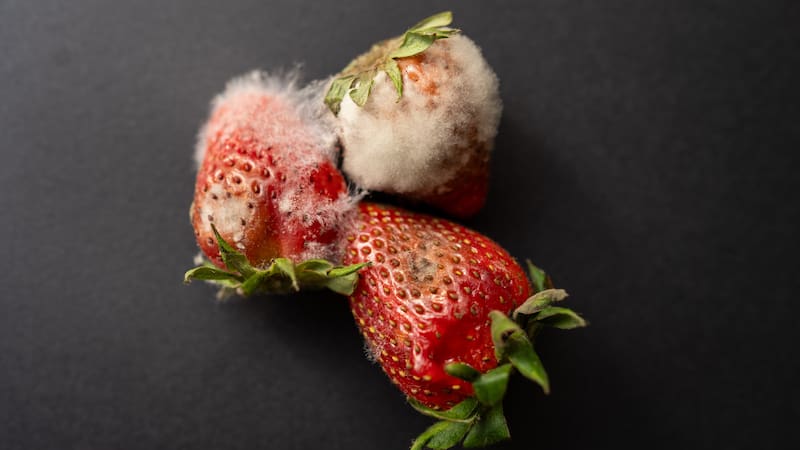
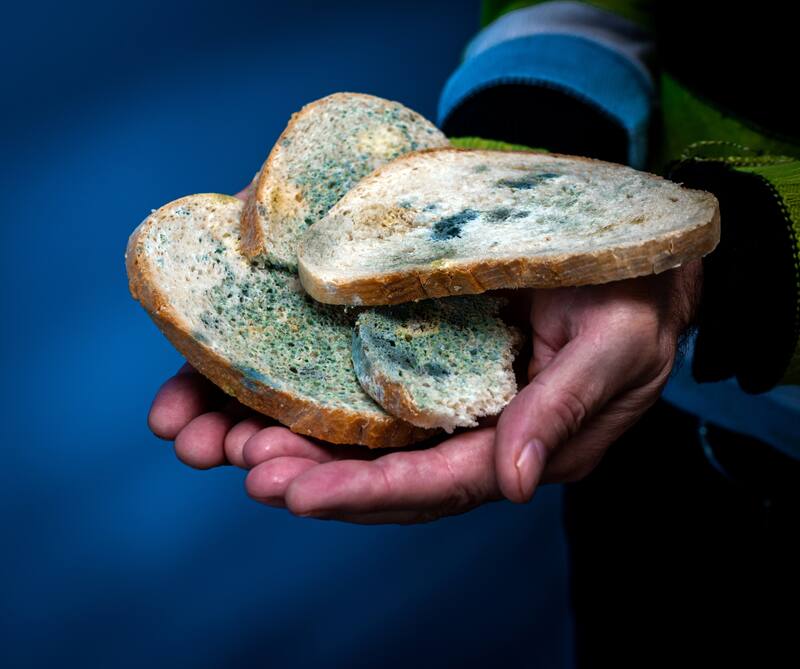
Mold is usually identified by white, green, gray, or black spots, which sometimes have a cotton-like texture. However, the visible part represents only a portion of the fungus, since its filaments can extend into the interior of the food.
Why is it not safe to cut out part of it and eat the part that seems unaffected?
The USDA warns that removing only the visible part of the mold does not guarantee that the rest of the food is safe to eat.
This is because fungi develop root-like filaments that can penetrate deeply into food, even when no changes are visible on the surface. Some types of mold can also produce toxic substances and coexist with invisible bacteria.
Recommendations vary according to the type of food:
- Baked goods: they should be discarded completely.
- Soft fruits and vegetables: they should be discarded completely.
- Soft cheeses, yogurts, and jams: it is not recommended to remove only the affected part and eat the rest due to the risk of internal contamination.
- Hard cheeses and firm vegetables: at least 2.5 centimeters around and below the affected area can be removed, without the knife touching the mold.
How dangerous is it?
The USDA warns that some types of mold can cause allergic reactions and respiratory problems, while certain species also produce mycotoxins that can cause illness.
In any case, there are some that are used in a controlled way in the production of cheeses such as Roquefort, Brie, and Camembert.
How can mold growth be minimized?
The USDA notes that hygiene and proper storage are essential to reduce mold growth because its spores can accumulate in refrigerators, utensils, and kitchen surfaces.
The main recommendations are:
- Clean the refrigerator periodically.
- Keep cleaning utensils clean.
- Protect food and store it properly.
- Refrigerate perishable products.
- Consume leftovers in time.
- Control the humidity in the home.
Precautions to keep in mind if mold is found
First, the USDA recommends not smelling moldy foods directly, as this could cause respiratory problems.
In addition, it is important to properly discard the affected products and then clean the place where they were stored. It is also recommended to check nearby foods, as they may have been contaminated.