
Por Mariana Adorno
En esta noticia
One of the best ways to save money and protect household finances is to understand the cost of what you use. When it comes to energy, each appliance needs a certain amount of electricity to operate, and that difference can have a major impact on bills if preventive steps are not taken.

According to Santa Clara, California’s municipal utility, Silicon Valley Power, knowing the energy cost of appliances can help determine which ones are best to keep on for the least amount of time and which to buy if you’re looking for better options.
How is consumption measured to control costs?
Electricity use is measured in kWh, and to calculate how much it costs to run an appliance, multiply the energy it uses by the price of each kWh.
According to the latest data from the Bureau of Labor Statistics (BLS) via FRED, the average electricity price in September 2026 was $0.196 per kWh in September 2026.
As a guide, you can use the following figures based on that average price:
- 100 kWh: $19.60.
- 200 kWh: $39.20.
- 300 kWh: $58.80.
- 400 kWh: $78.40.
- 500 kWh: $98.00
- 1,000 kWh: $196.00.
It is recommended that you check the figures on your bills so you can make calculations tailored to each case.
Which appliances use the most electricity in the United States?
Appliance use can be divided into three categories, depending on power and how long they run.
High-use appliances that run continuously
Even if they are not always the most powerful, these appliances can drive up electricity costs because they run for much of the day:
- Older refrigerator: About 72 kWh per month.
- Energy Star refrigerator: Between 28 and 63 kWh per month.
- Electric water heater: About 440 kWh per month.
- Heat pump water heater: Between 77 and 111.8 kWh per month.
High peak-power appliances
These are appliances that use electric heating elements to generate heat or high-powered motors. If used for long periods, they can cause significant increases in the electricity bill:
- Electric oven: 2.3 kWh per hour of use.
- Central air conditioner: 3 kWh per hour of use.
- Portable electric heater: 1.5 kWh per hour of use.
- Clothes dryer: 3.25 kWh per load.
- Dishwasher with a normal cycle: 1.59 kWh per load.
- Washing machine with hot water and warm rinse: 6.3 kWh per load.
Low-level standby use
Some devices keep using electricity even when they are not actively in use. That is the case for televisions, video game consoles, cable boxes, microwaves with clocks, and plugged-in cell phone chargers.
This is known as phantom load or standby power, and although it is usually small, it can add up over time.
Examples include:
- Computer in sleep mode: Between 0.001 and 0.006 kWh per hour.
- Cable box: About 11.58 kWh per month.
- Roku: About 2.18 kWh per month.
What are Silicon Valley Power’s tips for saving energy?
The utility offers several recommendations to cut electricity use in the home and avoid unnecessary bills.
The main tips include:
- Adjust the thermostat.
- Take advantage of natural light.
- Use appliances efficiently.
- Reduce hot water use.
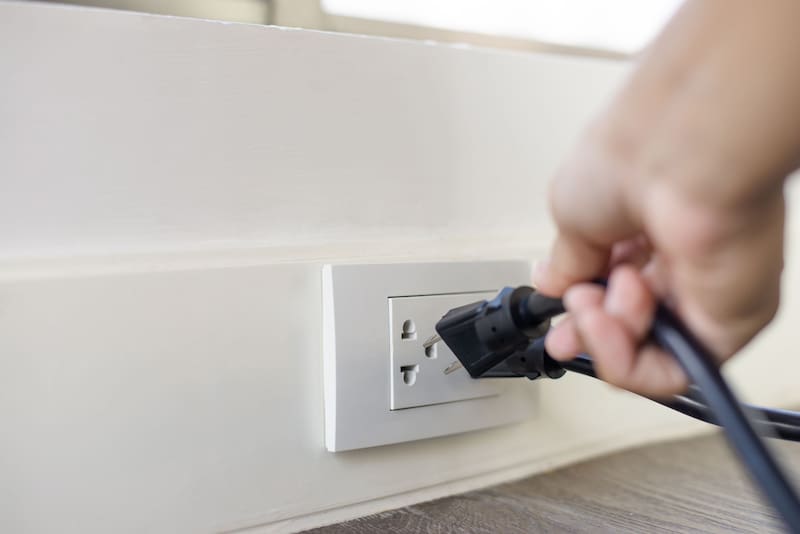
- Avoid phantom load.
- Maintain heating and cooling systems.
- Choose efficient appliances (with inverter technology).
- Use LED lighting.
- Turn off unnecessary devices.