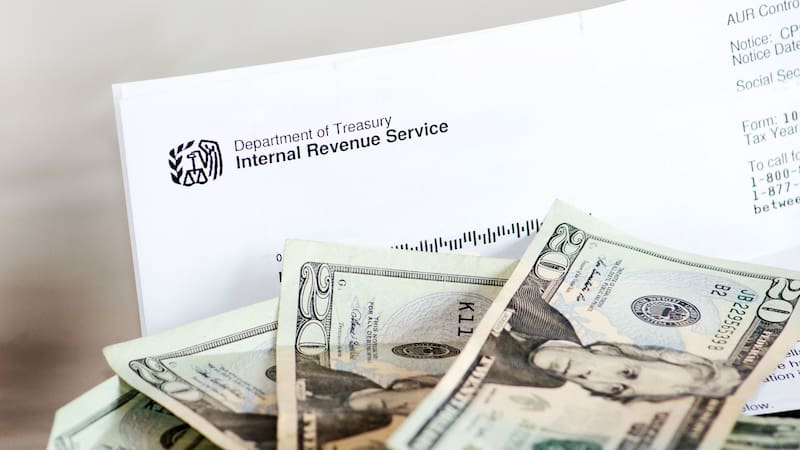

Payment plans from the Internal Revenue Service (IRS) are available to taxpayers with debts who cannot pay the full amount in a single payment and need time to pay it off.
In that sense, there are broadly two types of strategies depending on each taxpayer’s particular situation: short-term plans or long-term plans, each with its own requirements.

What are Short-term payment plans?
This alternative is intended for those who cannot pay their debt at the moment but believe they will do so within the next 180 days. Requesting it is free, although the interest and penalties on the obligation will continue to accrue until it is fully paid.
This plan can be requested from the online account or by contacting the tax agency at the number shown on the official debt notice.

How do long-term payment plans work
This option is offered to those who need several months to be able to pay their debt, and the IRS evaluates which type of plan is appropriate according to each situation.
“The IRS charges an initial fee when you set up a payment plan; however, if you are a low-income taxpayer, this initial fee is reduced and may possibly be waived or reimbursed when certain conditions apply,” it states.
They can be requested online, by completing and mailing Form 9465 (SP), or by calling the IRS.
IRS Simple Payment Plan: requirements to qualify
According to what the tax agency reports, “more than 90% of individual taxpayers with an outstanding balance qualify for a Simple Payment Plan”.
The requirements are:
- Not owe more than USD 50,000 in assessed taxes, penalties, and interest
- Be current with the filing of tax returns
Although it is stated that in general taxpayers have up to 10 years to pay their balance, as time passes, interest and penalties increase, so it is advised to pay off the debt as soon as possible.
As for how to pay, the agency recommends setting up monthly automatic payments from a bank account, which have a reduced fee, but there is also the option to schedule and modify payments through the online account or pay through Direct Pay.
IRS guaranteed installment agreement: requirements to qualify
The IRS specifies that this option is offered to those who owe USD 10,000 or less, excluding interest, and who meet the following conditions:
- Have timely filed all tax returns and paid any taxes owed during the last 5 years.
- Not having established an installment payment plan to pay taxes in the last 5 years.
- Agree to pay the full amount within 3 years and comply with tax obligations and laws while the plan remains in effect
- It was not possible to pay the obligation in full by the due date.
IRS partial payment plan: what it is
When more time than established is needed to pay -generally more than 10 years-, the IRS may request financial information to establish a plan that will be reviewed every two years and thus dynamically reassess how much must be paid per month.
Those who want to consult more information about IRS installment payments can do so by clicking here.
The advice is always to seek guidance from the agency to determine that you are requesting the plan that best fits each situation.
In addition, the agency emphasizes the importance of not losing contact when you have a tax debt, since ignoring official notices can lead to collection actions.