

Por Antonella Baldi
The Mexican Air Force carried out drills with T-6C+ aircraft and used a King Air aircraft as a simulated target during Amalgam Eagle 2026, a bilateral exercise in air defense with the United States. The flights took place between September and October 2026.
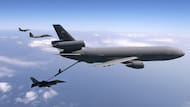
The drill simulated the detection, tracking, interception, and handoff of an aircraft considered a “track of interest.” The scenario tested communication and information sharing between the two countries’ air forces.
What was the interception scenario like?
An American aircraft’s entry into Mexican territory was simulated, in coordination with the U.S. Northern Command, whose authorities reported the aircraft’s altitude, speed and distance. A Cessna Citation 501 Eagle II surveillance aircraft detected the King Air, and the T-6C+ tracked it toward Hermosillo.
About 30 nautical miles from that city, the aircraft changed course toward San Luis Rio Colorado. As it approached the Colorado River, and under the bilateral memorandum of understanding, the track was handed off. F-16C aircraft from the 138th Fighter Wing guided it until it landed in Twenty Nine Palms, California, while the T-6C+ returned to Mexico.
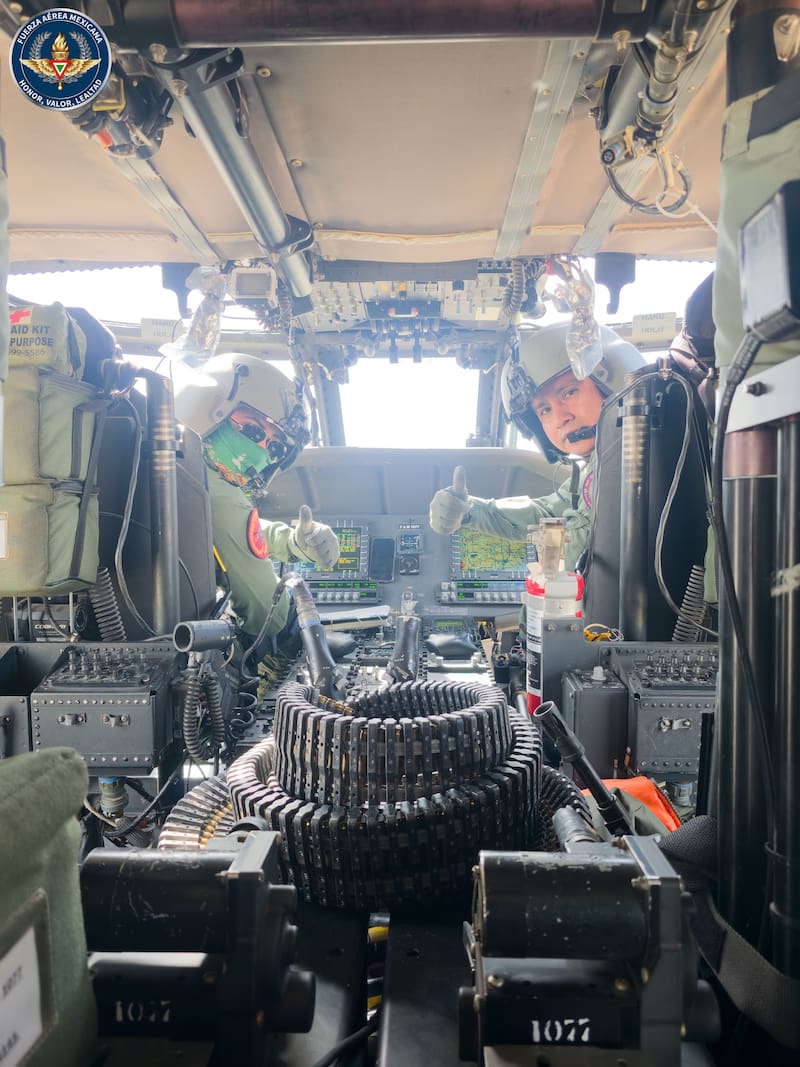
Who took part in Amalgam Eagle 2026?
This annual exercise seeks to improve operational compatibility between U.S. Northern Command, AFNORTH, NORAD and Mexico’s Defense Ministry. There was coordination with military air operations centers and with civilian agencies in both countries, including:
- the U.S. Federal Aviation Administration (FAA);
- U.S. Customs and Border Protection (CBP);
- Mexico’s Air Space Navigation Services (SENEAM).
Fifty-two Mexican personnel took part, and 13 crewed aircraft and two remotely piloted aircraft were used. Lt. Gen. Bradford Everman, commander of NORAD’s U.S. Continental Region, said, “Amalgam Eagle is a fundamental pillar of our security cooperation efforts in the theater.” The exercise also included a search-and-rescue operation.