
En esta noticia
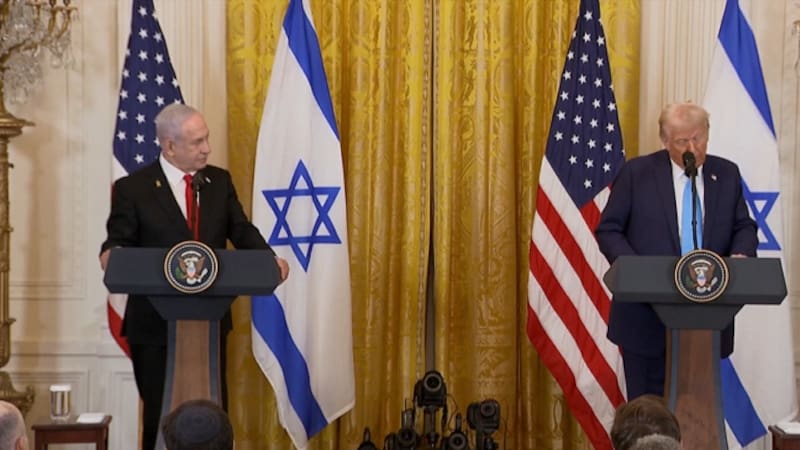
US President Donald Trump claimed on Tuesday that he has reached an agreement with Israeli Prime Minister Benjamin Netanyahu to stop providing $4 billion in annual military funding to Israel after the end of this year.
During an interview on Fox News’ Fox & Friends, the US leader asserted that the decision was made months ago, arguing that Israel no longer requires Washington’s direct financial assistance and pointing out that left-wing politicians were using the payments to criticize Republicans.
“Now, as far as paying Israel, Bibi Netanyahu and I have made a deal that we give Israel $4 billion a year, and we made a deal months ago that we’re stopping,” Trump told Fox News. “We’ve already agreed that by the end of this year we won’t be paying Israel. Now we’ll help Israel if they need it,” he added.
The Legal Framework and Congressional Limits
It remains unclear exactly which funding Trump was referring to and how a unilateral or bilateral verbal agreement would bypass current US law. A Memorandum of Understanding (MOU) that guarantees $3.8 billion in annual US military aid to Israel is approaching its expiration date in 2028, and conversations have been underway regarding how Washington’s assistance would evolve beyond that date. Any modification or cancellation of foreign military financing requires approval from the US Congress.
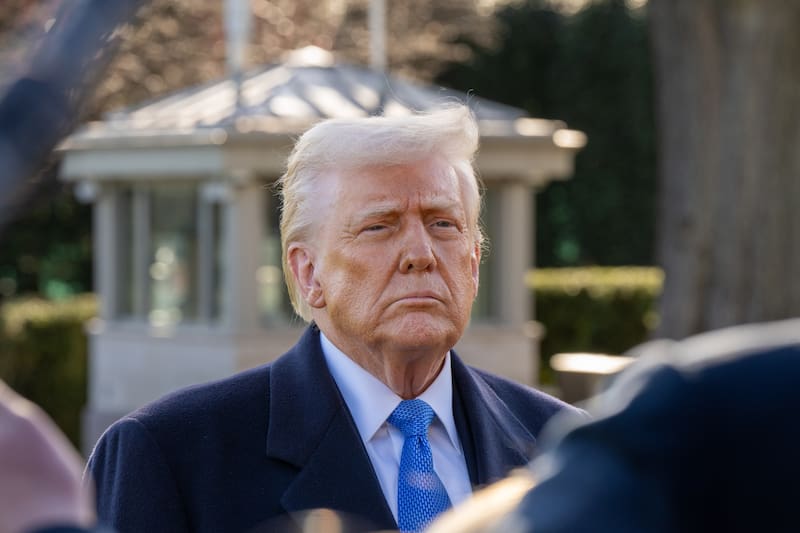
Trump justified the move by pointing to the domestic political debate. “The left uses the $4 billion payment that everybody knows about, well it’s no secret, as a signal of unfairness, and we can’t allow that to happen,” Trump said. He also emphasized that Israel would still be able to purchase American weaponry: “They can buy whatever they want. They can buy whatever they want. So can Europe. We make the greatest weapons in the world.”
Changing Public Opinion and Israel’s Stance
Netanyahu himself has previously signaled a desire to reduce his country’s reliance on American defense funding. In a May interview with CBS, the Israeli Prime Minister said he hoped to wean Israel off US military support within a decade. In a June letter to a US congressman, he wrote that the time had come for Israel “to move from aid recipient to partner.”
The President’s initiative comes amid shifting US public opinion regarding the conflict in the Middle East. US public support for Israel has fallen since the Gaza war began in 2023, particularly among Democrats. A June Quinnipiac University poll found that 48% of voters and 66% of Democrats believe the United States is too supportive of Israel, up from 16% and 20% when the question was first asked in 2017. Support among Democratic voters has plummeted, and even moderate lawmakers are increasingly willing to challenge decades of US support for Israel.
What happens to the war now?
A sudden termination of US military funding could have immediate repercussions for Israel’s multi-front conflicts in Gaza and Lebanon. Since the war began in 2023, Washington has provided billions of dollars in emergency military aid, intelligence support, and tens of thousands of precision-guided munitions, bunker-buster bombs, and artillery shells that have been vital for sustaining Israel’s high-intensity combat operations against Hamas and Hezbollah.
Military analysts note that while Israel possesses a robust domestic defense industry and its economy is theoretically capable of absorbing the financial blow, US aid still constitutes roughly 15% of the Israeli defense budget. An abrupt cutoff would force immediate budgetary reallocations, potentially slowing down long-term force buildup and straining the rapid procurement of essential interceptors for the Iron Dome and David’s Sling air defense systems, which shield Israeli cities from daily rocket barrages.
Beyond the financial impact, the announcement sends a powerful geopolitical signal. A perceived daylight between the United States and Israel could embolden regional adversaries, potentially altering the strategic calculations of Iran and its proxies, who may interpret the cessation of direct military grants as a crack in the US-Israeli alliance and an opportunity to escalate their offensives without fear of direct American intervention.
Conversely, a shift from an “aid recipient” to a purely transactional “purchaser” relationship might provide the Israeli government with greater operational independence. By funding its own defense procurement entirely, Jerusalem could deflect mounting international and American pressure to modify its rules of engagement, scale back its offensives in Gaza and Lebanon, or accept ceasefire terms dictated by Washington.