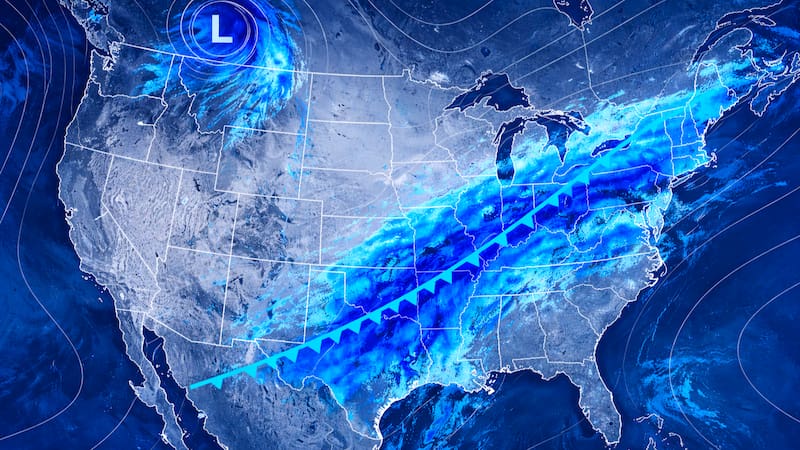
Winter is still months away, but the National Oceanic and Atmospheric Administration (NOAA) has already released its outlook for December, January, and February. The forecast shows a clear trend toward warmer-than-normal temperatures across most of the United States.
However, not every region has the same outlook. The Southwest stands out as the area with the greatest possibility of seeing colder-than-normal conditions, although NOAA currently gives it equal chances rather than a specific cold forecast.

Most US states could see a warmer winter
NOAA’s map shows above-normal temperatures favored across nearly the entire country during the meteorological winter. The strongest warm signal extends across much of the northern United States, while the Deep South and Florida are closer to normal.
The Southwest is the main wildcard
The Southwest is the only major region without a clear temperature preference on NOAA’s map. “Equal chances” means the probability of above-, near- or below-normal temperatures is not sufficiently different to favor one category.
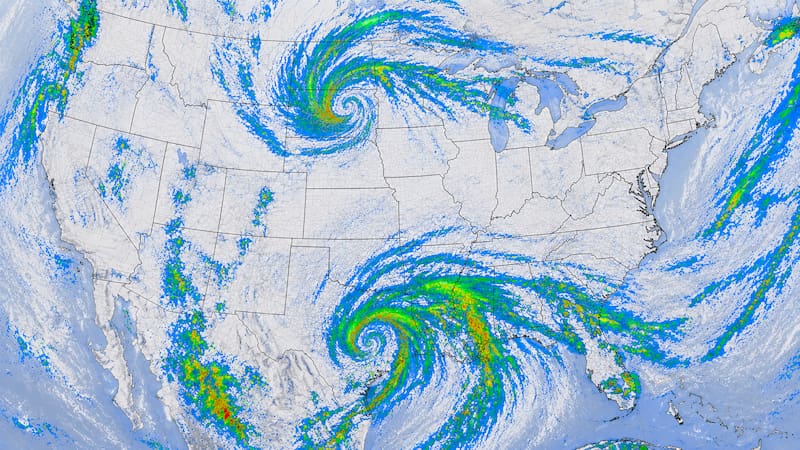
That makes the region the main area to watch for potentially colder weather. Still, NOAA does not currently forecast below-normal temperatures as the most likely outcome there.
When does meteorological winter begin?
The NOAA outlook covers December through February, the three months used to define meteorological winter. That season officially begins on December 1, several weeks before the astronomical winter solstice on December 21, 2026.