En esta noticia
One of the most ambitious infrastructure projects in South America is taking shape with the arrival of a fleet of new trains manufactured in China, whose impact will be felt directly on the streets of Colombia. This is Bogotá, which is getting closer and closer to becoming one of the cities with the largest urban rail infrastructure in the entire region.
The Bogotá Metro Line 1 has already reached an overall progress of 77.53%, and, according to the Bogotá Metro Company, new electric trains will arrive in the city this month. With this, Bogotá will have 13 of the 30 units that will be part of the system once it enters commercial operation.
With the gradual arrival of trains manufactured by the Chinese company CRRC Corporation Limited and the accelerated progress of the works, the Colombian capital aims to consolidate the longest subway line in all of Latin America, a project that will transform the mobility of millions of people.
What will the new electric trains that China will send for the Bogotá Metro be like?
The megaproject, driven with the participation of Chinese companies, includes an elevated network of nearly 24 kilometers that will connect the southwestern part of the city with 72nd Street. In addition, there is a proposal to extend the route to 100th Street with three additional stations, which would turn the Bogotá system into one of the most extensive urban rail corridors in Latin America.
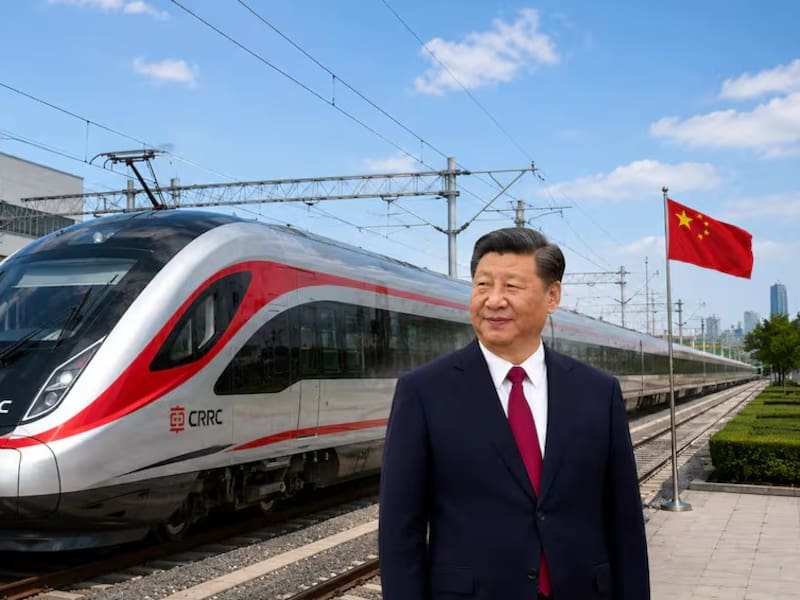
The trains that will arrive from China were manufactured by CRRC Corporation Limited, considered one of the world’s largest rolling stock companies. Each unit will have six cars, fully electric operation, and automatic driving, with no need for a driver on board.
The vehicles have intelligent CBTC signaling systems, automated braking, and permanent monitoring from the Operations Control Center. In addition, each train will operate with four electric motors that will allow for quieter, faster, and more efficient trips.
Bogotá authorities also confirmed that the first tests on the viaduct will begin in June 2026. The initial trials will be carried out without passengers on a stretch of about six kilometers between the Bosa maintenance yard and station number 4, located in Kennedy.
Why could Bogotá have the longest subway line in Latin America?
The project for Line 1 not only includes the original corridor between Bosa and 72nd Street. The construction company has currently presented a proposal to extend the route to 100th Street, adding three new stations and 3.25 additional kilometers.
If that expansion goes ahead, Bogotá would have a much longer and more strategic rail corridor, connecting key areas of the city with other mobility projects such as Regiotram del Norte and the main TransMilenio corridor on 68th Avenue.
The future 92nd Street station, for example, would allow integration with the regional rail system, while the 100th Street station would facilitate direct connections with new mass transit routes.

That growth would make the Bogotá Metro one of the most important urban infrastructure projects in Latin America and would consolidate the city as a new rail reference point in the region.
What progress has the construction of the Bogotá Metro made so far?
The mayor of Bogotá, Carlos Fernando Galán, said that 2026 has been one of the years with the greatest visible progress since construction began.
Currently, the viaduct already exceeds 13 kilometers built, and work is advancing simultaneously along strategic corridors such as Villavicencio Avenue, Primero de Mayo, NQS, South 8th Street, Caracas Avenue, and 1st Street.
In addition, the 16 planned stations continue under development, and more than 15,000 workers take part daily in different construction fronts.
One of the points authorities highlight most is integration with other transportation systems. According to the Bogotá Metro Company, 10 of the 16 stations will have direct connection with TransMilenio to make it easier for users to get around.

Where are the trains for Bogotá Metro Line 1 manufactured?
The trains for Line 1 are manufactured in the Chinese city of Changchun. They are then moved to the port of Qingdao to begin their sea journey to Colombia.
Once they arrive at the port of Cartagena, the units are transported to the Bosa maintenance yard, where new technical tests are carried out before entering service.
Before being sent to Colombia, the trains undergo static and dynamic tests, as well as runs of up to 2,500 kilometers in China to verify their operation in both manual and automatic modes.
The authorities’ goal is for the first trains to begin running in visible tests for the public during 2026, while Bogotá speeds toward the final stretch of one of the most anticipated projects in the country’s history.