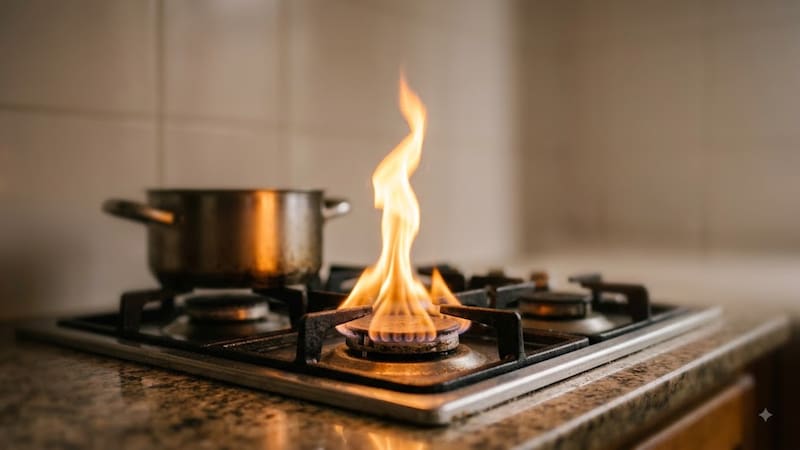

A gas stove burner should normally produce a steady blue flame. If it suddenly turns orange or yellow, it can indicate that the gas is not burning properly or that the burner is not getting enough oxygen.
An orange flame does not always mean there is a serious problem with the stove. However, if the color change persists, it should not be ignored because incomplete combustion can produce soot and potentially increase carbon monoxide emissions.
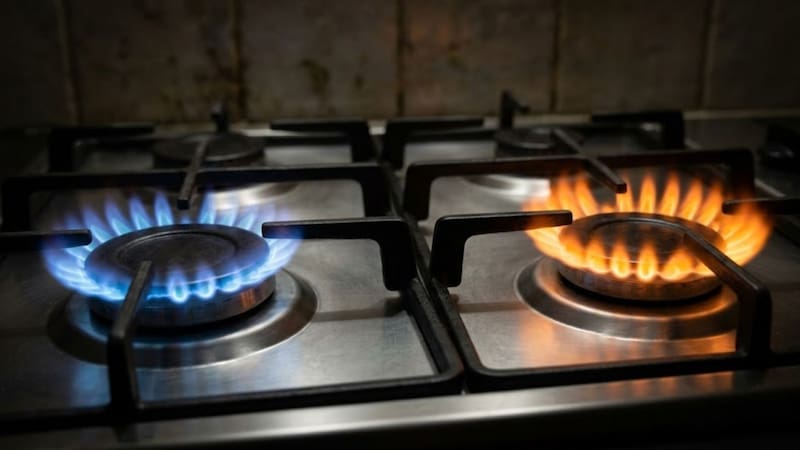
Why is my gas stove flame orange?
One possible cause is an imbalance between gas and oxygen. When there is not enough oxygen, the gas may not burn completely, producing particles that can make the flame appear orange or yellow.
Other causes can be simpler. Food, grease, and debris around the burner can interfere with airflow. An ultrasonic cool-mist humidifier can also temporarily turn a blue flame orange because minerals from tap water can remain suspended in the air and glow when they pass through the flame.
If a humidifier is running nearby, turn it off, open a window, and check the burner again after about 15 minutes. If the flame remains orange, the burner may need to be cleaned or professionally inspected.
When should you be concerned about an orange flame?
If the flame remains orange or yellow, turn off the stove and have it inspected by a licensed technician. This is especially important if you notice a strong gas smell or other unusual signs from the appliance.
Once the stove has completely cooled, you can also check for grease, food particles, or debris around the burner. Clean the removable components carefully and make sure the burner heads and caps are completely dry and correctly positioned before using the stove again.