
En esta noticia
Feet are often overlooked in daily hygiene routines, even though they bear the body’s weight and are exposed to closed shoes, sweat, and constant friction.
That is why a homemade wash with salt and vinegar has gained popularity, promising to relieve fatigue and reduce bad odor.
The practice combines two inexpensive, easily accessible ingredients. According to skin care specialists, the mixture acts as a natural antiseptic that complements daily hygiene without replacing it.
What benefits does this combination have?
Vinegar adds acidity, which helps balance the skin’s pH and hinders the growth of bacteria and fungi responsible for bad odor. Its antifungal action is also useful against mild cases of athlete’s foot in the early stages.
For its part, coarse salt helps absorb moisture from the skin and enhances the disinfecting effect of the mixture. In addition, warm water combined with both ingredients improves peripheral circulation and reduces the feeling of heaviness after a day in closed shoes.
Specialists point out that this routine does not replace medical treatment for advanced fungi, diagnosed wounds, or skin conditions, but rather works as a wellness complement when there are no active lesions.
In this regard, scientific evidence on the exact effectiveness of vinegar and salt as an antifungal treatment is still limited, according to various specialists. However, its use poses no risk for most people when the indicated proportions and times are respected.
How to do the wash step by step
The preparation is simple and takes no more than twenty minutes:
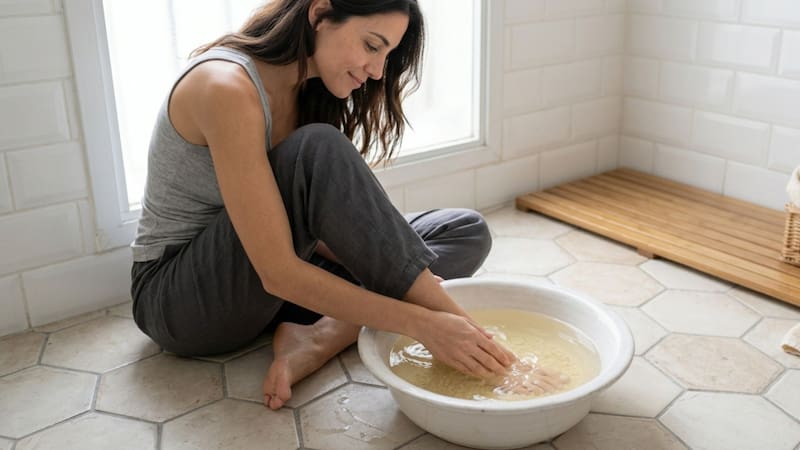
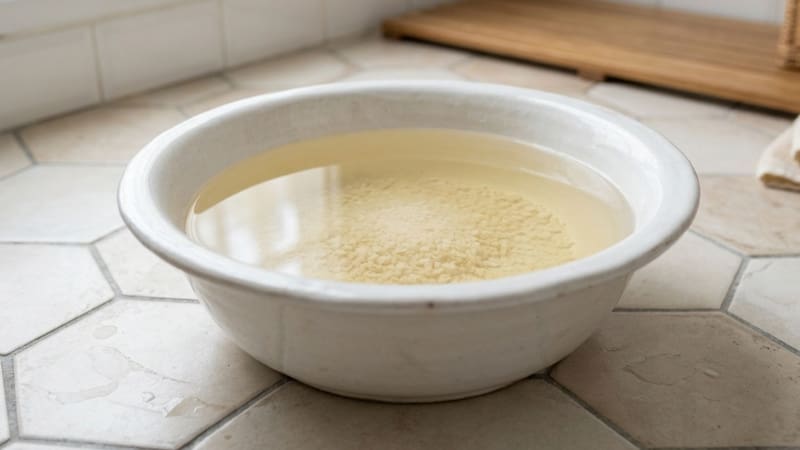
- Fill a large basin with one liter of warm water, making sure it is not hot enough to burn.
- Add half a cup of vinegar and two tablespoons of coarse salt.
- Stir until the salt partially dissolves.
- Soak the feet for 15 to 20 minutes, without exceeding that time.
- Rinse with clean water and dry thoroughly, especially between the toes.
The final drying is a step many people underestimate, although it is key to preventing leftover moisture from encouraging fungal growth. Specialists suggest not leaving the feet wet or putting on closed sneakers immediately after washing.
Those with sensitive skin or any open wounds should avoid this treatment until consulting a professional, since the acidity of the vinegar can irritate damaged areas. For everyone else, the routine can be repeated two or three times a week without problems.
To enhance the result, many specialists suggest ending the routine with a moisturizing cream, which helps restore the skin barrier after prolonged contact with vinegar. This step is especially useful for those with dry heels or heels prone to cracks.
In short, a simple ritual with kitchen ingredients can become a real ally for caring for your feet without spending too much.