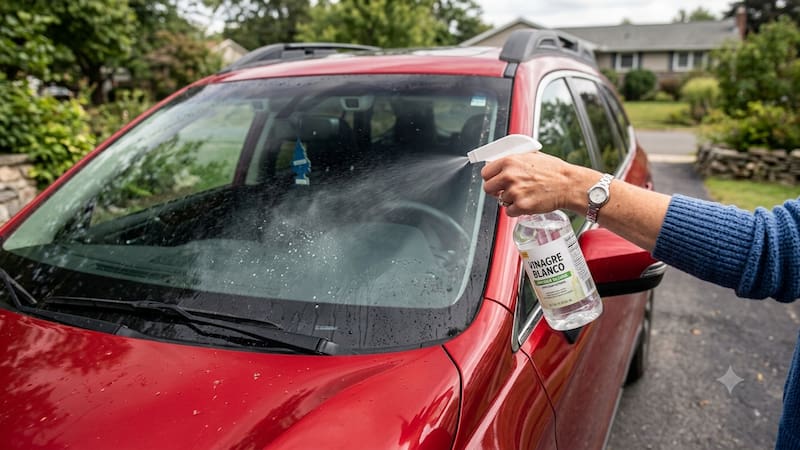
Vinegar has become one of the most commonly used home remedies by drivers to clean the car window. It is inexpensive, easy to get, and those who recommend it highlight its ability to help remove different types of dirt and stains.
Vinegar to clean and degrease the car window
The most recommended is distilled white vinegar, since it leaves less residue on the surface. Its main component is acetic acid, which is credited with disinfecting and degreasing properties that can help keep the windows clear.
That is why it is used to remove insect remains, bird droppings, tree sap, and hard water stains, which often contain a high mineral content. Its use is also mentioned in cold or humid climates to help reduce condensation inside the vehicle.
To apply it, it is recommended to dilute it in equal parts with water and use a microfiber cloth to avoid scratches. Pure vinegar used in excess could damage, with frequent use, the rubber seals, plastics, or the paint of the car.
The belief about frost and ice
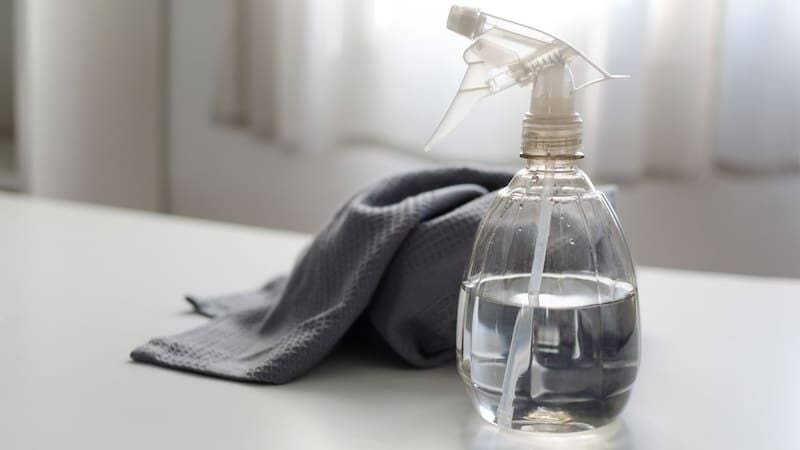
The other most widespread use is as a homemade method to delay the formation of frost or ice on cold mornings. The explanation that circulates is that the acetic acid in vinegar lowers the freezing point of water, which would make it harder for ice to form or stick to the glass.
This is a chemical principle: mixing a solute with water can lower its freezing point, something similar to what happens with salt.
However, there are no studies or concrete and verifiable data confirming how much the freezing point is lowered when diluted vinegar is used, or how effective it is against intense frosts.
That is why this use remains more of a popular belief widely held among drivers than a solution backed by proven scientific support.
Along with this trick, other home remedies are often mentioned with the same level of anecdotal support, such as rubbing the glass with raw onion or with a cut potato, although they also lack verifiable evidence to back them up.