
En esta noticia
Bad shoe odor is one of those everyday, annoying problems that commercial deodorizers often only cover up for a while.

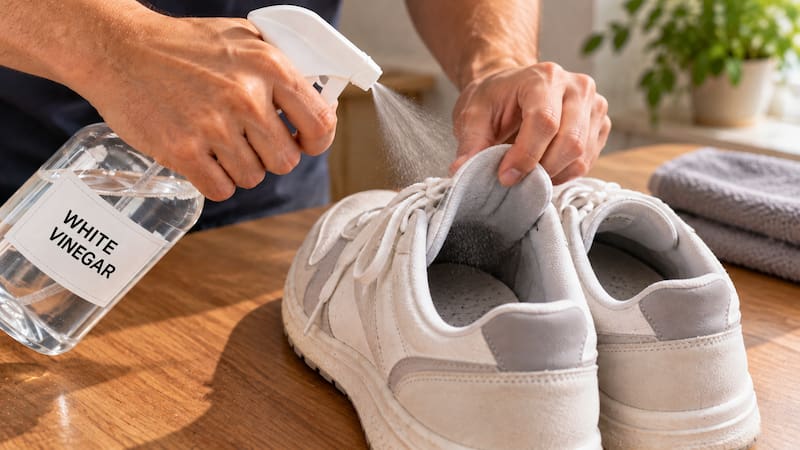
To get at the root of it, a simple, inexpensive home remedy gained popularity: spraying the inside of shoes with diluted white vinegar.
What spraying vinegar in shoes is for
The main use is to neutralize bad shoe odor. Unlike a spray perfume, which barely masks it, vinegar acts on the cause of the odor and helps, in passing, reduce the bacteria and moisture that feed it.
The bad odor of footwear is not caused by sweat itself, which hardly smells at all, but by the bacteria that live in the shoe and feed on that sweat: when they break it down, they release strong-smelling compounds.
White vinegar is a solution of acetic acid and works on two fronts. On the one hand, its acidity neutralizes those odorous compounds instead of masking them.
On the other, that acidic medium has a mild antibacterial action that helps reduce the population of bacteria responsible for the odor. And although the typical vinegar smell may be noticeable when sprayed, it dissipates as the shoe dries, leaving no trace.
Step by step: how to apply it correctly
The procedure is simple:
- Mix white vinegar and water in equal parts in a spray bottle.
- Spray the inside of the shoe with a light mist until it is barely damp, never soaked.
- Let it dry completely in the air, in a ventilated place and, if possible, in the sun, which helps it dry and reduce bacteria.
- Repeat whenever necessary, especially after heavy use or if the footwear became damp.
For more stubborn cases, you can let it sit for a few minutes before drying, or combine the trick with dry baking soda: sprinkle it inside the shoe once dry, leave it for a few hours, and then shake it out.
Why it is important to do it
Beyond the result, the appeal is that it is a natural, inexpensive, and handy alternative to commercial deodorizers.
It uses a product that almost everyone has in the kitchen, does not load the footwear with chemicals or artificial fragrances, and can be repeated as many times as necessary at little cost.
In addition, by attacking the bacteria and not just the smell, it keeps the footwear more hygienic, something appreciated in closed shoes worn daily.