
En esta noticia
- The Supreme Court and its historic ruling: How many people are affected and what was the argument?
- Expedited removals: How do they differ from the traditional process?
- The Donald Trump administration’s immigration policy: What do immigration laws currently allow and what protections do immigrants have?
- The future of immigration policies: What lies ahead for the foreign population in the coming months?
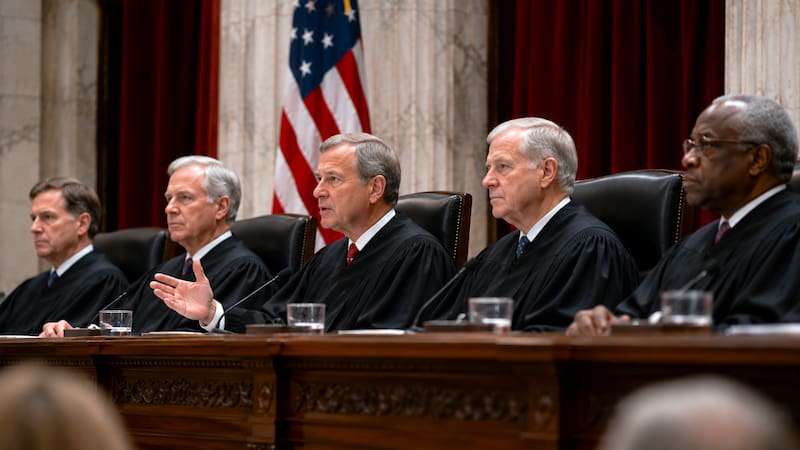
The United States Supreme Court issued a historic ruling that the Department of Homeland Security (DHS) has the authority to cancel Temporary Protected Status (TPS) designations.
The judicial decision particularly targets citizens of Haiti and Syria, who would lose their authorization to live and work temporarily in the United States and would be exposed to possible deportation proceedings.
Combined with the recent decision of the District of Columbia Court of Appeals, expedited removal could be applied, which does not require court proceedings and is left to the discretion of officers from the Immigration and Customs Enforcement (ICE).

The Supreme Court and its historic ruling: How many people are affected and what was the argument?
The United States Supreme Court ruled in a 6 to 3 vote that the Donald Trump administration may end TPS for Haitian and Syrian citizens, setting aside lower court orders that had blocked the government from canceling these protections. The court ruling is estimated to affect approximately 350,000 Haitians and about 6,000 Syrians.
TPS is an immigration benefit created by Congress in 1990 to allow immigrants from certain countries experiencing armed conflicts, natural disasters, or humanitarian crises to remain and work legally within the United States. It is a temporary protection and does not grant permanent residence or citizenship.

Those who voted in favor of this ruling argued that the Immigration and Nationality Act (INA) grants DHS the authority to assign or cancel TPS as appropriate. According to this law:
- The decision to cancel TPS falls to the executive branch
- Federal courts have a very limited ability to review these types of administrative determinations
Expedited removals: How do they differ from the traditional process?
On Tuesday, June 23, the District of Columbia Court of Appeals ruled that the Donald Trump administration could restart expedited removal proceedings (expedited removal).
This measure differs from the traditional one because it allows officers from the Immigration and Customs Enforcement to expel certain foreigners without a hearing before an immigration judge. Expedited removals had previously been suspended in August 2025 on the grounds that there were no safeguards to prevent wrongful deportations and that due process had to be protected.
With the latest update, expedited removal can be applied when a person cannot prove at least two years of continuous lawful presence in the country. Previously, the measure could only be applied near the borders: now it extends to the entire United States.

The Donald Trump administration’s immigration policy: What do immigration laws currently allow and what protections do immigrants have?
Since Donald Trump returned to power, he has tightened immigration controls and made it easier to expel people who remain without legal authorization:
- The use of expedited removals was expanded
- Various immigration protection programs were canceled
- There is greater scrutiny of those who cannot prove valid and regular immigration status
- Control and detention actions by authorities such as ICE were increased
Nevertheless, despite the tightening of this administration’s policies, immigration protections still exist that everyone should know about:
- Applications for asylum for people who demonstrate persecution, and withholding of removal (Withholding of Removal)
- Protection under the Convention Against Torture (CAT)
- TPS programs still in effect for other countries
- DACA
- U and T visas for victims of certain crimes
- Special Immigrant Juvenile Status (SIJS) for minors who are victims of abuse, abandonment, or neglect
- Status adjustments
- Family reunification processes
- Cancellation of removal
- Humanitarian visas and other categories of immigration provided for by immigration law
- Right to due process in traditional deportations where applicable

The future of immigration policies: What lies ahead for the foreign population in the coming months?
With the latest judicial decisions, the current administration gains more and more authority and decision-making power over this sector of the population. While these rulings do not mean immediate deportations, they eliminate one of the main protections that many people had.
All Haitians and Syrians who lose TPS will have to evaluate other legal avenues to regularize their status in order to avoid being exposed to the expulsion proceedings provided for under U.S. law.