
En esta noticia
For many years, shopping at thrift stores was widely seen as something people did only when they were trying to save money. Today, however, psychologists and consumer behavior researchers say that assumption is becoming increasingly outdated.
The secondhand market has expanded well beyond bargain hunters. Many people with comfortable incomes deliberately choose to buy pre-owned clothing, furniture, books, and household items, driven by values that have little to do with their financial situation.
Research suggests that environmental awareness, the desire for unique products, and more conscious consumption habits are among the main reasons why shoppers continue to visit thrift stores even when they can easily afford to buy new.

A scientific study found that environmental concern plays a key role
One of the most significant studies on the topic was published in 2021 in the peer-reviewed journal Entrepreneurial Business and Economics Review.
The research, titled “The Role of Environmental Concern in Explaining Attitude Towards Second-Hand Shopping” was conducted by Barbara Borusiak, Andrzej Szymkowiak, David Bernardo López Lluch, and Paola Sánchez-Bravo.
To better understand why consumers choose secondhand products, the researchers surveyed 841 people—403 in Spain and 438 in Poland.
Using the Norm Activation Model, a psychological framework commonly applied to explain environmentally responsible behavior, the researchers examined how environmental concern influences people’s attitudes toward secondhand shopping.
Their findings revealed that individuals who are more concerned about environmental issues tend to have a significantly more positive attitude toward thrift shopping and are also more likely to visit secondhand stores.
According to the researchers, buying used products is often viewed as a practical way to reduce waste, extend the lifespan of existing goods, and decrease the environmental impact associated with manufacturing new products.
Buying secondhand is no longer just about saving money
Although lower prices remain an important advantage, psychologists say that financial savings are no longer the only reason people shop at thrift stores.

Many consumers intentionally purchase secondhand items because they want their buying habits to reflect their personal values. Choosing pre-owned products allows them to participate in a more sustainable form of consumption while avoiding unnecessary purchases.
This shift reflects broader changes in consumer behavior, particularly as environmental concerns become a more important factor in everyday decisions.
The appeal of finding unique products
Psychology also points to another important motivation: individuality.
Unlike traditional retailers that sell identical products in large quantities, thrift stores often carry one-of-a-kind items that cannot easily be found elsewhere.
Whether it’s vintage clothing, discontinued fashion collections, antique furniture, or rare home décor, many shoppers enjoy expressing their personal style through products that stand apart from mass-produced goods.
Researchers suggest that this search for originality contributes to the growing popularity of secondhand shopping, especially among consumers who value creativity and self-expression.

Why thrift shopping can be emotionally rewarding
Beyond sustainability and individuality, experts say thrift shopping offers a different emotional experience than conventional retail.
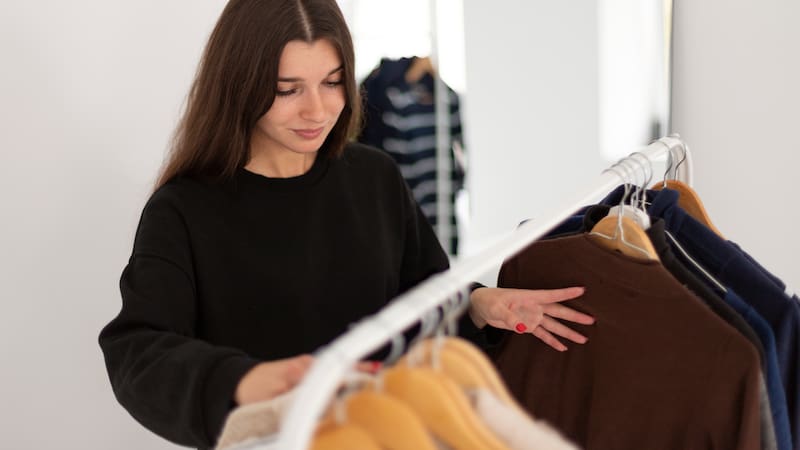
Browsing through shelves and clothing racks without knowing what might be discovered creates an element of surprise that many psychologists compare to a treasure hunt.
Finding an unexpected item or an exceptional bargain often produces a stronger sense of satisfaction than purchasing a product that is readily available in any store.
This feeling of discovery can make the shopping experience itself enjoyable, independent of the amount of money spent.