En esta noticia
The solar eclipse longest of the century already has a date and promises a unique spectacle: day will turn to night for a few minutes in a phenomenon that will not repeat for 157 years. In Spain in particular, anticipation is growing for an astronomical event that will mark a before and after for everyone.
According to EFE, Euskadi, and especially Álava, are emerging as some of the best places to observe this total solar eclipse, which will not be repeated in the region until the year 2183.
The path of visibility will be very limited and, in full, can only be enjoyed in Greenland, Iceland, and the Iberian Peninsula.

What will the longest solar eclipse of the century look like?
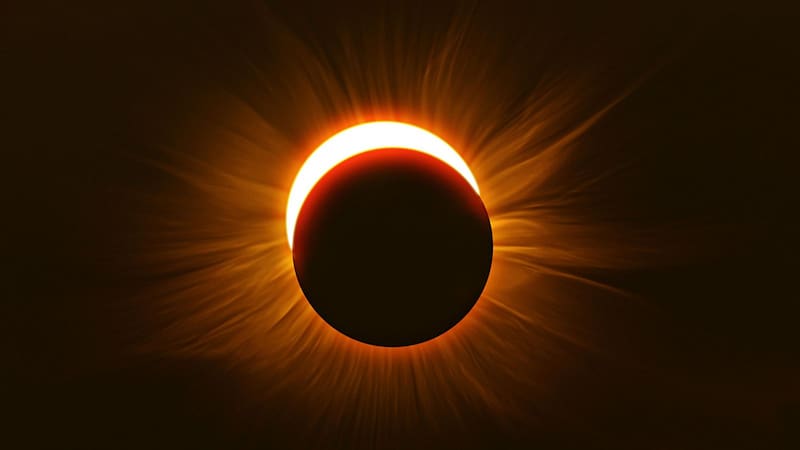
During the eclipse, the sky could darken to the point of allowing stars and even a planet to be seen. In addition, brief but striking phenomena will occur such as the "Baily’s Beads“, flashes of light caused by the sun’s rays passing through the Moon’s valleys.
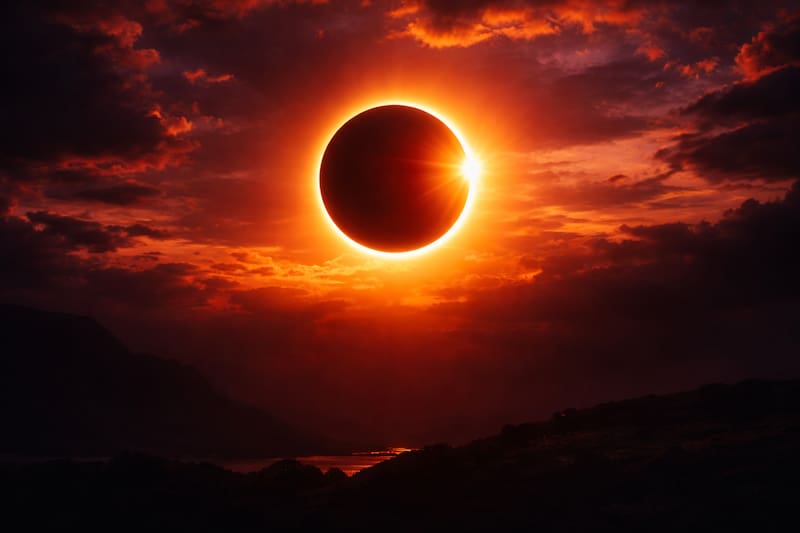
Next, the well-known "Diamond Ring“ will appear, a visual effect in which only a bright point of light remains visible, similar to a luminous jewel. Both phases last only a few seconds, but they are among the most anticipated moments.
When will the longest eclipse of the century be?
The longest total solar eclipse of the 21st century will take place on August 2, 2027. According to experts, it will last a maximum of approximately 6 minutes and 23 seconds, and it will be visible in North Africa, the Middle East, and parts of Europe.

How to observe the solar eclipse?
To observe the eclipse safely, it will be essential to use approved glasses in all its phases, except during totality, when the sky darkens completely. Without this protection, any sun ray can cause eye damage.
Although this eclipse will not be repeated for more than a century, there will be another partial eclipse on January 26, 2028, which will be part of an exceptional series of astronomical events.