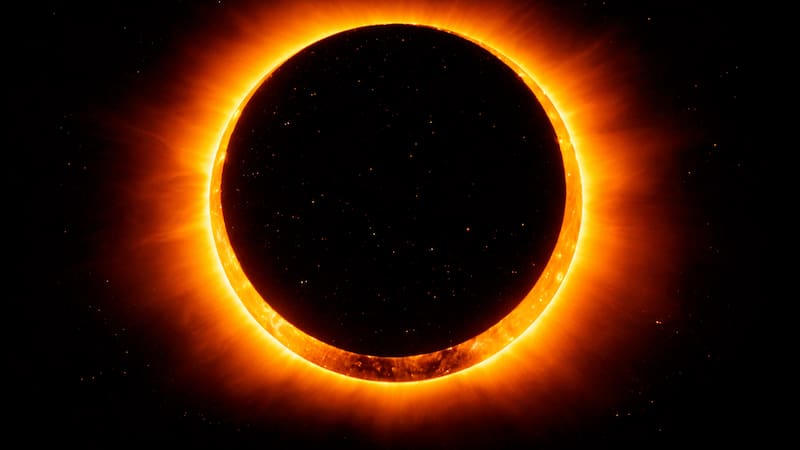
En esta noticia
On August 12, 2026 , a total solar eclipse will occur, darkening the sky for several minutes at sunset. The phenomenon will cross the Arctic, Greenland, and Iceland and reach northern Spain, where no similar event has been seen for more than a century.
NASA and the European Space Agency (ESA) confirmed the exact path of the lunar shadow over the Earth’s surface. This is the first total solar eclipse visible from the Iberian Peninsula in more than 100 years, which has sparked great anticipation among the astronomical community.

Who will be able to see the total solar eclipse on August 12?
The path of totality, the strip where the phenomenon is seen in full, will only cross Greenland, Iceland, and northern Spain, including the Balearic Islands. The United States lies outside that path, so the solar eclipse will not be directly visible from the country.
Those who are in the United States will be able to follow the eclipse through live broadcasts from Spain, available on official NASA and ESA channels. Outside the path of totality, much of Europe and northern Africa will observe a partial version of the phenomenon.
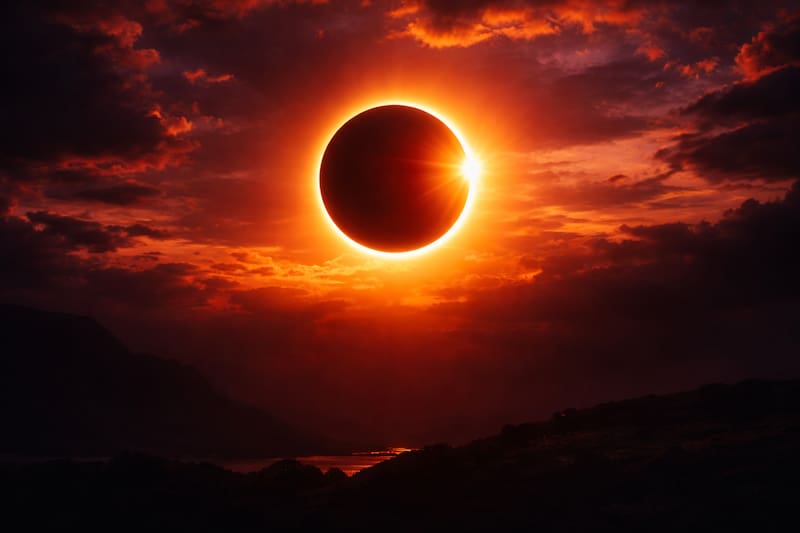
Areas where the total solar eclipse will be seen
- Greenland
- Iceland
- Northern Spain
- Balearic Islands
What will be visible during the solar eclipse and how can you follow it safely?
During the minutes of total darkness, the solar corona will appear, the Sun’s faint atmosphere that normally remains hidden by its brightness. Baily’s beads and the diamond ring will also occur, two visual effects that precede and follow totality.
To observe the solar eclipse directly, it is mandatory to use certified glasses that meet the ISO 12312-2 standard, since looking at the Sun without protection can damage your eyesight. Those following it by streaming will not need any special protection.

How to protect your eyes during the eclipse
- Use glasses that meet the ISO 12312-2 standard
- Do not look at the Sun with ordinary sunglasses
- Remove protection only within the path of totality