
Por Agustina Troiano
En esta noticia
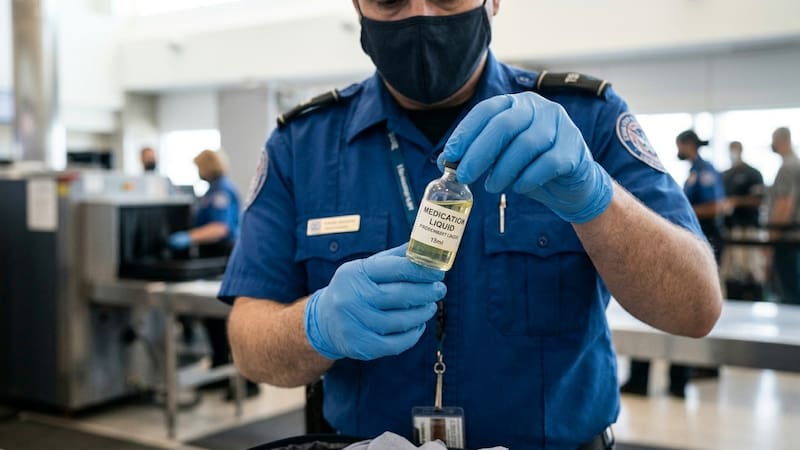
Traveling by plane from the United States means complying with airport security rules, including the restriction that limits the size of liquid containers that can be carried in carry-on luggage to 100 milliliters. However, the Transportation Security Administration (TSA) provides an exception for those who need to transport liquid medications.
The agency allows medically necessary medications in quantities greater than that limit, although passengers must meet certain conditions during security screening. The authorization includes an additional inspection and requires travelers to inform staff about the products they are carrying.
The TSA details the conditions for accessing this exception and what passengers must do before going through airport security.
What liquid medications can be carried in carry-on luggage if they exceed 100 milliliters?
The TSA allows liquid medications, creams, and other medically necessary liquids to be carried in carry-on luggage in containers exceeding 100 milliliters, an exception to the general rule that limits container sizes for liquids.
The policy allows reasonable quantities for travel, since among the products that may benefit from this exception are liquid medications and certain medical supplies. However, the fact that a product is health-related does not guarantee that it will pass screening, because the TSA may subject it to additional inspection and may not allow it in if it does not resolve security concerns.
What conditions does the TSA require to get through security with these medications?
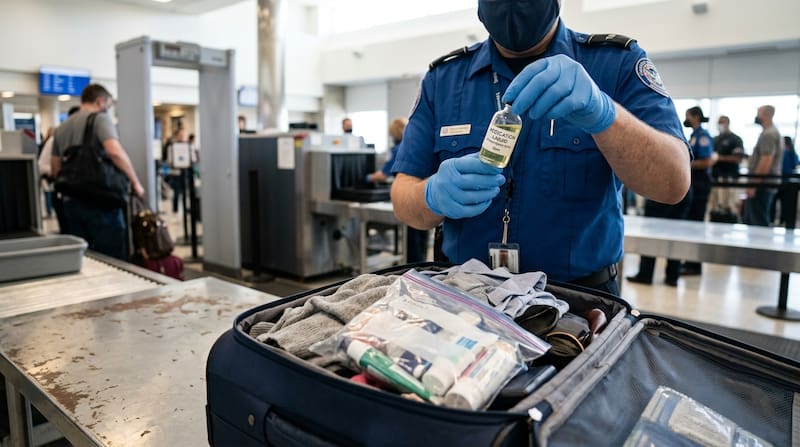
At the start of security screening, passengers must inform the TSA officer that they are carrying medically necessary liquid medications that exceed the usual limit. In addition, they must remove them from carry-on luggage and place them separately so that staff can inspect them.
Unlike common liquids, these medications do not need to be placed in the transparent quart-sized plastic bag. In this sense, the agency may subject the containers to tests to detect explosives or other prohibited items, and may request that they be opened for examination.
If staff are unable to clear the security alerts, the product may not be authorized to enter the airport’s secure area. The TSA also clarifies that, as a general rule, it does not require medications to be in their original pharmacy containers, although it recommends that they be identified to facilitate inspection.